
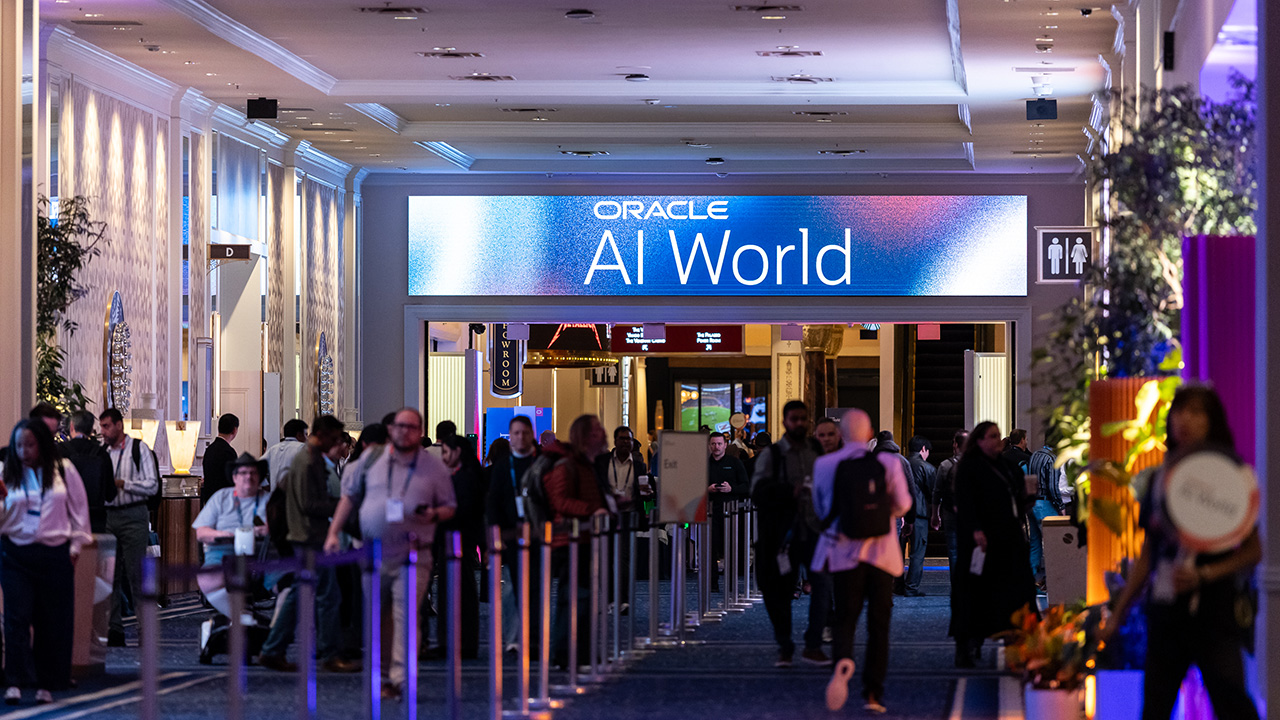
TO Oracle AI World AI has been everywhere, in keynotes, announcements and demonstrations. Yet the most effective summary of the three days in Las Vegas came from a manager who put AI back in its place, at least for the European market. Cormac WattersOracle’s Executive Vice President EMEA, explained in a meeting with the European press that in one year the order of customer requests has reversed. Twelve months ago it was Oracle that was pushing AI, today European companies are asking for everything first sovereigntyThen safetyand only when these two conditions are satisfied do we move on to talking about AI, which they now take for granted.
In recent days we have talked about the Fusion applications that perform the work, the alliance with OpenAI and the opening of OCI to Google and NVIDIA accelerators and the implementation of Fusion entrusted to agents. With Watters’ key these ads are read differently.
We also talked about it with Andrea SinopoliOracle’s Country Leader Italy, and with Muneer MirzaVice President Product Management Multicloud at OCI, in the two video interviews that accompany this article.
Who can turn off the cloud
For Watters, the question we hear most often in Europe is simple and brutal. “Who can turn me off?” Oracle had responded a few years ago with theEU Sovereign Cloudregions managed exclusively by staff with European citizenship. Today it is no longer enough, he admitted, because Oracle remains an American company with ultimate control of the infrastructure. The request moved up Sovereign Alloythe model in which the Oracle cloud is outsourced to a local operator, so that no one in the United States holds the switch. The same goes for Fusion and NetSuite applications, which can run on such a cloud. The topic, Watters noted, was already at the top of requests from customers in the Middle East, but a year ago no one would have predicted that it would also become so in Europe.
Security is less obviously intertwined with sovereignty. New AI models are capable of finding vulnerabilities in older software at an unprecedented rate, and many companies can’t update their systems fast enough. This is why they look to the cloud, where updates are managed by the supplier, but they want it to be sovereign. In Las Vegas Oracle responded with AI Security Mesha managed service that uses OpenAI cybersecurity models to search for and fix vulnerabilities, and with controls pushed right into the database, at the individual row and column level, so that an agent only sees the data that the person they work for is entitled to. On the keynote stage too Sam AltmanCEO of OpenAI, listed security as the first thing a company should address when it comes to AI today.
The AI that matters is inside the processes
AI is in third place because it has already entered everyday use. Watters said that, according to Oracle telemetry, over 80% of Fusion customers use AI functions in everyday work, to summarize a purchase order, prepare a report or manage a personnel selection. It is still a superficial use, and Watters himself recognizes that when he asks customers how much they have saved the answers become vague. For this reason, he considers AI projects that remain isolated in a separate working group useless. Just as integrated ERP replaced scattered systems twenty-five years ago, today we need AI integrated into the processes that the company already uses, and the driving force that pushes European companies to do so is above all cost reduction.
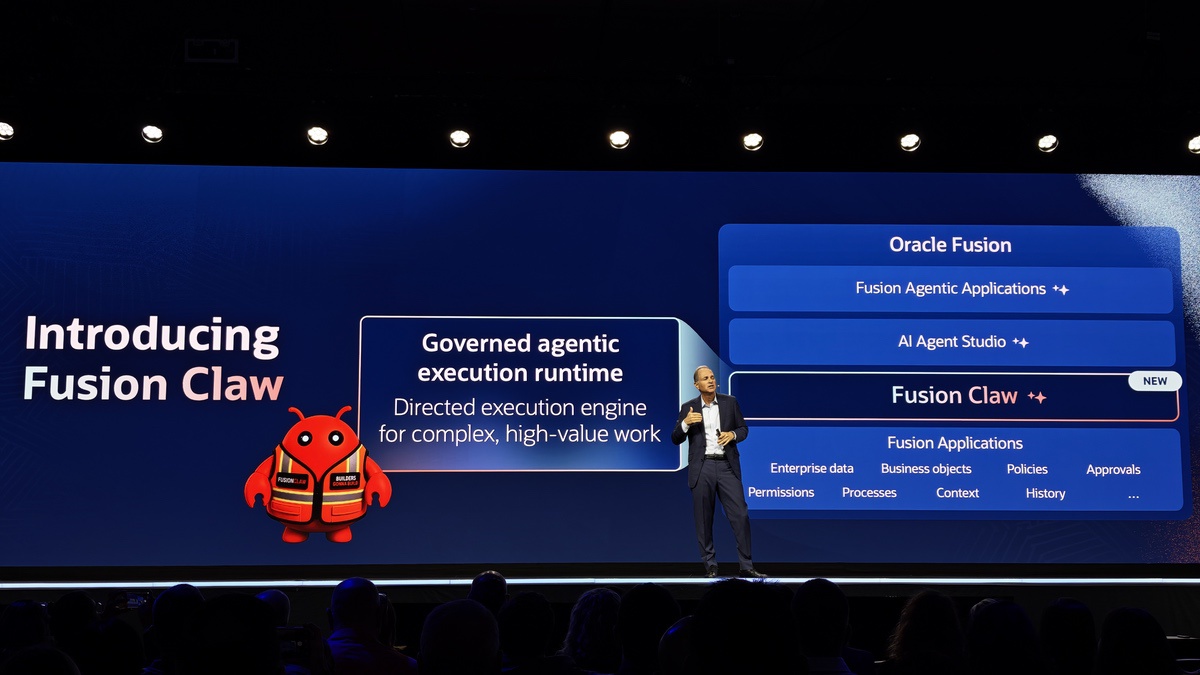
This is where it fits Fusion Clawthe execution engine for agents presented at the opening of the event. In Watters’ reading he does two things. It treats the AI as an extension of the person who activates it, with the same permissions that person has in Fusion, and acts as a sorter, deciding which steps really require a language model and which can be done by traditional computation without spending tokens.
The most concrete change, however, concerns the timing of projects. According to Watters, in implementations there no longer exists the phase in which the system is frozen before go-live, because the functionalities are constantly changing and innovation enters the project while it is underway. A large French multinational, he said, wants to redesign the processes taking into account how the agents will change them in the coming months, and no one plans five-year programs anymore. They ask to have something in production within twelve months. Oracle responded with the Fusion Setup and Configuration Registryan open source registry that allows agents to configure Fusion under expert supervision, and with the six AI Success Navigator agents. Partners, who build nearly 80% of Oracle’s application projects, can build upon industry methodologies and solutions.
The data issue remains, which for Watters is still the main problem of every project. Oracle also uses agents to extract and cleanse the data to be migrated, but sees a new risk. If agents also find information in emails, people may stop curating structured data. Tobias SchellhaasExecutive Vice President HR People Experience, Technology & Data at DHL, in a press briefing rejected the idea of allowing agents to skip data consolidation. With fragmented data and processes, he explained, AI doesn’t work, and for a group the size of DHL, this is the part that takes the most time.
Oracle has shown an openness towards these issues that it did not possess until a few years ago. The alliance with OpenAI brings ChatGPT and Codex into Oracle applications and cloud, Snowflakes becomes a native OCI service, le Google TPU they will arrive on Oracle infrastructure in 2027 and Oracle databases run in Azure, AWS and Google Cloud.
Ellison and “finished” software, sector by sector
The keynote of Larry Ellisonfounder and Chief Technology Officer of Oracle, has been devoted almost entirely to healthcare and Oracle Health. Beyond the industry, Ellison floated two ideas that cut across all business applications. The first is that with AI software can finally be finishedthat is, complete for an entire sector, without leaving the customer the task of filling the gaps with extensions and integrations. Oracle started with healthcare because it considers it the most complex sector, and intends to continue with banking, retail, hospitality and public administration. The second concerns implementations, which according to Ellison will no longer have to last years. A new module activates, recognizes the systems and data already present and begins to work, while the interface is reduced to a natural language question, without screens to learn or training. It is a promise yet to be verified, but it goes in the same direction as what Watters said about the timing of the projects.
Italy and multicloud in interviews
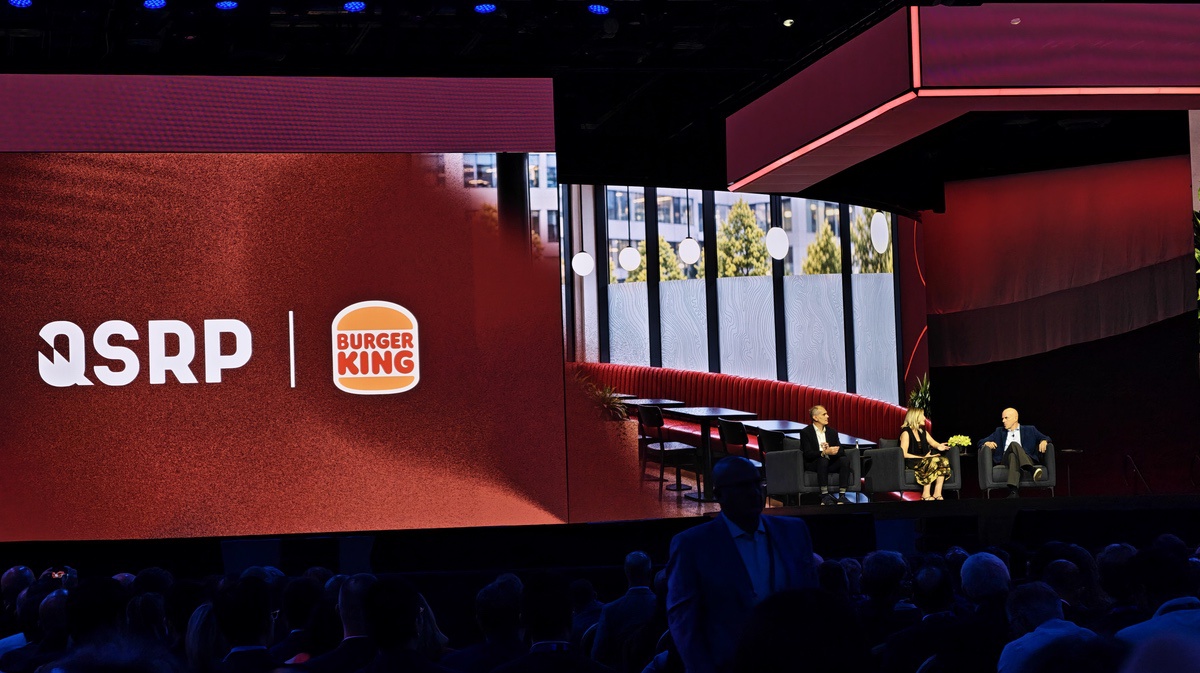
In the video interview, Sinopoli indicates Fusion Claw as the first major announcement to be reported in Italy, precisely because of the separation between the AI it suggests and the one it executes. You save computing resources and you get it “greater control and monitoring” of the result. The case of Burger King Italia, managed by the European QSRP group and presented in the opening keynote, for Sinopoli is the sign of a concreteness that was missing a year ago, and has also aroused interest among other Italian retail customers.
In a meeting with the Italian press Sinopoli was frank about where the market stands. Italy is still in one “phase 1.0”in which AI mainly serves to orient itself in a large wealth of information and make suggestions, while the agents carrying out tasks in the processes are not yet seen. The first benefits will arrive in medium-large companies that have internal structures and a governance model, and in those that develop their own services and applications. On the gap with the United States, Sinopoli asks for clear rules that remove today’s uncertainty from public and private companies, but “without creating too many barriers and too many constraints”.
Mirza confirms what Watters said from his observatory. AI has become the main reason why customers choose to use Oracle databases within other clouds, because they want to integrate them with each provider’s AI services, and AI that is far from the data risks giving misleading answers. Oracle’s multicloud is growing quickly, with multicloud database revenues rising by 353% in the first quarter of fiscal 2027. In Italy, Oracle databases are available through two regions, Milan and Turin, with data that does not leave the country, and according to Mirza, new European sovereignty certifications obtained together with other cloud providers will arrive in the coming months.
In Las Vegas, Oracle presented AI as part of the infrastructure and processes that companies already work on, with agents that do the work and controls that delimit their action. For European customers, however, the first test concerns sovereignty and security, and that is where Oracle will have to convince them even before the features.