
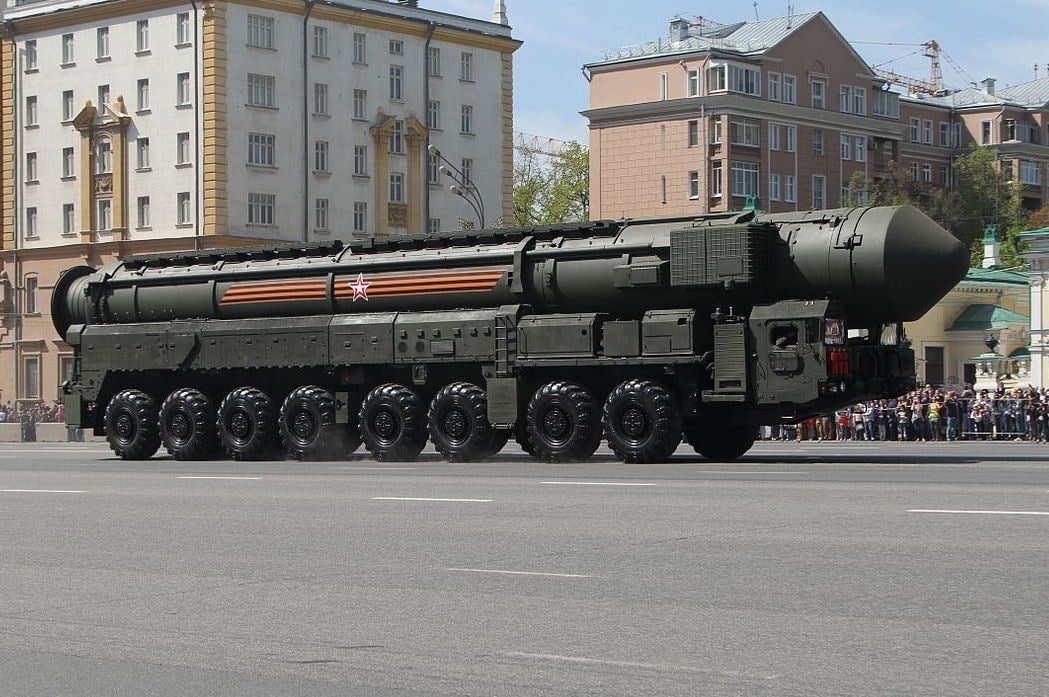
Intercontinental ballistic missiles (ICBMs) are among the most lethal weapons, being characterized by a range of more than 5,500 kilometers, extreme speed and the ability to carry multiple warheads simultaneously (conventional and nuclear). Here’s what we know about these missiles.
A Russian RS-24 Yars intercontinental ballistic missile. Credit: wikipedia
THE’military aeronautics of theUkraine announced that Thursday morning November 21, 2024 there Russia launched the first intercontinental ballistic missile against its territory (ICBMs – Intercontinental ballistic missile) since the beginning of war. From a technical point of view, as explained by armscontrolcenter, ICBMs are ballistic missiles with a range equal to or greater than 5,500 kilometerstherefore capable of hitting cities very far from the launch site. Russia and North Korea, for example, could target cities in the United States with these types of weapons. The maximum range is approx 11,000 kilometers for i Minuteman III Americans.
They are very large weapons that can travel to extreme speeds even in space – up to 27,000 kilometers per hour – and are capable of carrying more tested (even 10), including those nuclearwhich they are basically designed for. The power can even exceed the megaton. It is no coincidence that they are also known as “strategic missiles”. The costs are extremely variable but can easily reach several tens of millions of dollars for a single specimen (the cost of a cruise missile like the Storm Shadow el’ATACMSrecently approved for use in Russian territory by Ukraine, is estimated at around 1 million Euros).
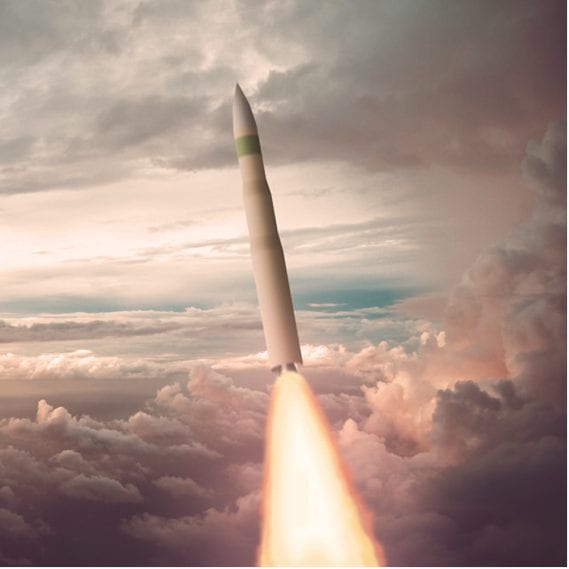
Illustration of a Sentinel ICBM
As reported by the Kyiv Independent, the intercontinental ballistic missile launched by the Russian army on November 21 would have departed from the Astrakhan Oblast – in southern Russia – on the border with Kazakhstan, a region located over 700 kilometers from Dniprothe affected Ukrainian city. The missile, which arrived together with aeroballistic and cruise missiles, would not have caused extreme damagedespite the particularly destructive nature of these weapons. “An industrial enterprise was damaged and two fires broke out in the city, said governor Serhii Lysak. A rehabilitation center for people with disabilities was damaged in the attack, Mayor Borys Filatov said,” explains the Ukrainian newspaper, adding that there were at least two injured following the attack.
Ukraine, Putin is looking for new soldiers for the front: debts of up to 90 thousand euros will be canceled for those who enlist
According to rumors in the Ukrainian press, the Russian ICBM may have been a RS-26 Rubezha medium-range intercontinental ballistic missile with a maximum range of 6,000 kilometers and the ability to carry four warheads of 0.3 megatons each. However, there is no confirmation of this. We only know that the missile traveled a thousand kilometers and hit Dnipro, without causing too significant damage (it was clearly armed with conventional and not nuclear warheads). The launch, according to Dr. Fabian Hoffmann, a defense expert at the University of Oslo, would have had “virtually no military value,” as he told the Kyiv Independent.
The characteristics of an intercontinental ballistic missile: range, speed and costs
Intercontinental ballistic missiles have a range of at least 5,500 kilometers and, in extreme cases such as the US Minuteman III, can reach 11,000 kilometers. As an example, Los Angeles and St. Petersburg are just under 10,000 kilometers apart, a distance that could be covered by ICBMs. These missiles can be launched from missile silos, submarines, truck And mobile launchers on rail; their mobility therefore makes them very difficult targets to identify when they are still “on the ground”. Even once in flight they are not easy to intercept. During their parable of death ICBMs can in fact reach a maximum speed between 24,000 and 27,000 kilometres, once you enter the space.
As regards costs, they are highly variable and depend not only on the size and range of the missile, but also on the type and number of warheads with which it can be equipped. The aforementioned RS-26 Rubezh can carry four 0.3 megaton warheads, while the Minuteman III can carry a maximum of three with comparable power. The estimated cost of this US missile is 7 million dollars. The cost of a single Sentinel, expected to replace hundreds of Minutemen between 2029 and 2075, is estimated at 100 million dollars (the entire development program has a cost of almost € 100 billion dollars). The missile can carry multiple nuclear warheads but is limited to a single one W87 Mod 1 (W87-1) due to international nuclear weapons treaties.
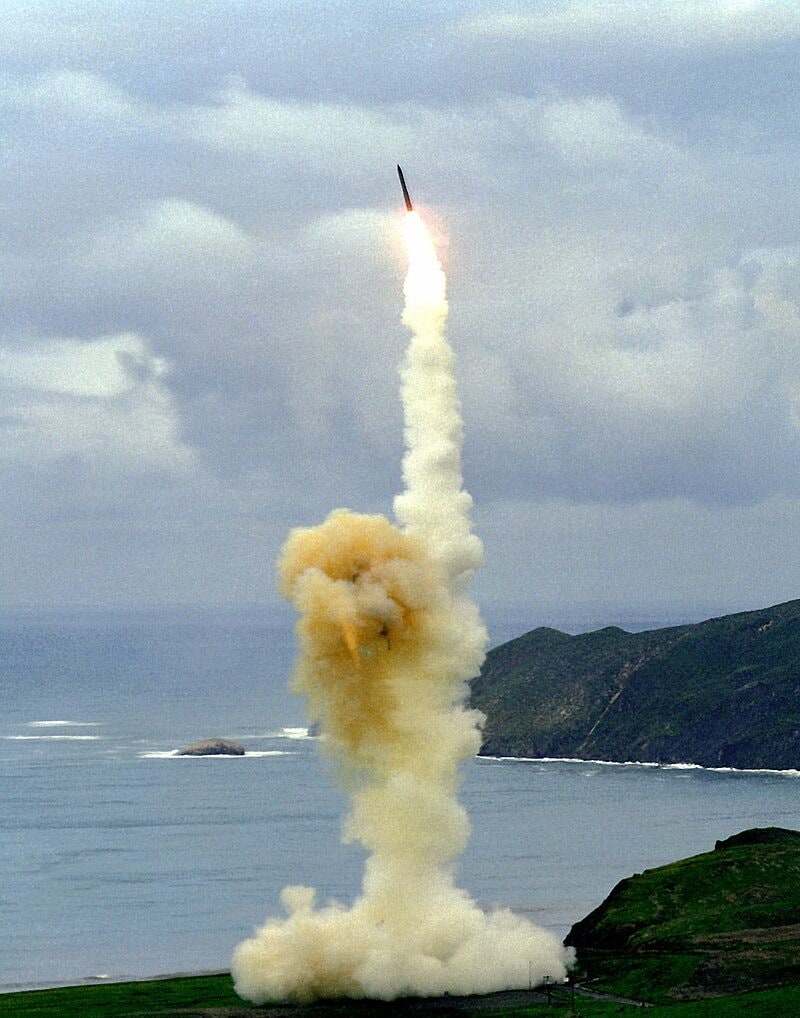
The test launch of a Minuteman III
What damage can an intercontinental ballistic missile cause?
Intercontinental ballistic missiles can cause extreme damage precisely because they are able to load multiple warheads of considerable power and type: conventional, nuclear, thermonuclear and even biological. These devices can be dropped on multiple targets during the flight path, before crashing to the ground. Also making ICBMs particularly sneaky is the fact that they can be loaded with fake warheadsmixed with the real ones; by throwing several, it can be difficult to intercept the truly destructive ones. The atomic bombs dropped by the USA on Japan during World War II had a yield of 15 and 21 kilotons (Little Boy over Hiroshima and Fatman over Nagasaki, respectively). Modern intercontinental ballistic missiles can also carry one from 1 megatonthat is, well 1000 kilotons; such power can raze entire cities to the ground, spreading death and destruction over a radius of several kilometers.
When and where they have already been used
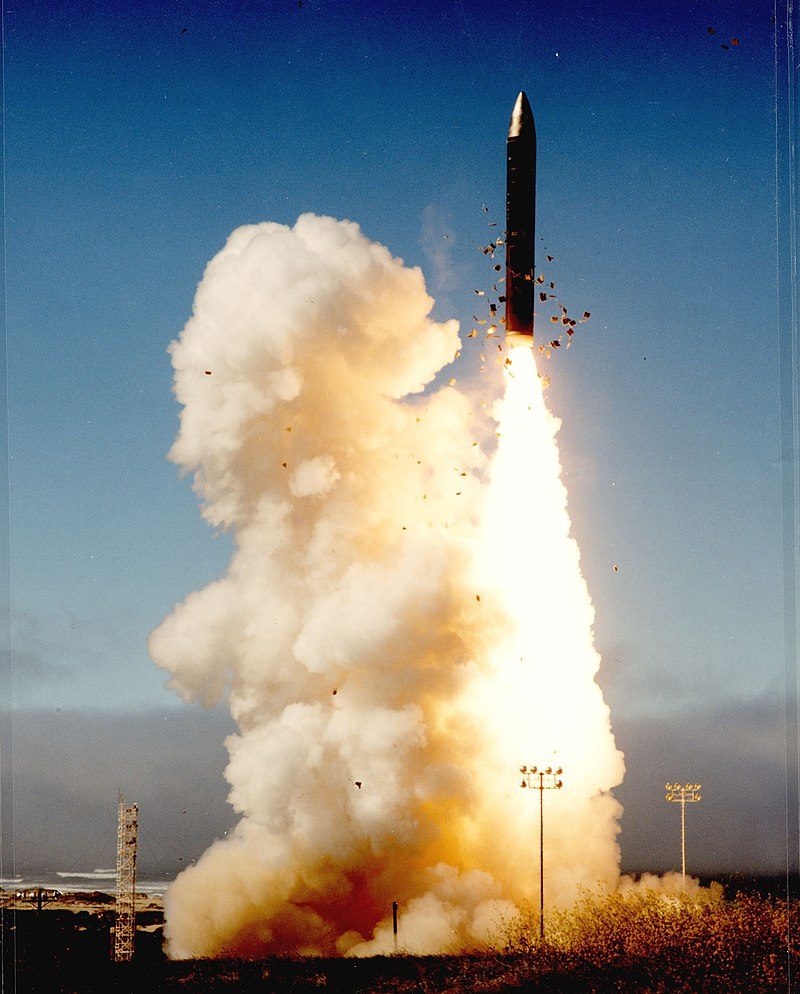
With the exception of the very recent launch in Ukraine, which has yet to be confirmed, there are no known launches of intercontinental ballistic missiles during conflicts that have broken out in the past. In other words, they are not Never been used in war to strike enemy countries. The only launches are linked to deterrence, efficiency and purely demonstrative tests, such as those carried out by North Korea starting around 2017 Sea of Japan. These are ICBMs Hwasong: Hwasong-14 (July 4, 2017); Hwasong-15 (November 29, 2017); Hwasong-17 (March 24, 2022).