
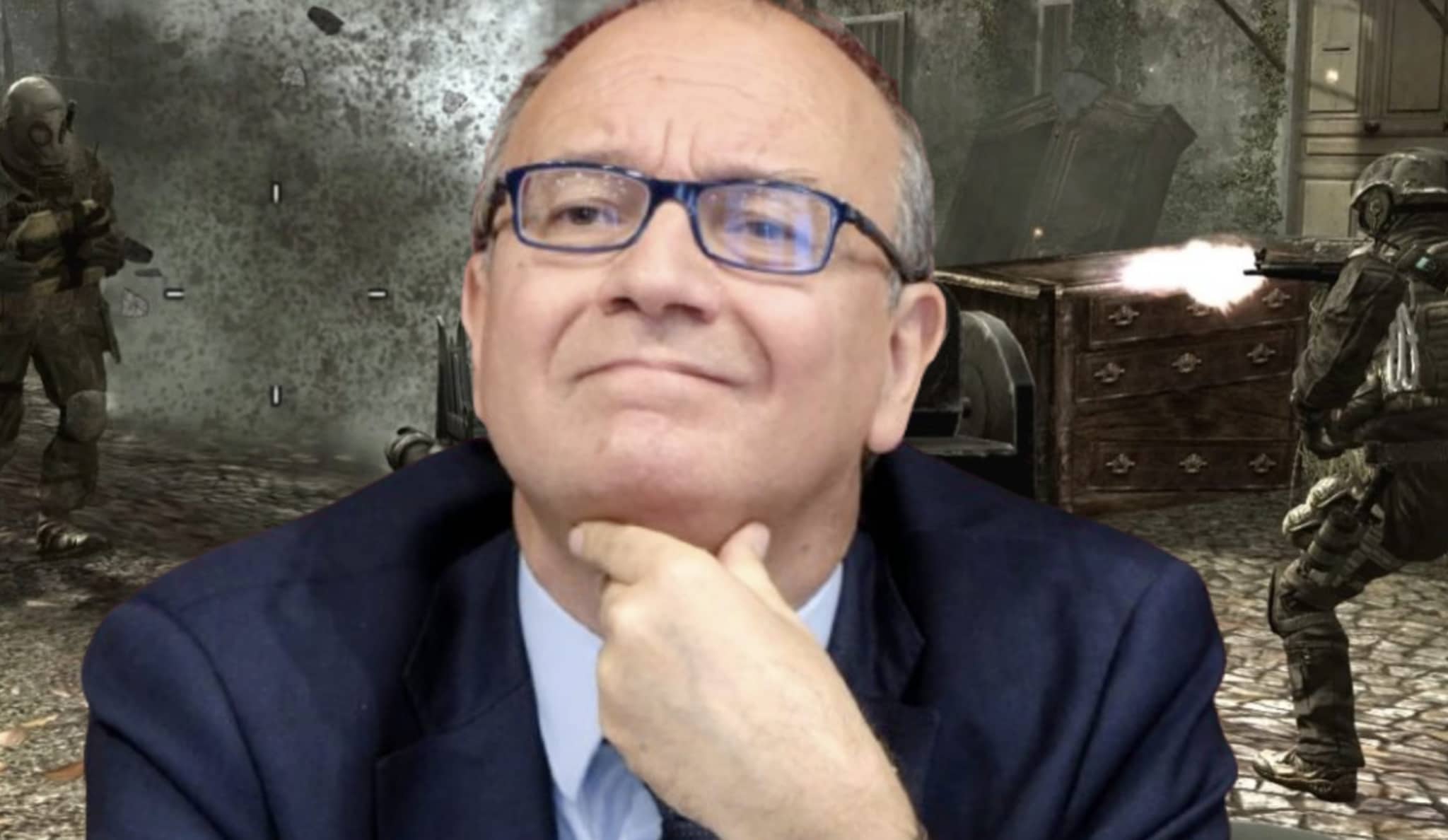
In recent weeks there has been renewed discussion of the link between video games and violence. It happened on at least two occasions: a sentence from minister Giuseppe Valditara and a debate on the program La Volta Buona. We talked about it with Marco Lazzeri, a psychologist specializing in virtual reality and new technologies.
Interview with Marco Lazzeri
Psychologist
“No to violent video games that stimulate aggression”. These are the words of the Minister of Education Giuseppe Valditara on the occasion of the “W la Salute” event, which took place on 11 December. Theme of the meeting, healthy practices and behaviors for the little ones. For this reason, video games should be avoided, or rather, demonized. Now it’s a recurring mechanism. It happens in waves. Video games enter the public debate and there is discussion about whether they can trigger violence in those who play them. It also happened on another occasion in the last few days.
During the December 5th episode of La Volta Buona, the program on RAI 1 hosted by Caterina Balivovideo games become the focus to explain the news case involving two teenagers aged 15 and 16, guilty of stabbing a 62-year-old man in Lucca. According to the debate in the studio, young people do not know how to communicate, due to the violence and isolation caused by gaming. “When I was little we played in the courtyard” the journalist Salvo Sottile says on the show, to indicate how much the sociality of the past was better compared to today’s. We talked about it with Marco Lazzeripsychologist specialized in virtual reality and new technologies.
What do you think of the statements of Minister Valditara and the guests of La Volta?
So our brain can rot while we watch social media: the psychologist explains what brain rot is
They don’t surprise me. It is common for complex topics such as video games to be addressed with hasty judgments and generalizations, especially when a solid scientific basis and in-depth knowledge is lacking.
Isn’t this alarmist attitude dangerous?
Certain. It risks not only fueling prejudices, but also diverting attention from one more constructive discussion and based on facts. Many of the fears expressed about video games, such as the risk of addictionsocial isolation or violent behavior, are in reality unfounded or greatly exaggerated.
What does the scientific literature say about it?
The scientific literature tells us that, although the Gaming Disorder is a real phenomenon, to date it represents a minimal part of the population of players, estimated by the WHO between 0.6% and 3%. Most people play in balanced way and benefits from video games, which can be a tool for socializing, relaxing and developing cognitive skills. There has also been a debate on the link between violent video games and aggression largely debunked by research. In 2020, the American Psychological Association itself declared that there is insufficient evidence to support a direct causal link between the two phenomena.
What could be a solution?
Rather than condemning video games outright, it would be more helpful recognize its positive potential. In educational, social and even therapeutic fields, video games represent an opportunity that deserves to be explored with responsible and evidence-based approaches. The real objective should be to educate and raise awareness of conscious use, overcoming prejudices that they are not matched in the reality of the facts.
Why do you think video games are still associated with violence today?
The association between video games and violence is the result of a combination of cultural, media and social factors. Often, this vision derives from a lack of direct knowledge of the medium and from a basic distrust towards new technologies, which in the past has also characterized other cultural phenomena. Added to this is the amplifying role of the mediawhich tend to focus on sensationalist news, such as news cases linked to violent behaviour, attributing a direct causal role to video games even in the absence of concrete evidence.
Are there other factors contributing to this view?
Another element is represented by the concerns regarding the time spent playing and the perceived impact on young people’s socialisation, academic achievement or personal development. These fears have consolidated over time through narratives that portray players as socially isolated or prone to antisocial behavior. All this reignites flows of alarmism and generalizations that struggle to be countered by one more balanced narrative. Yet, we know from research that video games, in the vast majority of cases, they are not the cause of violent behavior. On the contrary, they can represent a safe space for expression, socialization and learning.
Are there recent studies that testify to the non-correlation between video games and violence?
Several scientific studies have highlighted theabsence of a significant correlation between the use of violent video games and the increase in aggressive behavior. Of the many that can be found in literature, there is one in particular that I always like to mention. A study published in Nature Molecular Psychiatry (2018) analyzed the long-term effects of violent video games. The participants, divided into three groups – one who played Grand Theft Auto V (violent video game), one The Sims 3 (non-violent video game) and a control group who did not play – were monitored for two months.
And what were the conclusions of the study?
The results were clear: no significant differences emerged in levels of aggression between groups. These results invite us to shift attention to more determining factors, such as family and social context, to understand human behavior. Video games, on the other hand, deserve to be valued for their positive potential, especially if used in a conscious and balanced way
In your opinion, is this alarmism a phenomenon that only involves Italian culture or even foreign culture?
The tendency to generalize and stereotype video games as cause of addiction and violence is not a phenomenon limited to Italian culture, but also occurs at an international level. A significant example is the case of Canada, where in 2019 the law firm Calex Legal, representing three Canadian parents, requested approval from the Supreme Court of Quebec to undertake a class action against Fortniteaccused of creating addiction. The offending game mode is that of Battle Royale, introduced in 2017, with the accusation that the developers had created the game with the intention of inducing children to develop addictive behaviors without informing them of the risks associated with using Fortnite.
Recently Call of Duty was also blamed for the massacre in Uvalde, Texas. How did the class action against Fortnite end?
In support of their accusations, the parents cited behaviors attributable to their children, such as reduced sleep hours, increased personal neglect, family conflicts and excessive spending – up to around $600 – on the game store. In an article in the Daily Mirror (2018), British behavioral specialist Steven Pope compared Fortnite to heroin, a comparison which, although controversial, served to create similar alarmism in Italy. on December 8 of the same year, judge Sylvain Lussier deemed the legal action admissiblethus kicking off the proceedings and reigniting a critical debate on the impact of video games and their influence on younger people.