
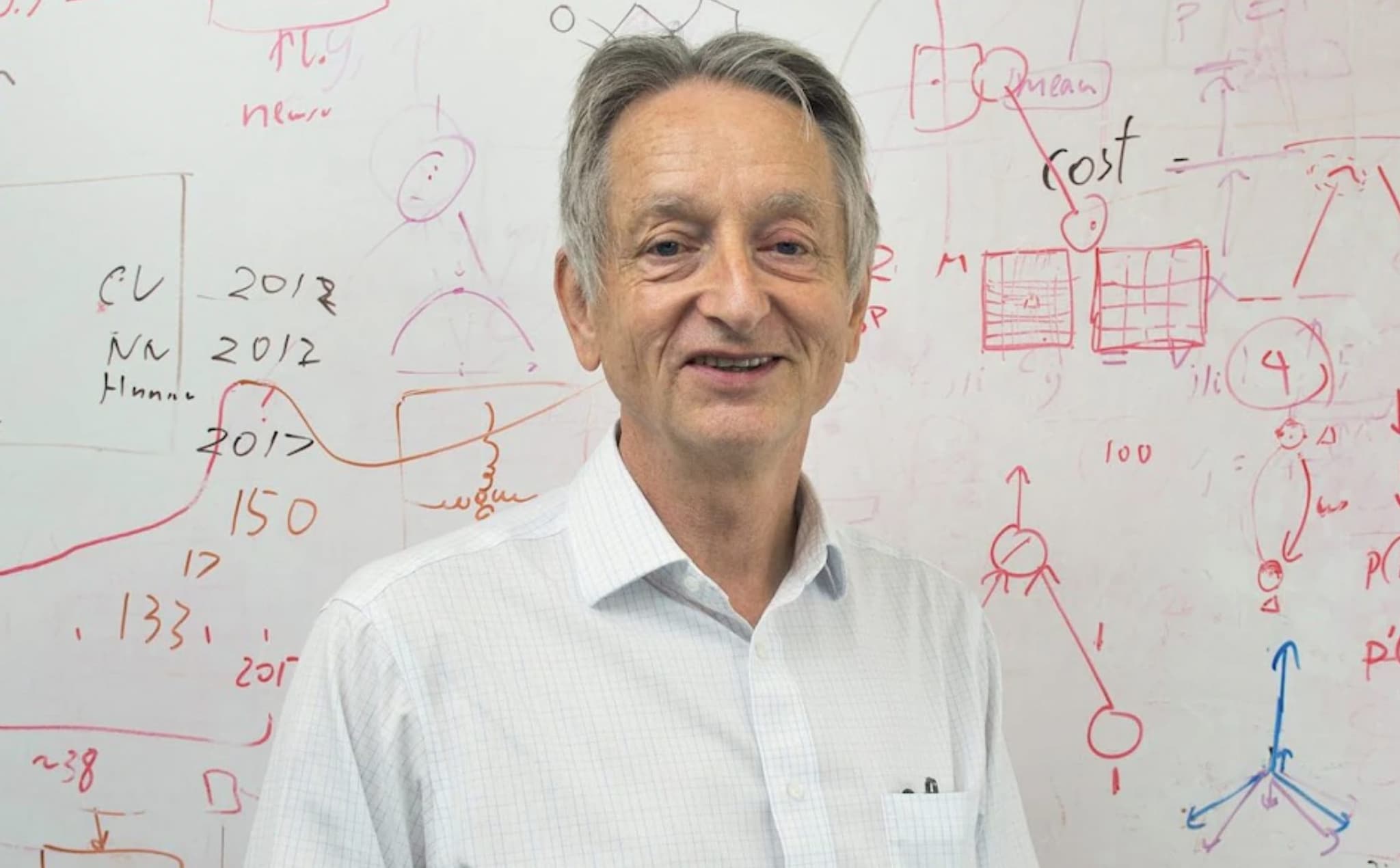
During BBC Radio 4’s Today programme, Geoffrey Hinton explained that there is a 10-20 percent chance that Artificial Intelligence will cause the extinction of humanity within the next thirty years.
Geoffrey Hinton, 75, was one of the pioneers of research into deep learning of neural networks, the process that underlies generative artificial intelligence. In other words he is the man who tried to build AI systems similar to the human brain. In 2023, after a very long career, he quits Google, to talk about all the risks of the machines he himself created.
Hinton launched the latest alarm during the Today program on BBC Radio 4. According to the godfather of AI “there is a probability of 10-20 percent that within the next thirty years Artificial Intelligence will cause the extinction of humanity”. Technology is advancing “faster than expected,” and we’ve never had to deal with something smarter than us. “And how many examples do we know of something more intelligent being controlled by something less intelligent?”
The Great Fear by Geoffrey Hinton
Geoffrey Hinton, won together with John J. Hopfield the 2024 Nobel Prize for Physics for his discoveries in machine learning (artificial intelligence) with artificial neural networks, inspired by the structure of neuron networks in our brain. As he had already explained in an interview with the New York Times, chatbots are “quite scary” and although “right now, they’re not smarter than us, I think they soon could be.”
We tried the app to create finished kisses, it can be used with anyone: even with those who don’t want you
Software could also be exploited, deformed to reach dangerous objectives. Artificial intelligence, according to Hinton, would then pose a risk plurality of thoughtconsidering his similar and homologated responses to the dominant ideology.
“I have come to the conclusion that the type of intelligence we are developing is very different from the intelligence we have. We are biological systems and these are digital systems. And the big difference is that with digital systems you have many copies of the same set, the same model of the world,” the risk is standardize thinking through standard responses.
“It’s like you have 10,000 people and every time one person learned something, everyone automatically knows it. And that’s how these chatbots they can know much more than any person.” As the godfather of AI explains, plugging all the loopholes is a race against time: “Look at what it was like five years ago and what it is like now“.
How to protect ourselves from AI that is smarter than humans
“We have no experience of what it means to have things smarter than us,” Hinton said during a phone call with the Nobel committee. “It will be wonderful in many ways… It will mean huge improvements in productivity. But we also have a number of things to worry about possible negative consequencesespecially the threat that these things get out of control“.
Not only that. According to Hinton we need to introduce new laws to regulate AI “If we leave it in the hands of the companies that produce it and that follow the profit it will not be developed safely. The only thing that can force those large companies to do more research on security is a government regulation”.