
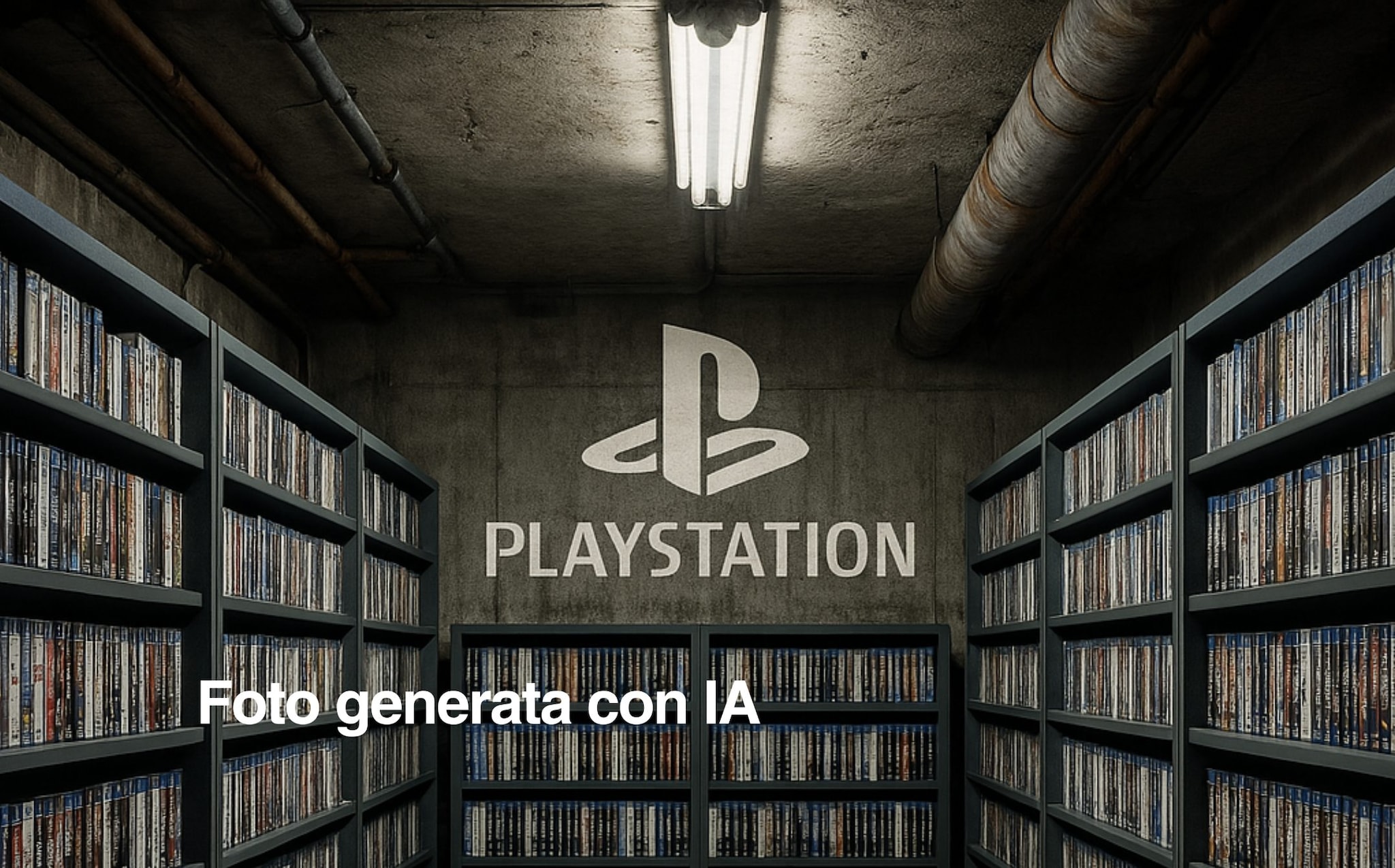
In an underground mine is the PlayStation Studios Vault, an archive created to keep 30 years of video game according to Sony. It looks like excellent news for the preservation of video games, but the reality of the facts is much more complex. In fact, the archive is not open to the public.
During the Game Developers Conference (GDC) Sony announced The PlayStation Studios Vault. It is an archive that aims to preserve three decades of PlayStation’s video game history. The Vault collects about 200 million filesincluding source codes, audio assets, documentation and prototypes. The oldest material preserved dates back to 1994, and is one Preliminary Build of the Arc The Lad game For the first PlayStation. “PlayStation Studios Vault is our solution to collect all the rich thirtieth anniversary of PlayStation in one place,” he explained to the GDC Garrett FredleySenior Build Engineer of the project.
How the PlayStation archive works
According to Fredley, the data is initially collected in Two temporary archives located in Las Vegas and Liverpoolequipped with high -speed SSD storage. Subsequently, these files are transferred to a final archive, kept on magnetic ribbons inside an underground mine (hence the name Vault). However, access to this archive is extremely limited: is reserved for the team of preservation of intellectual properties and some members of the IT section. The goal of this initiative remains historical conservation, but it is not difficult to hypothesize its use by Sony to facilitate the realization of remaster and remake. In any case, the immense catalog is not accessible to the public.
The problem of preservation of video games
The PlayStation Studios Vault represents a significant commitment from Sony to preserve PlayStation’s rich videogame inheritance. Yet the impossibility of being able to consult the archive as the archive makes the conservation discourse for academic and cultural purposes decay, leaving the institutional void around the preservation of video games intact. In the United States, for example, only 13% of classic video games are currently accessible to the public, and just 3% of the titles published before 1985 are reprinted. This means that many games risk being lost forever. And it’s a problem.
Nintendo Switch 2 is on the market: how to prevail to buy it as soon as it comes out
In an interview for Fanpage.it, Andrea Dresseno, former manager of the Bologna videogame archive, underlined the importance of consider video games as historical sourceslike books, comics and films, available in bibliographic and museum catalogs. Yet videogame productions remain excluded from these processes that contribute to making media representations penetrate within society as cultural expressions. The reasons are different: There is an institutional voidbecause on the part of politics there is currently no interest in preserving the videogame productions of the past. There also seems to be a shared disinterest from companies. To this are added difficulties related to use and accessibility, because in order to consult a title of the past, specific consoles and play platforms are needed, many no longer on the market.
Certainly, the PlayStation archive creates an interesting precedent, which could open the way to a greater awareness of the historical-cultural value that have video games. Yet its structure, which effectively excludes the public, does not allow you to be optimistic On this front.