
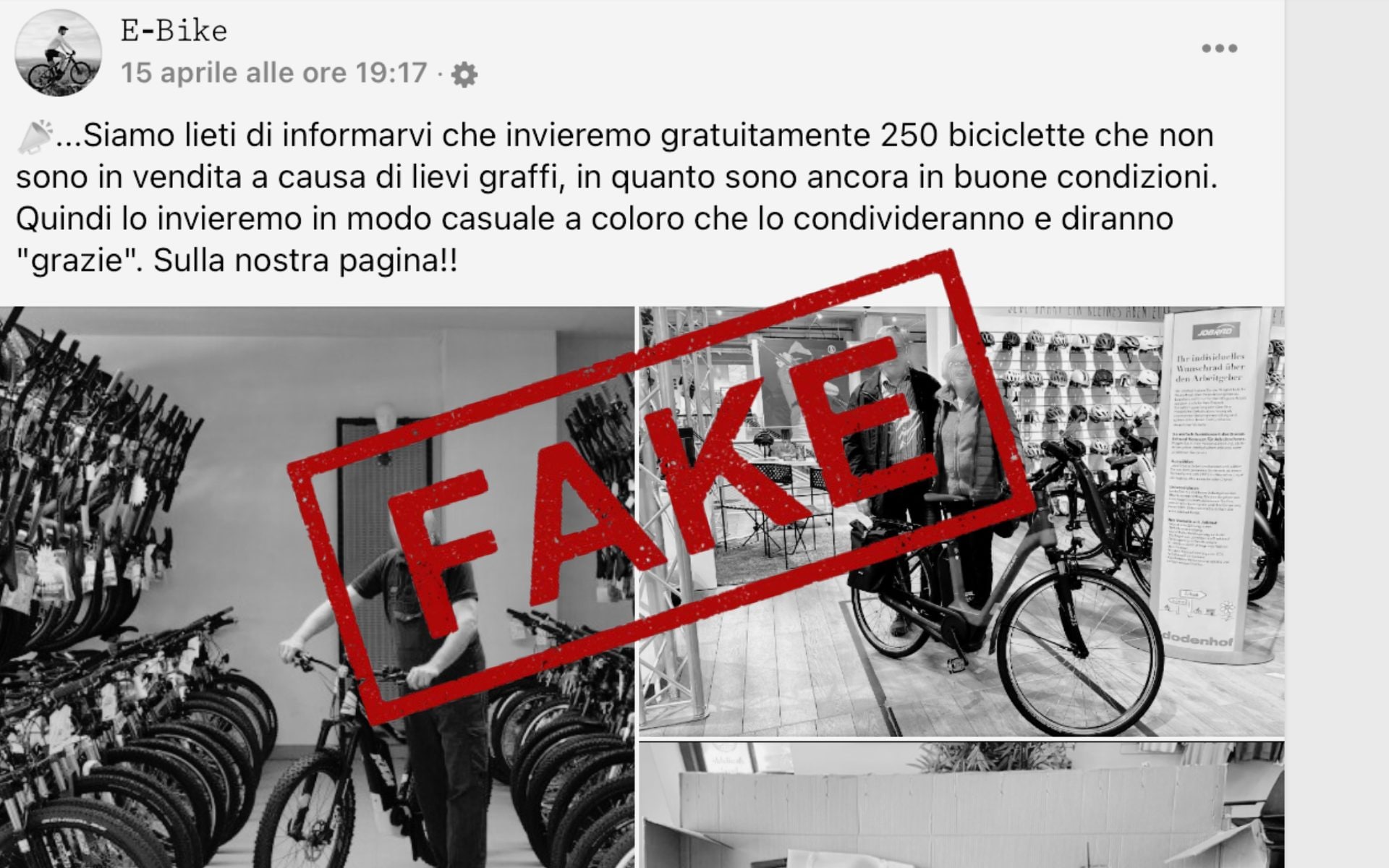
On Facebook this post is circulating which promises 250 free electric bikes because they are inventable due to some scratches, but in good condition. In reality, it is a scam from the now known scheme: to promise a prize or a cash reward to induce users to give their personal data.
Facebook | Social scam post on electric bikes
“We are pleased to inform you that we will send free 250 bicycles which are not on sale due to slight scratches, as they are still in good condition. ” Online scam that promises prizes of hundreds of euros In exchange for a few simple steps, how to share a post and follow the page.
Too bad that, in reality, There is no prize at stake: Almost always this kind of ads leads to sites where you have to register. The only goal of these scams is in fact to obtain i Personal data of usersincluding sensitive ones, sometimes too password or credentials to access current accounts.
The electric bike scam
As happened already in the past, for example with the scam of invented Amazon packs, the bait used to attract users is a post socialcomplete with photos and explanation. In the case of New electric bike scamthe post in question is shooting on the Facebook E-Bike page-as reported by Corriere della Sera-for a few weeks and has already been reconciled more than 3,000 timeswhile the number of people who replied has exceeded 900.
Now on Instagram you can change the order of your posts: how the personalized grid works
The post in question, in addition to the breeder promise of 250 electric bikes freeit also contains a series of photos that actually show dozens of bikes still in the packaging within what seems in all respects a sporting goods shop. The first comment post then contains the instructions to participate: you have to follow the page, share the post and write thanks in the comments. Made these simple steps we should receive a message with the subsequent steps.
“Congratulations, you were selected as a winner”
We do it and in fact The message comes: “Congratulations, you have been selected as a winner and you are entitled to an award”. To request it, we must share the post in ten Facebook groups and click the “made” button contained in the message itself. In reality, as we have verified, even if you don’t share the postwhen we click “done”, in the chat comes immediately after a new message. We won.
The prize though that’s not exactly what had been promised In the post: “You are entitled to win 1 electric bicycle unit and a shopping voucher from 500 €. The next step is to register through the official link and request the prize immediately, “explains the message.
The scheme is the one common to many others Online scams: use the promise of a prize or a cash reward to induce users to register for unknown platformsentering their data. One of the risks – as Corriere della Sera explains – is to run (if you don’t have a good antivirus) in a malwareor a software designed to enter the PC with malicious intentionshow to damage the computer or acquire information without the user’s consent.
But, regardless of this scenario, the point is that when you try to obtain the prize, you must still register, following the link that comes to us, and this means, in any case, to give our personal data, how name and surnamebut also Mail and telephone numberto an unknown body, which we do not know how or with what purposes it will use them.
How to recognize a scam
In general, you always have to be wary of posts that promise us easy earnings or super advantageous prizes in exchange for a simple registration. In addition, a somewhat trained eye is able to recognize a series of signs that must alert us. It may seem trivial, but Italian is one of these.
Let’s take the case of the scam on the e-bike page: already the same post that contains the announcement contains grammatical errors. Also the site that opens by clicking the link contained in the message is clearly not very recommendable: first There is no information sectionno physical or contact details. Even the home page is unclear: “Congratulations, you are our winner. This bicycle can be used in all our shops everywhere”. Clearly, it was Written or translated badlyand this speaks volumes about the reliability of those behind and of the alleged competition to which they invite us to participate