
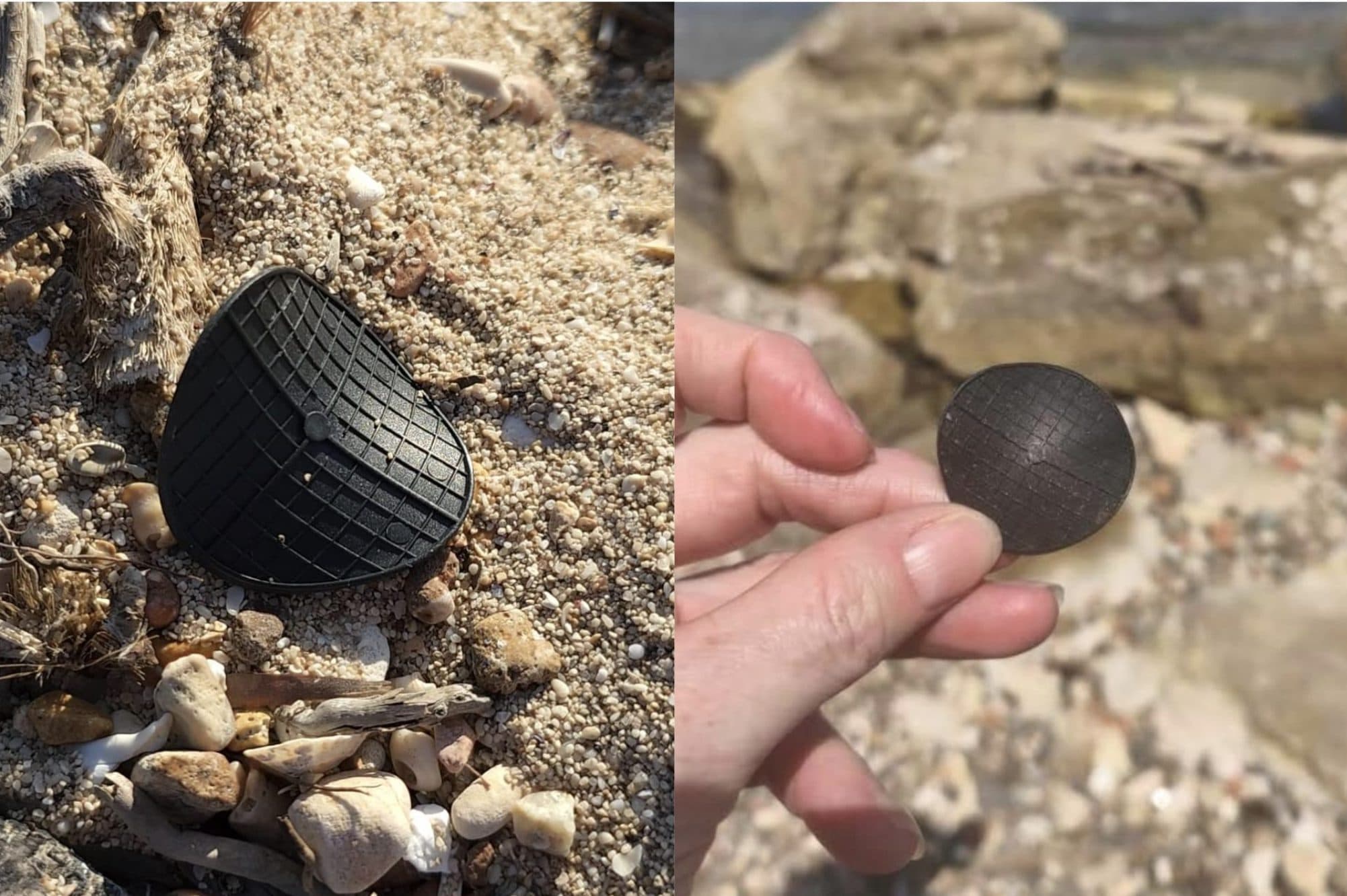
Are gods black plastic disks. They all have the same shape. They are not dishes. I am slightly inarcatedorders were some Pringles. The surface is not bass but covered by a lattice. In all likelihood you will have seen them too this summer, perhaps while you were on the beach. From January they have registered hundreds of sightings on all the coasts of Mar Adriaticor, of Ionian Sea And now also on Coasts of Sicily.
One of the first reports came from Instagram Archeoplasty profile. It is the social project created by Enzo Suma To document the history of plastic waste found on Italian beaches. Last June 16thin an interview with Fanpage, he had explained that everything had started since January:
“Starting from January we are observing the continuous arrival on the beach of thousands of small black plastic disks used as supports for biomass in some purification plants”.
Where the black disks in the shape of Pringles arrive from
Now there is some more certain news. These black disks would come from the Adige river, the river that was born in South Tyrol and flows into the Adriatic Sea. Not only that. They would be linked to one loss of a purifier which downloads precisely in this river. In fact, these disks he explained Riccardo Mancin of Palstic Free, they are technical components used in modern purifiers. But now there are also indications on what to do when we find them on the beach.
Studio reveals that every day we rail frightening quantities of microplastics, at home and by car: the risks
Where to send the black disks: the study of the Milan-Bicocca University
THE’Milan-Bicocca University has decided to open a study On these black black disks. The announcement was published on social networks byArcheoplasty account who explained all the steps to follow when these disks on the beach are found. The more material it will be sent, the more the study can be consistent.
The goal is to analyze how the material with which they are made It turns into the sea. The researchers will analyze the polluting substances that have absorbed, the alteration suffered in recent months and if they have released other contaminates.
If you find them on the beach and you want to participate in the study you can follow these four steps:
- Put them in a closed envelope
- Insert the date of the discovery
- Insert the place, better the coordinates
- Send everything to: Francesco Saliu, Ph.D. Disat – University of Milan-Bicocca. Piazza della Scienza 1 | 20126 Milan