
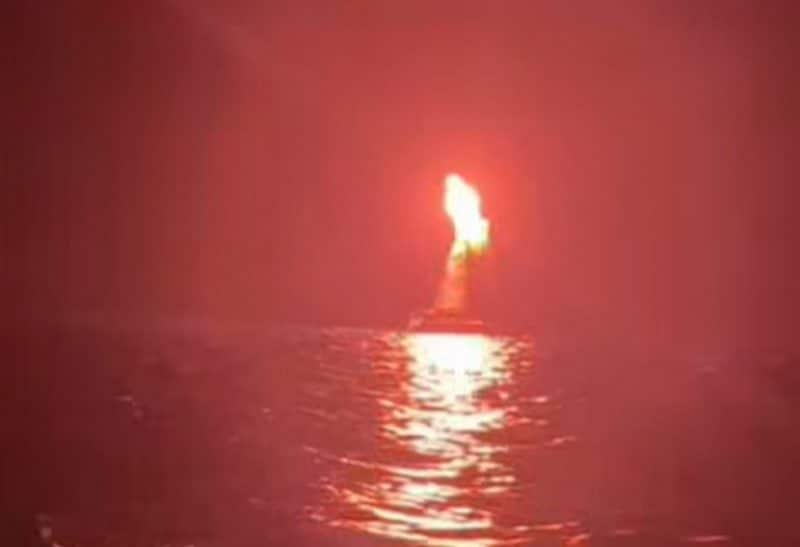
As also documented by the advance of Fanpage.it Saverio Tommasiwhich is located on board the ship Tomin the night between 23 and 24 September the Global Sumud Flotilla has been the subject of attacks with drones Durased several hours. Among the devices Raised by remote controlled aircraft there have also been so -called “sound bombs“, Which as the name suggests are able to produce a very strong roar. They are also known as stunning grenades, Flashbang and other related names.
Although they are explosive devices considered “not lethal”, If they explode very close to a person they can actually wound it seriously and potentially kill her. They also have power arsonist (also because of the intense heat released) and can cause damage through shock waves. Not surprisingly, following the attacks on tonight’s Flotilla, some boats from Italy, Poland and the United Kingdom have remained damaged; Among those most affected the ship Zephiro who lost the master tree and the ship Morgana. The sound bombs should not be confused with the sonic weaponslike those potentially used by the Serbian police during the events against the government and President Aleksandar Vucic.
The American Civil Liberties Unions Association (Aclu) in this document explains that sound bombs were originally developed in the 60s by the British Special Air Service, to simulate real explosive devices for themilitary training. In a short time the instructors realized that they could be effectively used for stun And disable The people, so they became standard equipment for the detectivefor example those specialized inanti -terrorism. In addition to the very strong roars, these devices can emit blinding flash (hence the name Flashbang) who favor the stunning and the disorientation of those who are invested. They can also instill sense of panic and do loss. In recent years the controversial use of these weapons has increased for the control of the crowds.
Instagram continues to obscure stories about Gaza, even if they are not sensitive content
As explained in the article “Sound Bombnology” published in the Scientific Magazine International Journal of Science, Engineering and Technology, these bombs generally produce sound waves “At extreme decibels levels, typically higher than 160 dB“, They can also produce shock waves” capable of causing physical damage, disorientation or inability “. The more significant non -lethal damage can be caused to the auditory system: the breaking of the eardrums And the permanent loss of hearing was documented among some of the people who were involved in these explosions. Shock waves can also throw people against solid objects causing various types of injuries (exploding on the bridge of a ship could make people finish in the water). The Aclu also reports respiratory and psychiatric consequences. Unlike the fragmentation grenadesthe Flashbang envelope in which the explosive mixtures It is designed to remain intact. Among the substances used they appear magnesium, aluminum And potassium nitrate.
According to the stories of the crews of the Global Sumud Flotilla, the heavy drones – without reports of reports – as well as with the aforementioned sound bombs attacked the ships by release also with other devices. Have been released stinging spray and other substances unidentified. Also report interference to radio communications. Fortunately, the attacks did not cause injuries, but due to the damage to the sails now the ships must proceed towards Gaza with diesel engines.
In light of the severity of these attacks, which occurred south of Crete (Greece) in international waters, the Italian government has sent the activists to support and defense the frigate of the Navy “Fasan“, Which is able to reject and break down drones. At the moment it is not known who are responsible for the attacks, but the suspicions focus on Israel. For now the approximately 40 boats of the Flotilla – which bring aid for the Palestinian population – navigate in international waters, but it is not clear what will happen when they enter those controlled by Jewish statewhere a naval block.