
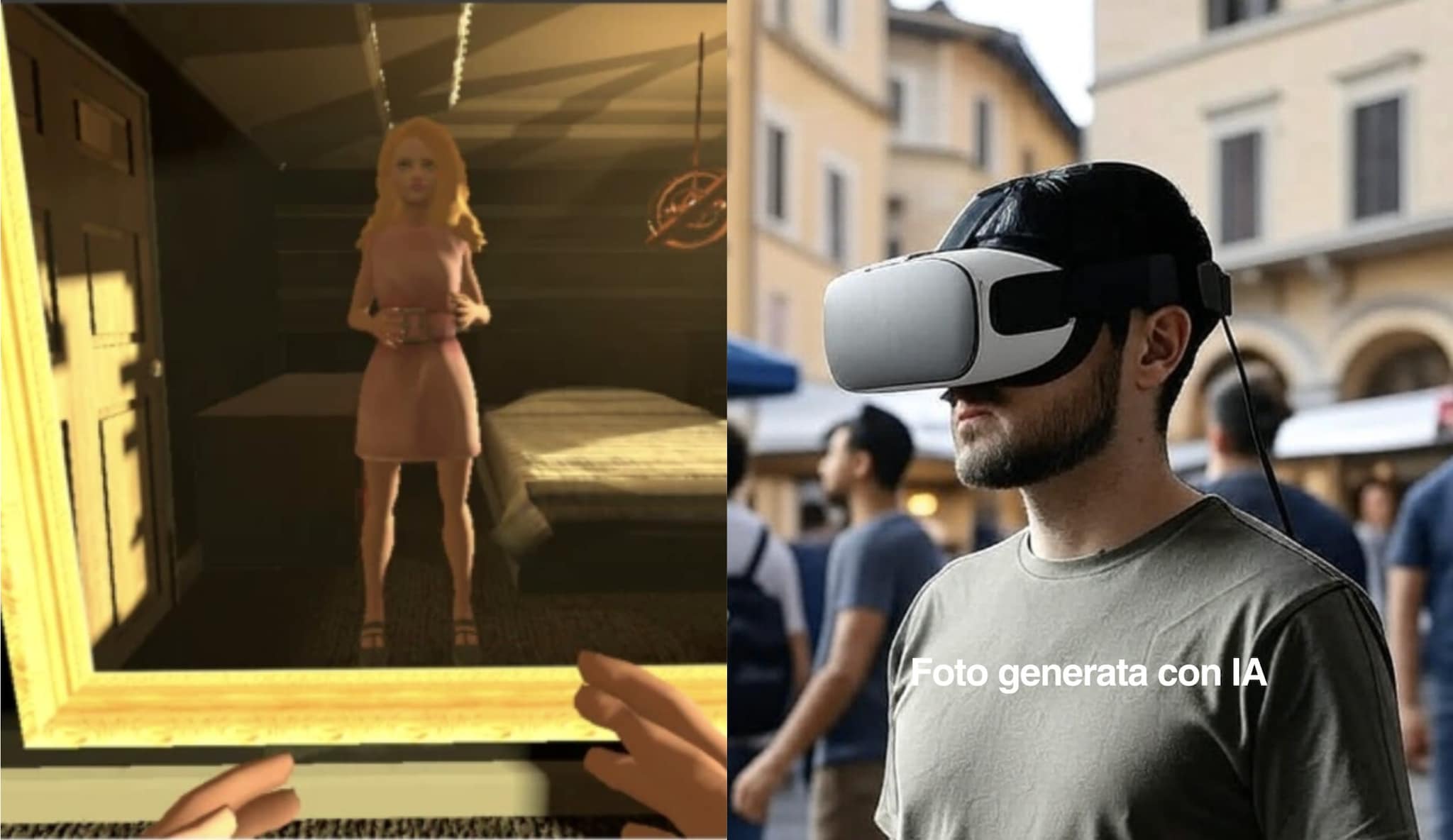
36 menaverage age 23 years old. Each of them was asked to wear a virtual reality headset and simply go through the whole virtual experience that had been prepared. Once worn they found themselves faced with a first scenethe same for everyone. They were in a bedroom and were watching everything with the eyes of a girl.
Thus begins the experiment conducted by the University of Bologna and the University of Messina, together with the Institute of Cognitive Sciences and Technologies of the CNR. The results were published in the journal Scientific Report. The title is Virtual embodiment increases male sensitivity to catcalling experiences. In short, virtual identification increases men’s sensitivity to catcalling experiences. If you want to learn more you can read the complete study on Nature.com.
How the experiment works
The subjects look at themselves in the mirror. They see their new avatar and get ready to go out. At this point a second part of the virtual experience begins, the subjects immerse themselves in another environment, a metro stop where there are Three men. A new virtual experience that however not the same for everyone.
Why the Mia Moglie group had so many members, the psychologist: “It’s not perversion, the point is power”
Nothing happens to a test group. Men interact with the avatar with few questions, just times and stops. Neutral sentences. With another group, however, the virtual experience includes harassment. Phrases, we read from the study, extracted from “typical expressions of Italian catcalling”. Only one subject reacted by attacking the male avatars. The others preferred to remain silent or walk away.
The results: what the subjects involved felt
According to the study the test results they were clear. From the analyzes done after the experiment, the men who underwent the virtual experience with catcalling experienced “feelings of anger and disgust, emotions frequently associated with moral disapprovalNot only that, there is also one more fact.
The strongest effects were recorded in subjects who had a highest level of identification in the virtual experience. The more they felt themselves, the more they were affected by the harassment: “A significant correlation emerged between the intensity of these emotions and the subjective sense of virtual embodiment.”