
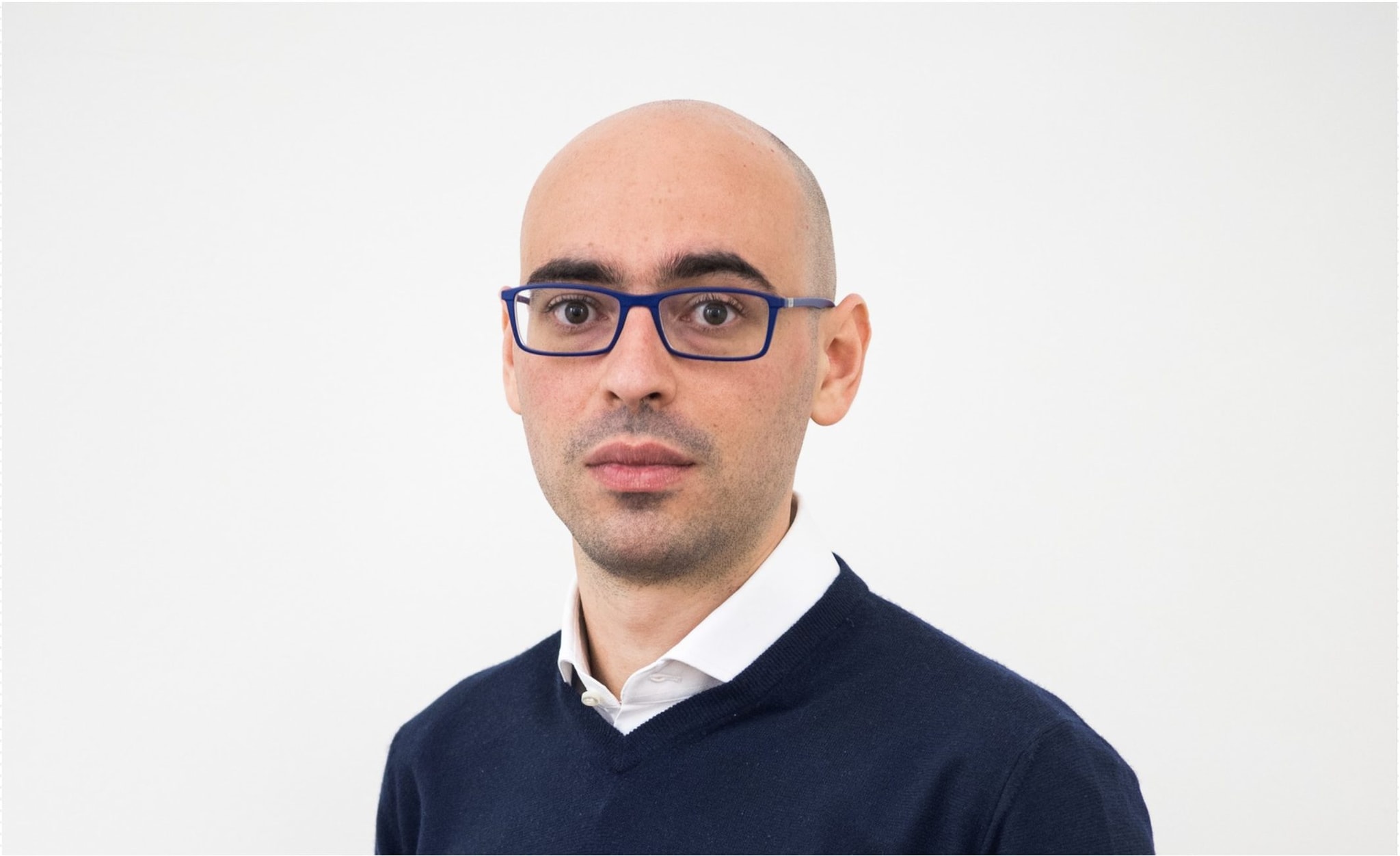
“Do like Aranzulla”. For years the advice given to those who write texts for the web it was more or less the same. “Explain each step well. Use the key words many times. Repeat the same concept but in a different way.” Anything to appear between the first Google results. Now they are suggestions that seem to come from digital jurassic. The explosion of content on social media and the arrival of artificial intelligence are redesigning the internet and also our way of staying above it. And they are changing too Aranzulla.it.
Salvatore Aranzullaborn in 1990, began publishing texts on the web in 2003 when he turned his newsletter into a blog. It’s information that now everyone can learn from Wikipediawhich is not to be taken for granted. For about nine years his page on the online encyclopedia was deleted. According to some users it did not respect the “criteria of encyclopedicity”. Yes, that’s what they say even though it’s terrible to write.
Salvatore Aranzulla’s site is one of the most interesting examples of what’s happening to the internet. If we all use only ChatGPT, what will happen to the texts that have been accumulated online for years? They are not books. Don’t just leave them on a shelf. They need updated sites, servers to host, someone who pays to keep them active and therefore also someone who makes money from it. We talked about it directly with him.
16-year-old boy commits suicide, the family accuses ChatGPT: “They lowered their defenses”
In the fall of 2022 the general public discovered ChatGPT. How is the internet changing?
I’ll make a little introduction. For us it is obvious, but perhaps not for the readers. There is an implicit pact between Google and those who publish texts on the internet. The publishers, let’s say. You provide free content and Google drives traffic to your site. The profit? You can monetize from advertisements around this content. Or you can go the affiliate link route, but that’s another matter.
It is the art of SEO, that set of practices that optimize content to make it appear in the first Google results.
Here you are. Now that’s changing. Ask Google which smartphone is the best, perhaps including Aranzulla in the keywords, and instead of making you go to my site you will find a text made by reworking my evaluations or those of my collaborators. And this is bad for us.
What is the result?
It’s clear. At the moment, editorial sites in Italy are facing a contraction in traffic. Consider that for Aranzulla.it we are talking about 25% less. There are those who have had more marked contractions and those who suffer less because they can count on a different community.
The searches also moved to social media.
I also have things I look for on TikTok, like recipes or exercises to do in the gym.
Haven’t you ever thought about moving onto the video part?
But it doesn’t work for everything. Content related to technology lends itself better to the written form. Keep the text to one side and then perform the steps with your smartphone in your hand or in another card. Not to mention that the texts can always be updated, with videos it is more difficult.
The path taken by Google seems clear. The work on Gemini, AI Overview and now theAI Mode for research.
In the long run, this contraction in traffic translates into a contraction in revenues. If you generate less traffic then you also sell less advertising. And if you have less advertising you no longer have money to pay your collaborators or those who write the content. 45 people work for Aranzulla.it.
Are you thinking of closing?
We are currently standing. It’s a streamlined structure. We do not have an office, the collaborators are freelance and work from home. The impact will be more evident for more structured publishers. But I look at the perspective. We cannot continue to produce content for a system that doesn’t pay.
If the system no longer works, do you already have in mind what to do next?
The problem isn’t for me. If we close, amen. I will live off the money I have accumulated over the last 20 years.
Are they enough?
I have always put aside what I earned. I don’t spend money on clothes, I walk around with an iPhone and an AppleWatch from a few generations ago. I have a beautiful house, it’s true. I wanted it to be beautiful because I spend many hours working on it. I studied Economics and Management at Bocconi: I learned to manage money with investments. Nothing risky, all very linear financial products.
So who is the problem for?
The problem is for my collaborators, and in general for the authors or journalists who work in this economy. It’s incredible that no one has thought about protecting this market. I mean both at a government level and at a European level. The artificial intelligence systems before us were built without taking copyright into account. I saw that something is moving now but I’m afraid it’s too late.
To provide answers, the algorithms must take information from the sites. Isn’t it possible to find a way to charge for these accesses?
There are already artificial intelligence models based on this idea. Accesses are monitored and a sum is paid for each access package. It is an ideal solution, also because maintaining a site has its costs and if bots go there instead of people the mechanism is not profitable. I spend to keep a server active which is then not visited by real users. Instead of gaining, I lose.
Why aren’t such mechanisms applied?
The point is that artificial intelligence companies must agree. And they also have to agree quickly. As long as only ChatGPT refuses and everything skips. But these are companies born ignoring copyright.
What about Google’s business? Their revenues also come from advertisements on the sites.
I don’t expect a decline in Google’s revenues. Many AI-related features are now free. For others, however, you have to pay. But they can always decide to insert advertising directly into the answers.
One might ask: but ultimately, what changes for users?
For now, artificial intelligence is providing updated answers based on the content it can find on the internet. If no one is interested in producing that content anymore, on what basis will those answers be given?
So will AIs start responding randomly?
Not only that. They risk being influenced by advertisers. From those who pay publishers to create content where only their products are advertised. We really risk a loss of quality. In the end, when we ask “What is the best smartphone” we will find the answer to be the model of the company that paid the most to be positioned.