
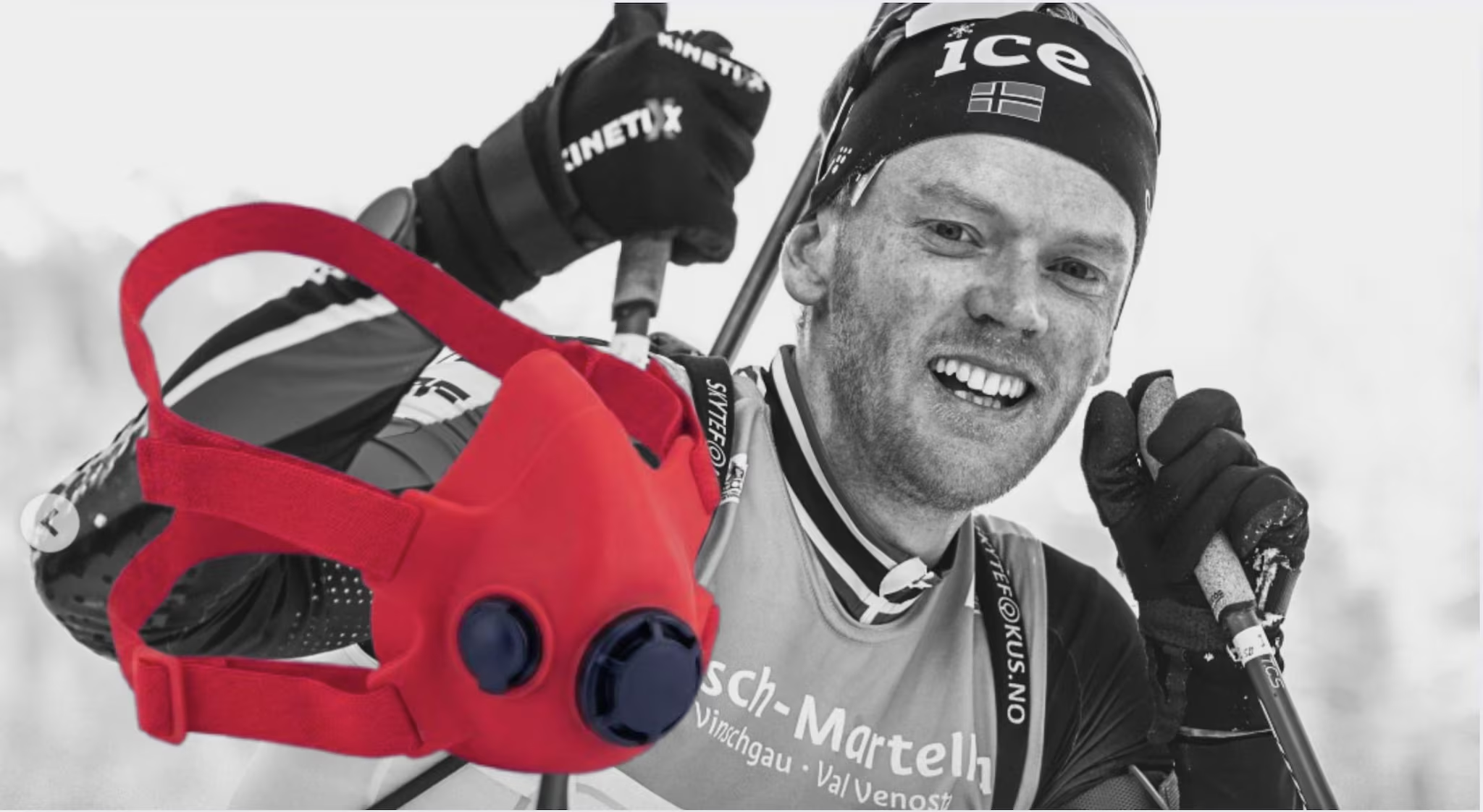
Hypoxia is a condition known to those who practice high altitude mountaineering. Sometimes the symptoms are already felt above 2,500 meters but in most cases between 3,000 and 3,500 meters that the first problems are felt. Nausea, insomnia, difficulty recovering from efforts and a sense of tiredness. In more serious cases: pulmonary edema. Hypoxia is the lack of oxygen and masks now exist for replicate this condition.
On the night of December 22, Silvert Bakken died. 27 years old, Norwegian, Bakken was a biathlon athlete and was in retreat in Italy. Specifically, he slept inDolomiti Hotel at Passo di Lavazèin Trentino. Bakken was preparing for the Milan – Cortina Olympics which will begin next February. From the first analyzes it seems that death is occurred during the nightwhile Bakken wore a hypoxic mask.
A link between the Bakken death and the hypoxic mask. Furthermore, Bakken had also suffered from in the past pericarditis and had to interrupt his career as an athlete. And, let’s specify, we are talking about a device that is not considered doping. It’s not even difficult to recover. They can easily be found on Amazon devices starting from 40 euros. You can also find it with the acronym ETM, Elevation Training Mask.
He drank eight energy drinks a day then the stroke at 50, the doctors: “Three times the permitted caffeine”
How the hypoxic mask works
The mask has fairly simple mechanism. In fact, thanks to a series of filters and valves, it reduces the entry of oxygen into our respiratory system. Depending on the models, oxygen levels should decrease between 6 and 10 times. The mask can be used both during training, to simulate effort at altitude, and at rest, to simulate a acclimatization at high altitude.
But what are the effects? Despite the announcements of those who sell these devices, scientific studies are more cautious. At least the ones that have emerged so far. One much cited in these hours dates back to 2016 and is entitled Effect of Wearing the Elevation Training Mask on Aerobic Capacity, Lung Function, and Hematological Variables.
Here they were studied 24 subjects averagely trained. All underwent a long high-intensity training cycle six weeks. One part with the hypoxic mask, one part without. At the end of the analyses, it was found that the group with the mask Not recorded conditions comparable to a high altitude trainingeven if some values actually are change:
“Wearing the ETM while participating in a 6-week high-intensity cycle ergometer training program does not appear to act as an altitude simulator, but rather as a respiratory muscle training device.”