
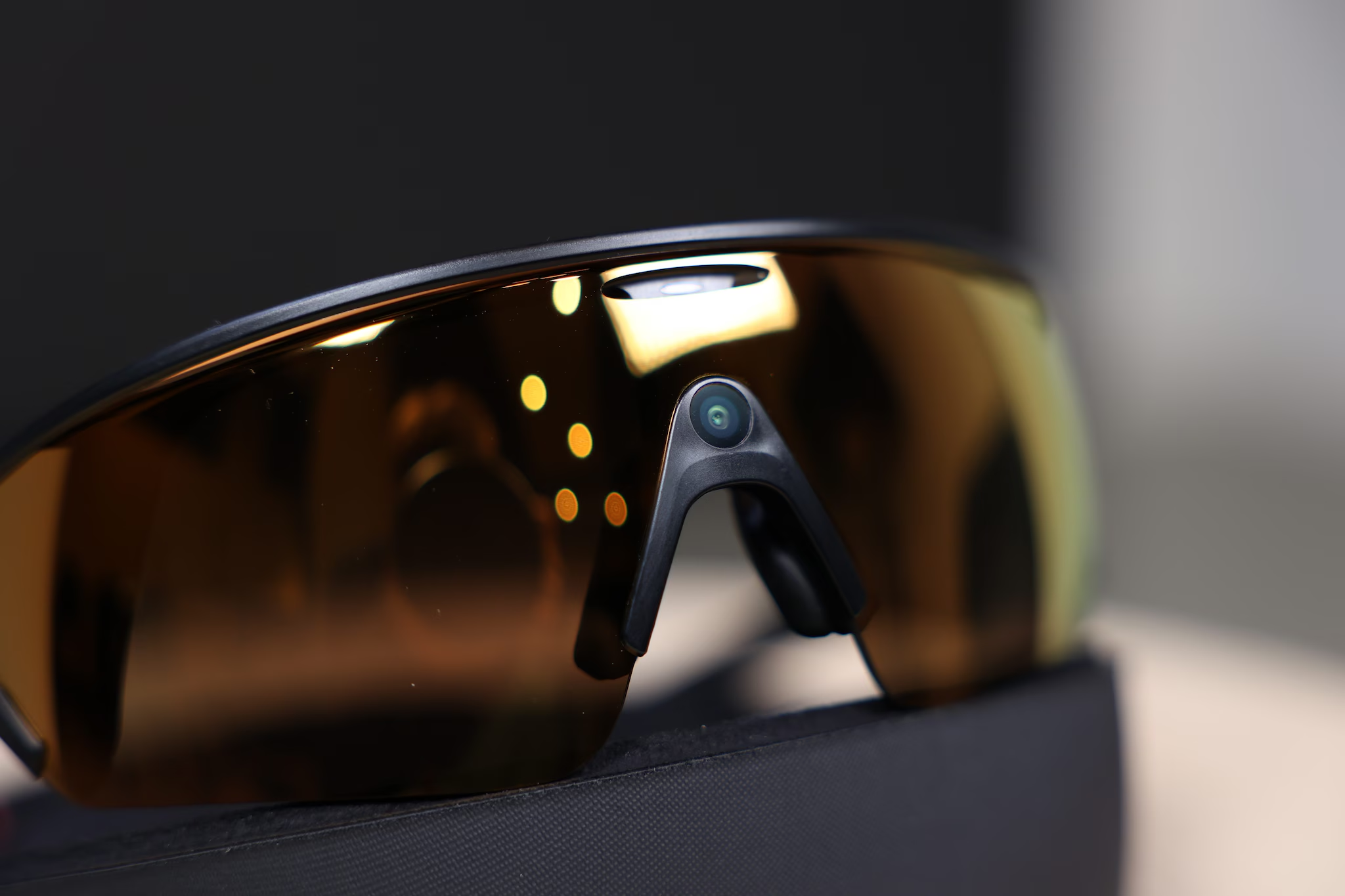
In jargon they are the eyeglasses fast. Wide, mirrored lenses. They are used for sport or if you like the genre to go dancing. If it works for you as a look even for going shopping. Oakley launched a pair of sports glasses in collaboration with Meta. The official nomenclature is Oakley Meta Vanguard. The project is always part of collaboration between Meta and the Luxottica group.
Smart glasses are one of the experiments that Meta is working on. The starting hypothesis is enough clear. Looking at what we wear every day, what can become smarter? About ten years ago the answer was simple: the watches.
After smartwatches, attention has shifted towards rings. And after him smart ring now the falling point for the tech industry seems to have become the eyeglasses. Of course, Google had already tried it in 2013 with i Google Glass and it didn’t go well: today, however, technology has changed.
Mega leak Apple previews 2026-2027 products: from foldable iPhones to secret devices
How Meta Vanguards are made
With these glasses Oakley has a precise target. The difficult thing about working on smart glasses is convincing who He does not have an eye prescription to put them on. And this is still a limit for the market. The Meta Vanguards are in fact accessories, designed forsporting activity. And they are aimed precisely at those who already use this type of lenses. The main uses are intended for running and cycling. Cost: 549 euros.
When turned off, the Meta Vanguards are de facto gods sunglasses. Specifically, they are Oakley Prizm lenses, with filters designed to improve the contrast level of what we see. Once turned on, they become de facto smart glasses. Charging is done as if they were a pair of bluetooth headphones. Just keep them in their homes. The three characteristics that make these smart glasses I am: camera, speaker And connection with Meta TO THE.
The speakers are not bone conduction: it’s like having two chests in the wands which emit very directed audio. The technical definition is open ear. The camera instead is placed on center of the lenses: it is a wide angle from 12 MP capable of shooting at 3K resolution. The glasses then connect directly to the proprietary app and so are able to take advantage of it too Meta AIthe artificial intelligence developed by Meta. Vanguards are also integrated with Garmin And Strava to record data to then share with apps.
The Meta Vanguard test: trekking
We tried the Meta Vanguard in a trekking. Specifically on the path that goes from Sources of Gajum al SEV refugein the mountains near Lecco. After a couple of hours uphill the best feature of these glasses becomes clear: it is the audio. The speakers with open-ear technology allow you to listen to music, podcasts or make calls while still listening to the surrounding audio.
It’s a great feature in case of danger. If you use them for running in the city or for cycling on the street there is no risk of isolating yourself. Can you hear the hornthe warning screams, the cars arriving and in general all the signals that are cut by the headphones that have one too clear noise cancellation.

The camera has a good qualityeven if the definition comes to 12 MP. It is convenient for taking photos or short videos when we don’t intend to take the smartphone or when we have gloves. Perhaps certain sports are better suited to using it than others. It’s unlikely you’ll want to take a video while running in the park, more likely you’ll want to film it instead a jump with a snowboard. Just a note: watch your hair, if you don’t want to find it in the frame you’d better move them.
The connection with Meta AI works well. It can be useful if you need simple information such as forecasts, return train times or geological curiosities about the formation of the mountains around you. For slightly more complex tasks it struggles a little more.

The new Meta Ray-Ban Display options
The most advanced model, at least from a technological point of view, of the collaboration between Meta and Luxottica are the Ray-Ban Display. These are the glasses presented last September which also have the smart options possibility of projecting texts and images inside the lens. Technically we are talking about a head-up display. To navigate within this small screen use the Neural Banda band worn on the wrist that records the tendon movements.
The function was also added in the latest update Teleprompter: we can view texts on the lens that scroll as we speak. Good option for presentations. Not only that. An option has also been added EMG writing. Instead of dictating a text to be written or sent via message we can draw the letters with one finger on any surface. We tried this option at Ces in Las Vegas. It works: even with different proofs, both in italics and block letters.
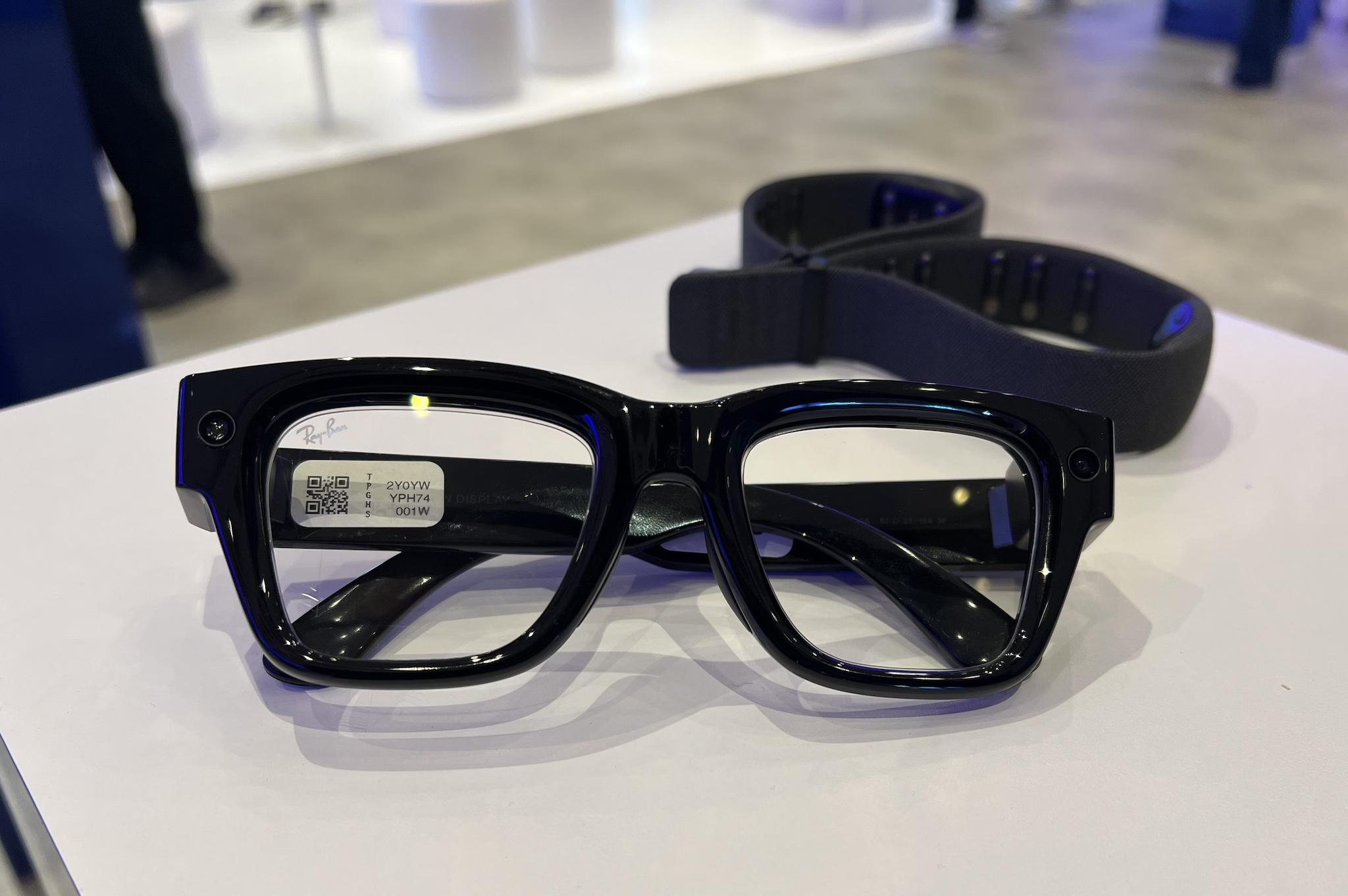
Certain. The unknown still remains regarding its use. Will all these features be enough to convince us to leave our smartphones in our pockets? In Italy, and throughout the European market, it will still take some time to answer this question. There is currently no official launch date yet. The explanation is that demand is high but stocks are limited. Before Europe it will be necessary to absorb the orders in the United States.