
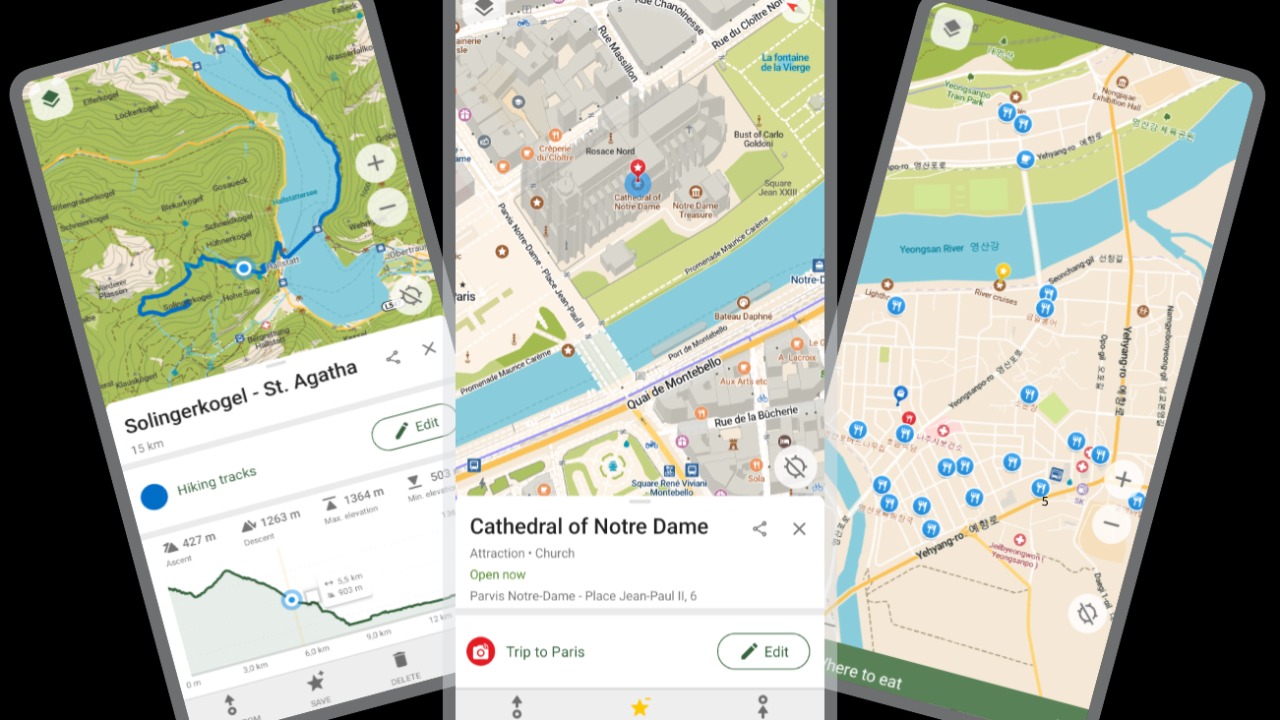
CalyxOS has replaced Organic Maps (which we talked about just a few days ago) with CoMaps as a pre-installed navigation app starting from May 2026. The move consolidates a project born just a year earlier from an internal fracture in the open source map community, which is now trying to carve out a stable space for itself among the real alternatives to Google Maps.
CoMaps is a free and open source navigation applicationavailable on Android, iOS, macOS and Linux, built as a fork of Organic Maps and Maps.me. It draws on OpenStreetMap data to offer maps that can be downloaded offline, with address searches and route calculations that work even without a data connection, designed for those who walk, cycle or drive in areas without mobile coverage.
The project was born from an internal rift within Organic Maps. In April 2025 a group of historic collaborators sent an open letter to the company’s shareholders, denouncing problems of governance and transparency linked to the risk that the profit of the shareholders would end up prevailing over the interests of the community. Faced with a response deemed insufficient, those same developers started CoMaps as an independent project.
CoMaps: even more verified privacy and reduced consumption
The first releases arrived quickly: an Android preview on Codeberg in early June 2025, release on F-Droid on June 19, and debut on Google Play and App Store on July 3rd of the same year. The code, written in C++ for the core and in Java and Swift for the respective mobile platforms, is distributed under the Apache 2.0 license.
On the privacy front, the developers claim the total absence of user identification, tracking and data collection, a promise subjected to independent verification by Exodusan organization that analyzes mobile app permissions and trackers. The declared energy consumption is lower than the most popular navigation apps, a detail that is not secondary for those who use it on long journeys by bicycle or on foot far from a power socket.
The model remains community: anyone can add points of interest on OpenStreetMap, report bugs or contribute code to the repository hosted on Codeberg. Economic management passes through donations, while the project is formalizing a legal status as a non-profit organization under the fiscal umbrella of Open Collective.
Staying off Google and Apple’s radar comes at a price: map updates linked to the pace of OpenStreetMap, a less refined interface than commercial apps and economic sustainability entrusted to the generosity of those who download the app. The choice of CalyxOS, the Android operating system designed for those who give up Google services, however remains a sign that a public willing to give up some comfort in exchange for more control over their data exists, and is growing.