

Today more and more creators create freehand videowithout crew, complex stands or traditional and super expensive cinematographic equipment. It is a typical approach of vlogs, dynamic reports, social content, travel videos, backstage, reviews and personal storytelling, where the person filming is often also the protagonist, operator and editor at the same time. In these contexts, tools are needed
light, quick to use and capable of guaranteeing high quality even on the move.
Many people use smartphones, of course, it’s undeniable. They are there though
enormous differences and not just qualitative ones
in opting for something much more advanced. Let’s talk about
level of control, overall and optical quality, as well as creative flexibility that is achieved in more complex real-world conditions
. For fast creators, TikTok and the like, light vlogs or everyday content, the top of the line phones are definitely effective. However, a full-frame mirrorless camera changes completely
the potential on a technical scale
. The sensor
much bigger
allows for better performance
low light, a natural depth of field and a vastly superior dynamic range
i.e. more detail in highlights and shadows. Try taking a shot at night or in low light and with zoom using a smartphone, as expensive as you like. But it is only one of the critical issues.
The main needs of this type of creator are effective stabilization, reliable autofocus, operational simplicity and flexible video formats for social media and different platforms. A camera dedicated to this use must therefore allow smooth shooting
without bulky gimbalsfast shot management, good performance in variable conditions and streamlined workflows for quickly recording, editing and publishing. This is precisely the segment that Canon is aiming for with the new one
EOS R6 V and the RF 20-50mm F4 L IS USM PZ power zoom system.
Canon EOS R6 V
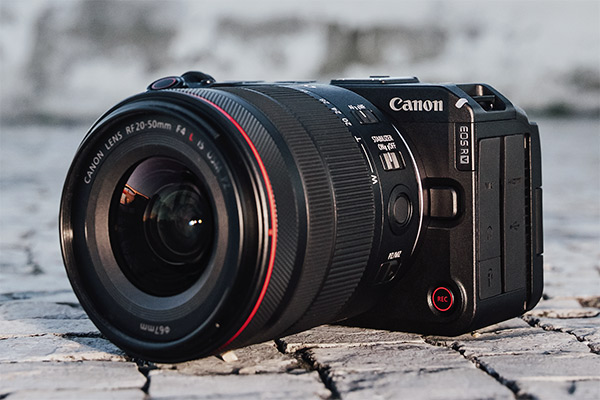
The EOS R6 V is a video-oriented compact camera, with internal stabilization up to 7.5 stops7K 60p RAW recording, 4K oversampled up to 60p and 4K 120p slow motion without cropping. Support
Open Gate, 4K streaming via USB-Cvertical recording (with side tripod mount and rotation of controls on the display), active cooling and Dual Pixel CMOS AF II autofocus
with advanced tracking of people, animals and vehicles. It also includes advanced photography features with sensor from
32.5 MP and burst up to 40 fps.
In fact it is the most compact full-frame mirrorless camera ever created by Canonwith well 12 keys customizable. EOS R6 V records up to RAW 7K, Open Gatewith advanced slow motion and formats
very flexible for color grading and professional post-productionwhich on smartphones remains more limited or heavily processed via software. Without obviously neglecting the optics. With the new Canon RF 20-50mm F4 L IS USM PCS you have a smooth motorized zoom, professional autofocus, combined stabilization and real control of the shot without depending on digital crops or computational zooms. A camera of this type is designed for more structured productions: long recordings without overheating, multi-channel audio, dual cards, professional accessories, external monitors, stable 4K streaming and immediate manual controls.
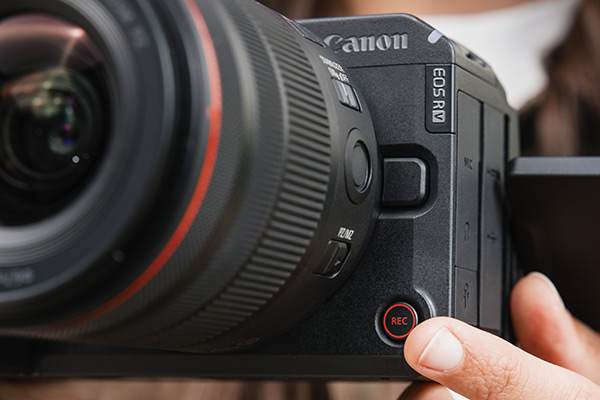
From a technical point of view, the Canon EOS R6 V is a full-frame mirrorless designed with a strong video priority, as we have already said. Integrate
5-axis IBIS stabilization up to 7.5 stopsespecially useful in handheld shooting, and supports recording
RAW 7K up to 60 fps, 4K oversampled from 7K up to 60p and 4K 120p slow motion without cropping. Canon also places great emphasis on flexibility in post-production thanks to Open Gate recording, which uses the entire surface of the sensor, allowing you to subsequently crop vertical or horizontal content from the same clip. The Dual Pixel CMOS AF II system with intelligent tracking recognizes people, eyes, animals and vehicles, while active cooling allows for prolonged video sessions without the thermal limitations that many are unfortunately familiar with. On the operational side we find dual SD slot4K UVC streaming via USB-C, audio recording a
four channels and physical controls designed explicitly for solo users, including buttons
Front REC and vertical attack for social content.
Canon RF 20-50mm F4 L IS USM PCS
The new Canon RF 20-50mm F4 L IS USM PZ is also clearly oriented towards hybrid video. It’s about the
first L-series full-frame RF lens with integrated power zoomthat is, an internal motorized zoom that allows
Smooth, controlled transitions without external accessories. The zoom ring can function both as a servo zoom for continuous kinematic movements, and as a “by-wire” manual electronic control for more precise adjustments. The 20-50 mm excursion favors wide focal lengths ideal for vlogs, interiors and close-up handheld shots, while the constant f/4 aperture maintains uniform exposure throughout the zoom, as well as guaranteeing a pleasant and present blur (we are on full-frame, f/4 already does great things in this sense).
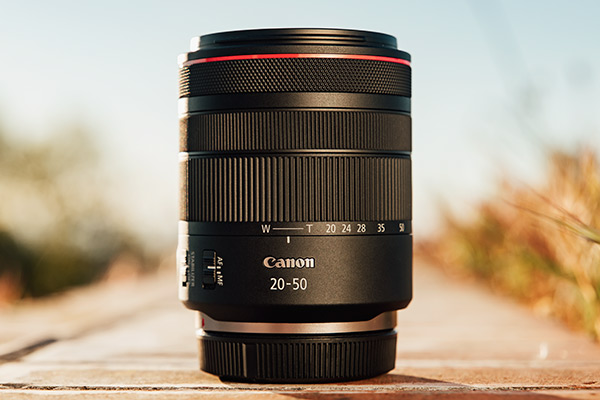
The lens integrates N autofocusfast and silent USM anusfocus breathing suppression to avoid visible changes in the frame during focusing and optical stabilization up to 6 stops, which can reach up to
8 stops when combined with the EOS R6 V’s IBIS. Despite the L-series construction, it remains relatively light at 420 grams, an important feature for handheld setups and compact gimbals.
* * *
In the Canon EOS R6 V segment the main competitors are hybrid full-frame mirrorless cameras aimed at advanced video creators. The most direct rival is probably Sony A7S III, much loved in the video world for autofocus, high ISO performance and professional workflow, even if it has “only” 12 MP on the photo side. Above in resolution but very close in philosophy is the Sony A7 IV, which remains one of the references for independent creators and videomakers thanks to the good balance between photography and advanced 4K video. At Panasonic, the natural competitor is Panasonic Lumix S5 II, appreciated for excellent stabilization, professional video functions and aggressive price, while Nikon Z6 III focuses on a very hybrid approach with excellent AF performance and advanced RAW video.

On the lens front, the new Canon RF 20-50mm F4 L IS USM PZ enters a segment that is still relatively
not crowdedbecause there aren’t many full-frame power zoom lenses designed specifically for creators and handheld videos. The closest competitors are some Sony motorized zooms from the PZ series such as the Sony FE PZ 16-35mm F4 G, widely used by video makers and creators for professional gimbals and vlogs, or Panasonic hybrid video lenses such as the Panasonic Lumix S 28-200mm F4-7.1 Macro OIS and the new compact zooms designed for the Lumix S system. However, Canon
it differs due to the very close integration between the EOS R6 V body and internal motorized zoomwith
dedicated controls directly on the cameraclearly aiming for a “plug and play” creator ecosystem that is simpler than traditional video solutions.
EOS R6 V will arrive at the end of June 2026 for €2,619.99, while the new 20-50mm will cost €1,569.99. We will try to have a test kit because this way, on paper and without being able to test it well and for a certain period of time, any consideration on prices collapses. It’s impossible to dare say “it’s a lot, it’s not much” without a proper test. What is certain is that Canon offers a lot of substance and a lens that promises sparks and the competition certainly does not have prices that are very different from these.