
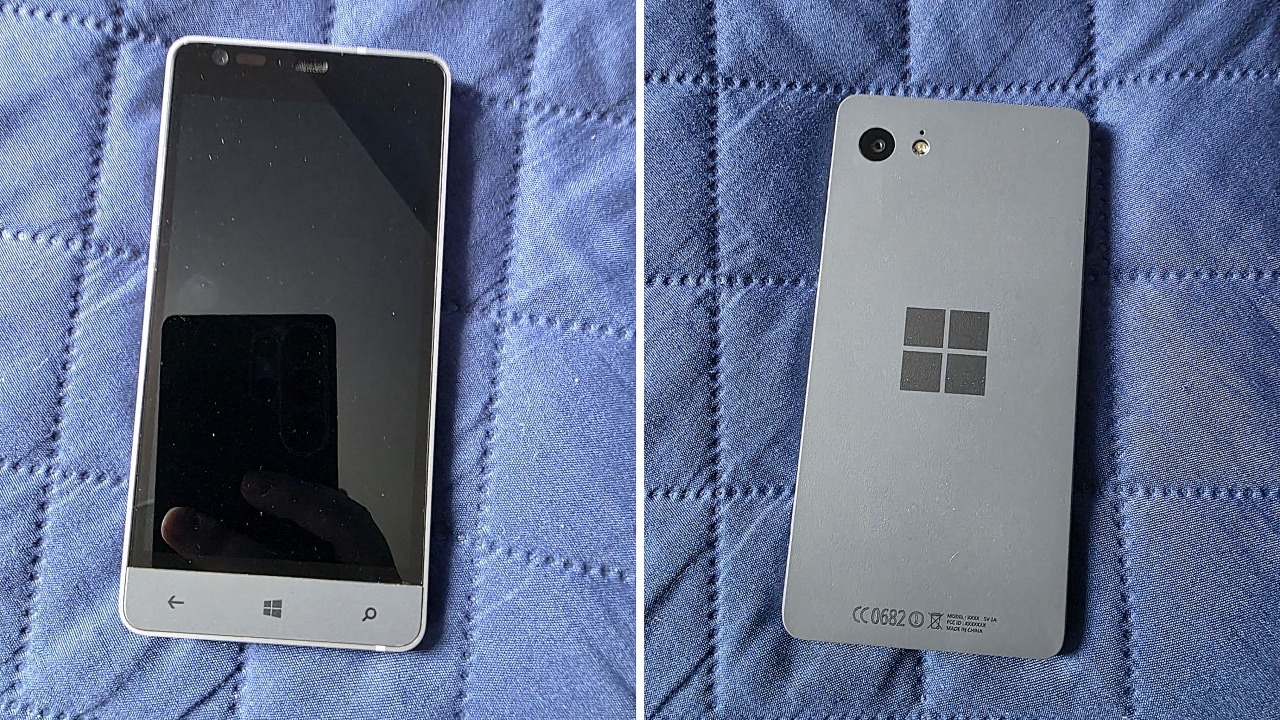
Microsoft developed a prototype metal-shell smartphone in late 2013 and early 2014, shortly before completing its acquisition of Nokia’s mobile division. The device, perhaps known internally by the code name Raven, displays a close aesthetic relationship with the tablets of the time and it has recently re-emerged through a series of photographs that document its real functioning in the field.
The images reveal a fully operational terminal based on a preliminary build of Windows Phone 8.1 dated September 2013. On a technical level, the device integrates a display with 720p resolution, a Qualcomm processor and the Microsoft logo embossed on the back. The satin aluminum body directly recalls the finish seen on Surface 2, confirming the Redmond company’s intention to extend the proprietary hardware to the telephone sector before definitively turning to the Lumia series devices.
The construction of “Raven” highlights engineering choices typical of the Windows Phone 8 era. In addition to the classic three capacitive keys dedicated to navigation positioned under the screen, the frame contains separate physical buttons for adjusting the volume, a power button located on the top edge and a physical selector for activating the camera. The scope of delivery includes one micro-USB port for charging, the input for the 3.5 mm jack and the slot for the SIM card, elements which confirm that the device was a functional unit ready for laboratory tests.
The Surface that never was: strategic reorganization and legacy
The stop to the development of the terminal occurred in conjunction with the negotiations for the acquisition of Nokia’s devices division, completed during 2014. At that historical moment, Microsoft chose to converge its resources on the Lumiapausing internally engineered variants under the Surface Phone brand. Raven’s architecture is part of a period of strong experimentation for the Redmond giant, which was also evaluating concepts focused exclusively on data traffic and call management via Skype.
The vision of a Surface-branded phone materialized on the market only years later with Surface Duo, a dual-display device born in 2016 and released on the market in 2020 with the Android system. The images of the canceled prototype document the transition phase experienced by the company before scaling back its ambitions in the smartphone sectorand offer a concrete vision of how the Windows Phone ecosystem could have evolved.