
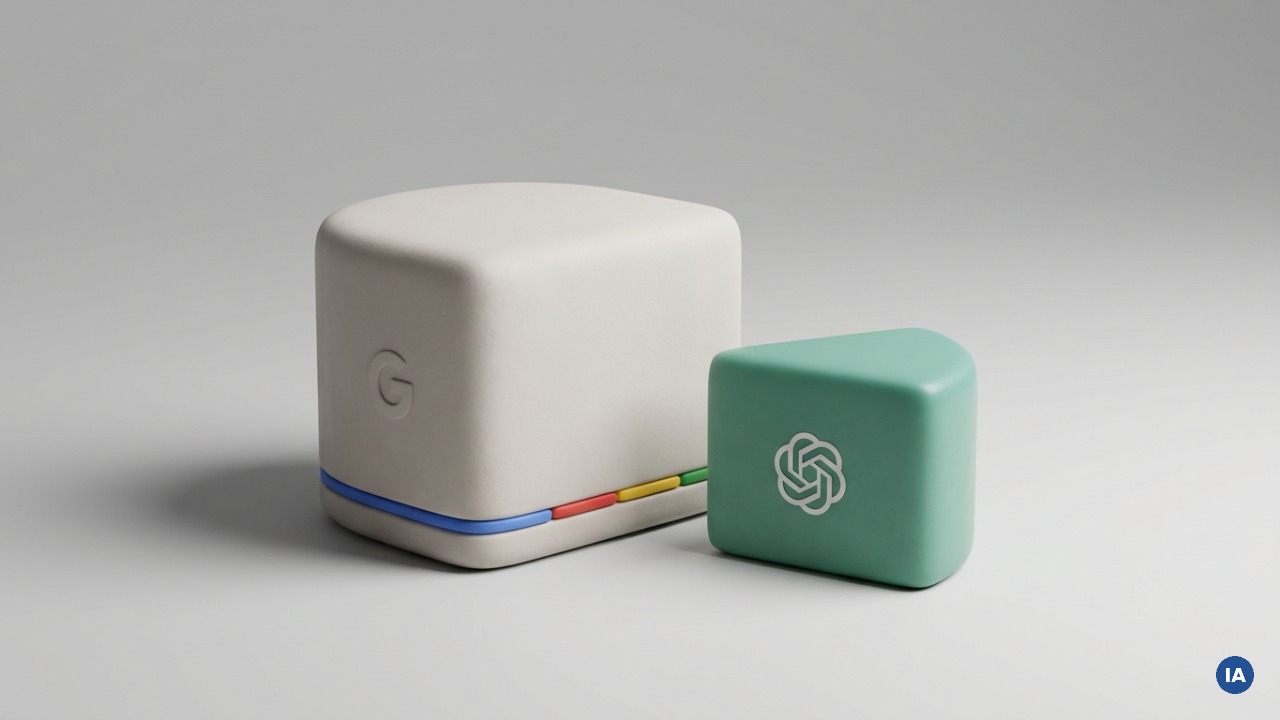
OpenAI stated that ChatGPT has reached a volume of searches equal to approximately 20% of that managed by Google Search. This was confirmed by Adam Fry, head of the chatbot’s consumer product, during a meeting with the press organized in New York on November 3rd.
Fry explained that OpenAI considers any prompt that generates web navigation to be a “search,” excluding simple definitions or quick instructions: “any time you ask a question and go and search the web, that’s a search,” he said. An elastic definition, which leaves a lot of room for interpretation, given that the company has not specified where the comparison data on Google comes from.
The historical comparison helps to understand the significance of the figure. When Microsoft CEO Satya Nadella testified in 2023 at Google’s antitrust trial, he admitted that Bing, after more than a decade of trying, it had not gone beyond 3% share in the search market. If Fry’s numbers were confirmed, ChatGPT in just two years it would have eroded a market share never achieved by any of Google’s historic competitors.
Growing users, expanding advertising
During the same meeting, Fry shared more data on the product’s growth: weekly active users went from 1 billion to 1.2 billion in just 60 dayswith around 100 million new subscribers every month. Voice mode has 250 million users per week, while image generation reaches 1.5 billion creations weekly.
On the advertising front, Fry made no secret of the company’s ambitions: “The advertising did not have a negative impact on the product or its use”he said, adding that “most people don’t seem to have a problem with the ads.” Words that sound like an opening to further expansion of sponsored spaces, just as OpenAI evaluates a possible IPO for the beginning of next year. Not surprisingly, last month the company began showing images of sponsored products in ChatGPT responses, going beyond simply referring to a company’s name, logo and link.
Fry also talked about personalization, claiming that users “really love” ChatGPT’s ability to understand the context of requests over time. And he anticipated the future direction of the product: an increasingly visual and interactive interface, which the company internally calls “Intelligent UI”. “That’s where the future of this technology goes. You’re talking to a canvas,” he said.
The fact remains that the 20% figure is a number provided by OpenAI without a verifiable source on the Google side and with a tailor-made definition of “research”. But you only need to look at Google’s push on AI Overview and AI Mode, and its own admission of “lower monetization” due to artificial intelligence in Search, to understand that in Mountain View the threat is taken seriously, regardless of how precise the mathematics behind that 20% is.