
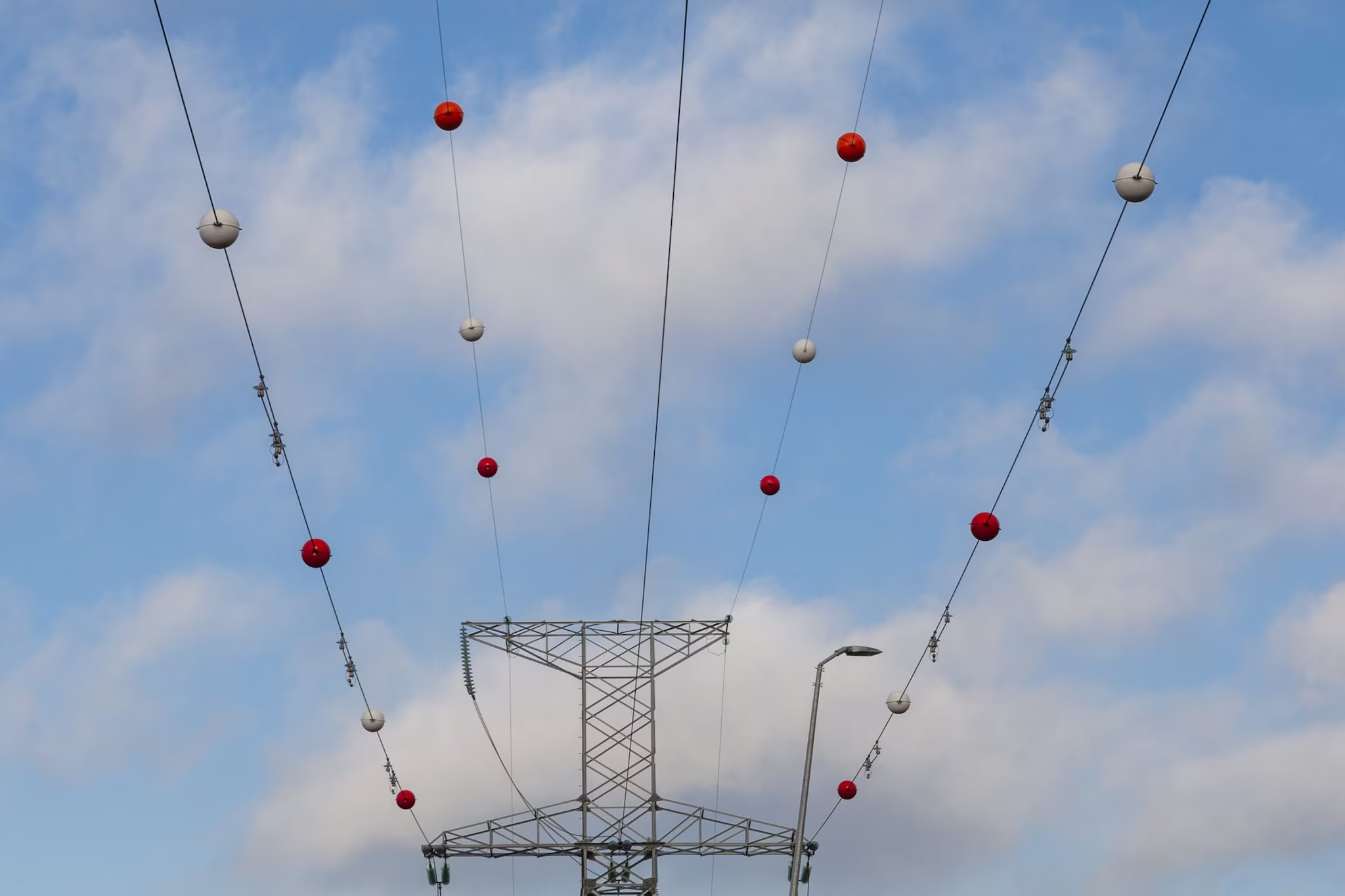
THE overhead electrical cables of the average andhigh voltage – those supported by imposing pylons – are often accompanied by adults colored ballsclearly visible from the ground. They generally are white, red or white and red, but in various countries they can also be installed in colour orange (the classic “International Danger Orange”) o yellow. These spheres they are a rather common presence along the highways that flank the mountains, but they can also be seen close to urban contexts. So what are these large balls that “grasp” the cables of power lines? Technically they are gods aerial cable indicators (aerial marker balls or power line marker balls in english) and have a very specific purpose: they serve to make the cables clearly visible to people pilots That they fly at low altitude. Simply put, I am a security system to avoid plane crashes. It is therefore no surprise that these spherical devices are installed on overhead cables located near the airportsbut also on those that stand out over water or mountain ranges, which make it difficult for pilots to discern the cables from the background.
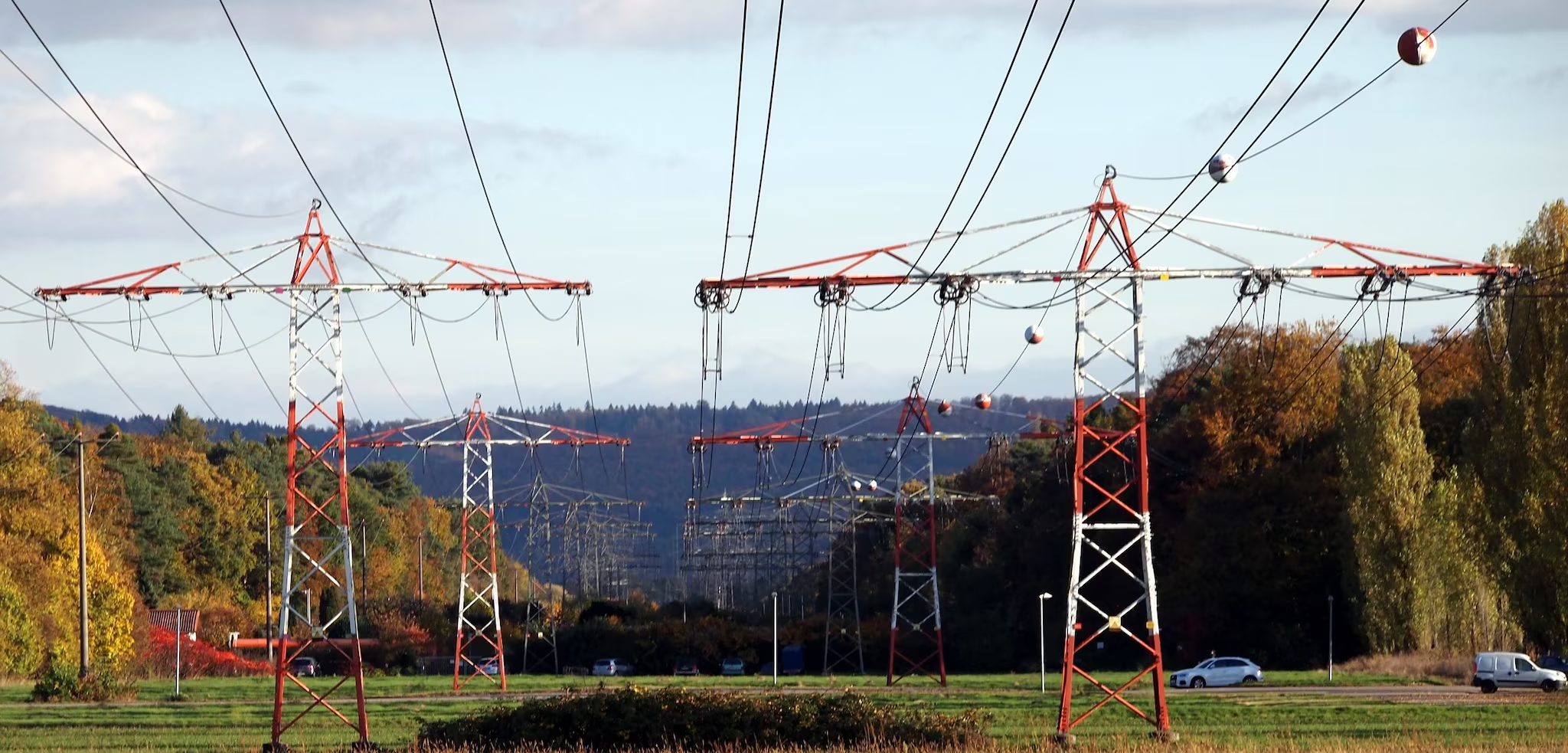
From the ground it is not easy to determine the dimensions of these signaling spheres, but it is objects rather large (from 60 to over 90 centimetres in diameter) composed of a double hemispherical shell, which is joined and tightened around the electric cable with appropriate clamps in aluminum alloy. They are generally made of sturdy plastic polymers reinforced with fibers (FRP), they weigh about ten kilograms and have various precautions to withstand constant exposure to ultraviolet rays and atmospheric agents. For example, the paints on these balls are designed to last a long time UV raysFurthermore, the shells have holes to facilitate the outflow of therainwater and avoid increasing weight on the cables.
Beacon balls have such a critical function that their installation is tied to guidelines and approval from major aviation bodies, such as theENAC (National Civil Aviation Authority) in Italy and the FAA (Federal Aviation Administration) of the Department of Transportation in the United States. Other indications derive from the International Civil Aviation Organization (ICAO), which for example recommends that the spheres should not have a diameter of less than 600 millimetres.
Airbus A320s stopped: have we been traveling on unsafe planes for years? The expert’s explanation
As the company Flight Light Inc. which produces these spheres explains, aerial markers “must be recognizable in conditions of clear daytime visibility from a distance of at least 4,000 feet (1,219 meters) and in all directions from which aircraft are likely to approach.” THE colors of the balls must also be alternated to increase the visibility of the obstacle. Curiously, the approved shape can be not only spherical, but also cylindrical. At least in the US, the spheres must be spaced evenly along the wires, spaced 61 meters apart, a spacing that’s called “standard.” In some critical areas, however, they can also be positioned at a distance of 5 – 10 metersas indicated by Myafrp.com (which also reports prices, from 170 to over 395 dollars depending on the type). In short, behind these objects there is a very precise science that contributes to saving human lives, even if, unfortunately, accidents involving planes and helicopters hitting high voltage cables are still not rare.
But how are these aerial markers installed, maintained and removed? Where possible, when the overhead lines are not too high or in too inaccessible and remote places, scaffolding, trolleys and the like can be used, but standard operations involve the use of specialized teams on board small helicopters. In the video above you can see the painstaking work of removing one of these large spheres by a worker on the gigantic Bolte Bridge in Melbourne, Australia. This is a highly specialized job and not without risks; in August this year, for example, a helicopter engaged in installing these spheres hit high voltage cables near Alton, on the Mississippi River (United States), falling and crashing into a barge carrying liquids. Unfortunately, the two people on board died and a large fire started.