
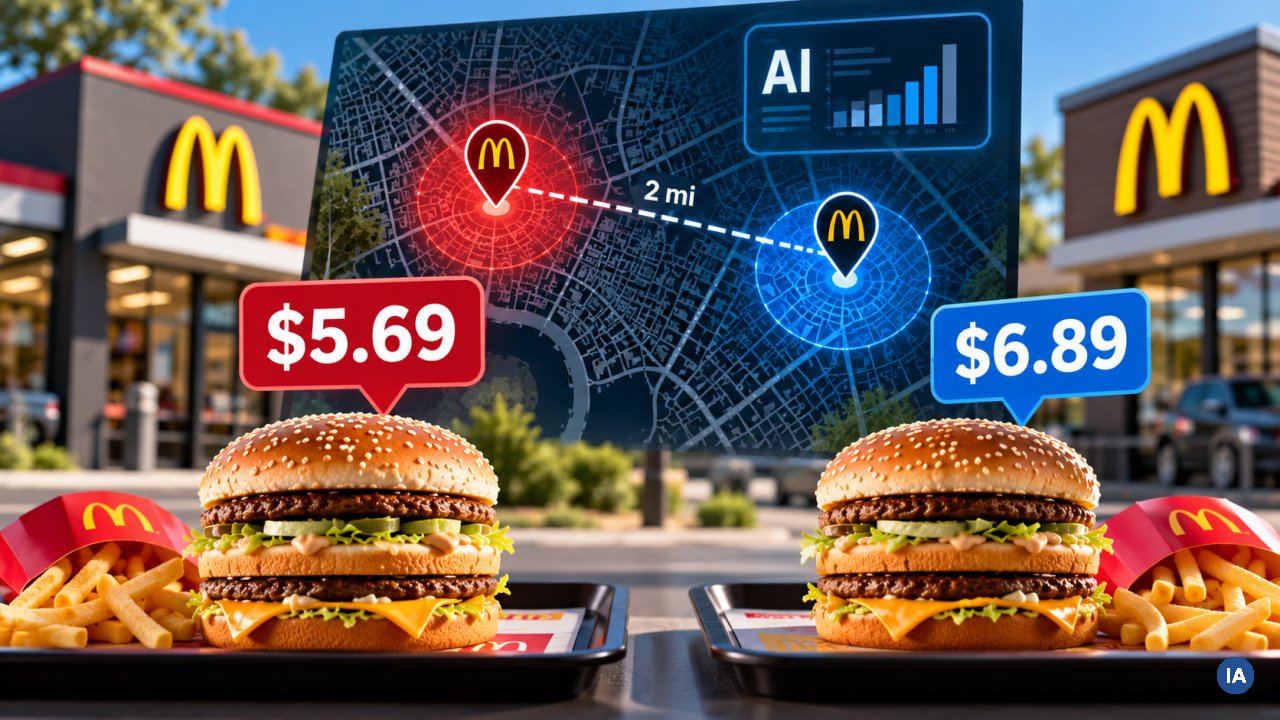
McDonald’s use tools artificial intelligence to estimate the optimal price of every item on the menu, restaurant by restaurant, in the United States and some foreign markets, Reuters reported. The goal is to align with what the customers of each restaurant would be willing to pay, and the result is that even two restaurants in the same city can apply different prices to the same product. The mechanism is reminiscent of the dynamic tariffs of ride sharing platforms, but applied to sandwiches.
The interface with which franchisees access the technology, which Reuters was able to see, shows messages such as “your restaurant is showing MEDIUM SENSITIVITY to price”, formulated based on the willingness to pay of customers in the area. The differences between neighboring rooms can be marked: researchers have found that a Big Macs it was expensive $5.69 at a restaurant in Fresno, California, and $6.89 in another two miles away, i.e. the 21% more. McDonald’s maintains that franchisees are free to set their own prices.
The company calls Reuters’ reporting “speculative and ill-informed” and describes the portal as “a tool, not a requirement, designed to provide restaurant-specific recommendations to help franchisees deliver value to customers and make informed decisions.” A version of this technology has been in use since at least 2019again according to Reuters. In 2023 the CEO Chris Kempczinski had boasted to investors about the development of proprietary tools to evaluate the prices of individual restaurants.
The margin of choice of affiliates
Some managers interviewed by Reuters say that the company pushes them to use the tools. A company document shows that McDonald’s monitor membership to the platform and note any deviations from recommended prices, with guidance sent to affiliates at least three times a year. Furthermore, the new company standards include the obligation to “engage constructively with the Pricing Consultant and the tools approved by McDonald’s”, as stated in an internal communication to franchisees.
Some owners describe phone calls with the venue after deviating from recommended prices. “You really don’t have much choice anymore,” says Karen King, a former restaurant owner. The office has a lot of power over franchisees because it decides whether to renew licenses and whether to allow new openings, and Kempczinski recently told investors that “noncompliance on pricing, in certain cases, is part of those conversations” about contract renewals.
The portal’s terms of service themselves report the legal risk: They warn that the owners “may be competitors with each other” and that “it is particularly important that all users of the tool fully understand and comply with antitrust and competition laws.” The same document reiterates that affiliates are “always free to determine the final price”, a formula that could relieve the headquarters from any antitrust disputes, and suggests contacting independent legal counsel. According to the former federal commissioner William Kovacicheard by Reuters, the contract’s language is “an acknowledgment that there is a potential problem,” given the recent scrutiny pricing algorithms are under.
Background and context
A precedent concerns an affiliate from Connecticut, who the platform had suggested charging 18 dollars a single Big Mac. The case went viral and resulted in a lawsuit, in which the manager claims the brand tried to oust him from the system for discriminatory reasons; the procedure is still ongoing. Other affiliates say versions of the tools have recommended sharp increases during the pandemic and afterward, with inflation still rising.
McDonald’s derives a large portion of its revenue from one percentage of turnover of each restaurant, and higher menu prices increase that base. The title has lost the 30% since February. Kempczinski attributes the decline to traffic from low-income customers, which has been “down nearly double digits” over the past two years.
The rest of the sector has already received negative reactions. In 2024 Wendy’s had to point out that its CEO’s words about “dynamic pricing” had been misunderstood, and today says it doesn’t use customer data to set prices. Instacart had tested a platform that showed different prices to different customers based on variables decided by algorithms: after protests it declared that it will never use personal information to determine prices and has stopped using AI-based pricing tools. Walmartwhich unveiled a plan to make digital price labels mandatory, has seen customer backlash, with its CEO John Furner pledging not to use personal data to influence prices, while Yum Brandsowner of KFC and Taco Bell, is developing AI platforms for nearly every area, including a dynamic drive-thru menu that changes based on the car approaching the window.