
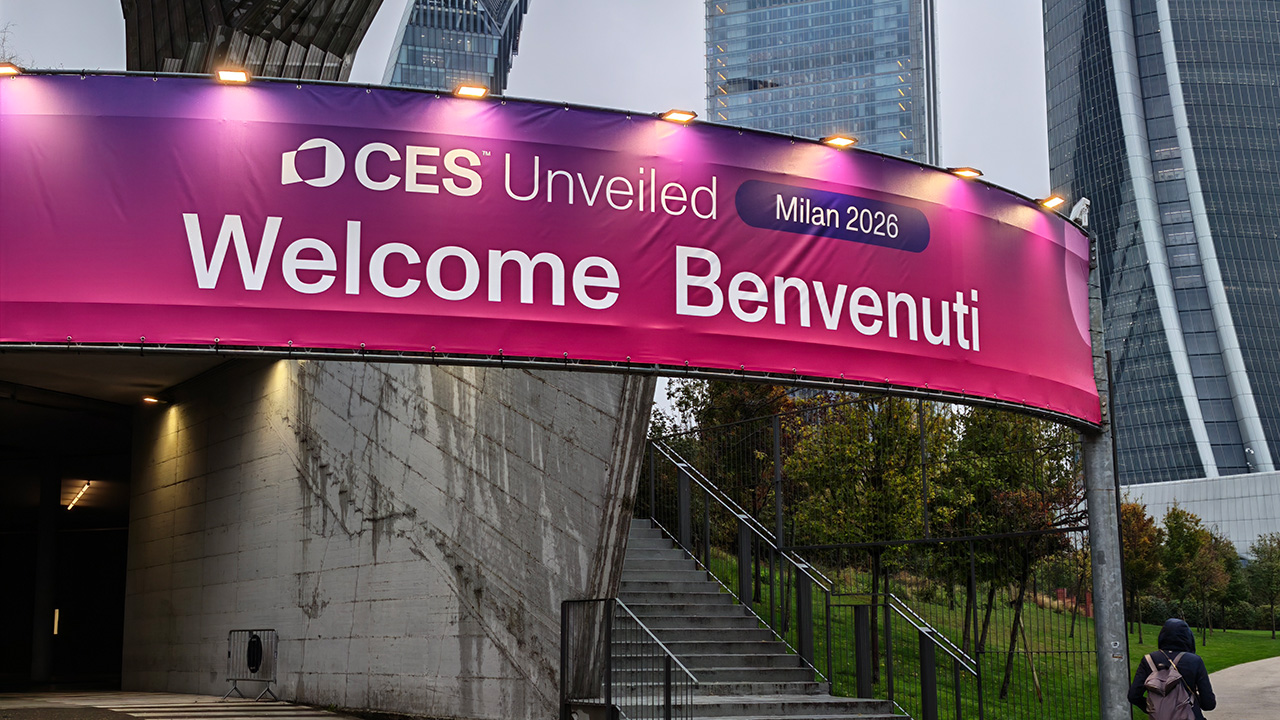
For the first time there Road to CES made a stop in Italy. On October 21st the Allianz MiCo in Milan hosted CES Unveiled MilanEuropean preview of the sixtieth edition of CESscheduled in Las Vegas from January 6th to 9th. The event, organized by Consumer Technology Association with ICE, brought together 108 exhibitors from aerospace, AI, agritech, digital health and luxury tech, and ended with a competition between ten finalist startups offering a stand in Eureka Park, the startup pavilion in Las Vegas.
The institutional weight of the day was unusual for a technological event. They took turns on stage Matteo ZoppasPresident of ICE, Giovanni BozzettiPresident of the Fiera Milano Foundation, Attilio FontanaPresident of the Lombardy Region, Valentino ValentiniDeputy Minister of Business and Made in Italy, e Mauro BattocchiDirector General of the Ministry of Foreign Affairs and International Cooperation. The thread of their interventions was the same, with an almost defensive insistence on Italy’s role as the fourth largest exporter in the world and on the need to internationalize companies. Zoppas said it bluntly, you don’t export if you aren’t competitive, and an event like this serves to measure the distance between Italian technology and the state of the art. From the stage he quantified the national presence of 51 startups from 13 regions on 700 square meters of exhibition space.
Even on the American side the day had a particular character. Gary ShapiroExecutive Chair of the CTA, e Kinsey FabrizioPresident & CEO since last May, almost always split the international stages. In Milan they were both, and it was the only occasion of the year. “It’s the only event outside the United States where we’re both there.”Shapiro explained, “we usually go our own way”. For Italy it is a sign of attention that is worth more than surface numbers.
Trade as an innovation infrastructure
Shapiro has led the CTA for more than three decades and has transformed CES into the world’s leading technology event. For those who have been following the fair for twenty-five years, interviewing him is not a step like the others. His interpretation of CES has remained the same as always, a meeting place and a market where media, buyers, investors, creators and producers they are in the same place for four days, with a space reserved for those who bring a new idea and want to understand if it works.
The most interesting part, however, concerns international trade, an issue on which the CTA has had a public position for some time and which Shapiro explicitly reiterated. “Trade matters because it allows you to do business and gives access to products at the most reasonable price possible. Obviously we don’t like tariffs and we are fighting them. But when a country trades with another, it is less likely that we will go to war”he told Edge9. It is not a temporary position, it is a line that the association pursues in Washington and which puts it on a collision course with the US administration.
In the conversation that preceded the interview the point became clearer. Shapiro defined absurd the idea, supported by part of the administration, that everything consumed in the United States must be produced in the United States, and addressed the issue of technological sovereignty that dominates the European debate. It understands and respects it, each country has the right to decide what it wants to be, but it does not share the idea that each country must be self-sufficient. His proposal is a bloc self-sufficiency, built together with democracies that share the same values, so as not to depend on China on rare earths and some critical manufacturing components. At the moment his prediction is short-lived, “I think we’ve gone in the wrong direction on trade, but I’m confident it’s temporary”.
From megatrends to the pillars of innovation
The heart of the morning was the speech of Brian ComiskeyStaff Vice President, Innovation and Trends of the CTA, which every year previews the technologies destined to dominate the fair. This year it changed facilities. Instead of the megatrends that had marked previous editions, such as Intelligent Transformation, Longevity and Engineering Tomorrow, it presented three pillars of innovationFoundation, Transformation and Exploration.
The reason for the change is more interesting than the change itself. “The megatrends I talked about in the past continue to exist, they have not disappeared. But we have reached a point where what matters is the way we talk about technology, how it is born, how it interacts with other technologies and what effect it has on industries and people”he explained to Edge9. The previous grid described the what and the how, the new one adds the why, and above all makes visible the order in which the technologies drag each other along. AI and energy go together, physical AI paves the way for mobility, mobility leads to agrifood and agrifood to health. The sequence is not randomis how innovation really gets to people.
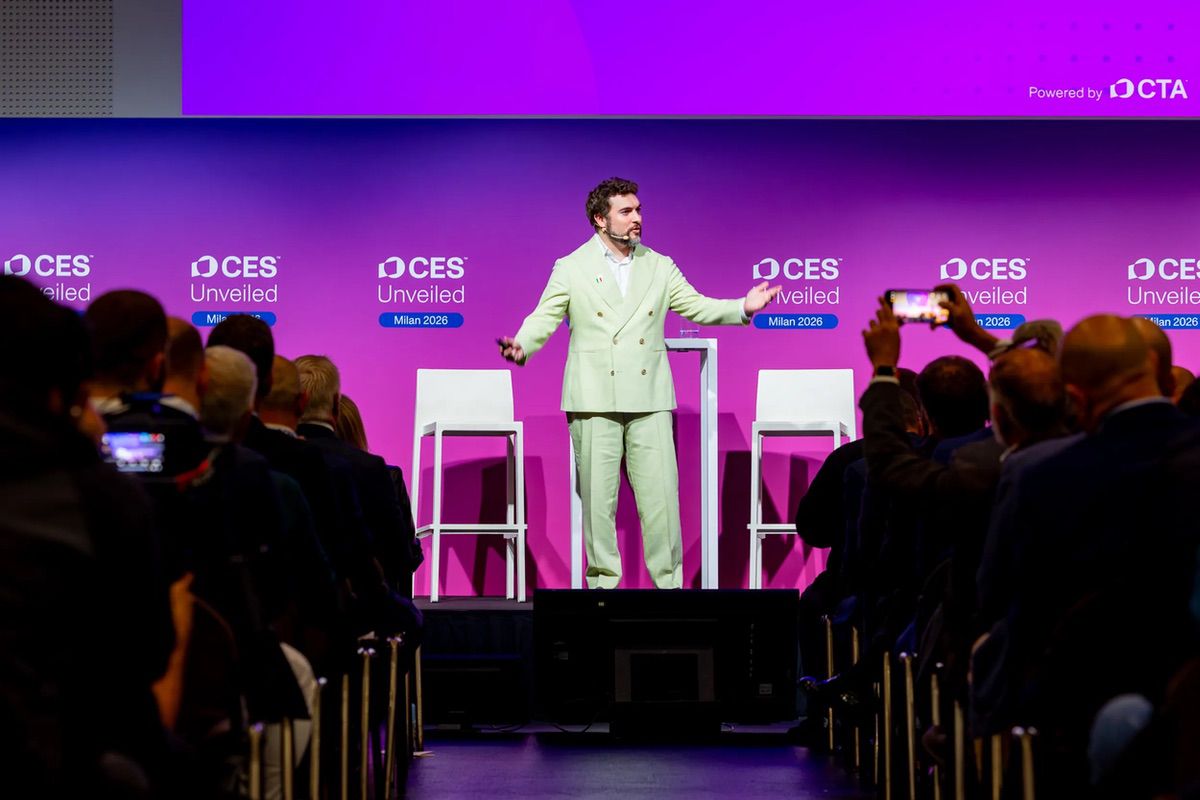
For a corporate reader the pillar that matters is the first. Comiskey built Foundation on cybersecurity, cloud and data, the three elements that support everything else, and then moved on to what he called the age of intelligence, made up of the semiconductor ecosystem, vertical AI and agentic AI. Foundation’s third block is energy, broken down into generation, storage and network intelligence, with a two-way relationship that he was keen to underline: energy enables AI and AI helps optimize energy. The Transformation pillar includes smart glasses and augmented reality, robotics and physical AI, mobility with AI integration and V2X communication, agrifood, longevity, smart home and entertainment. In Exploration he placed technologies that are still difficult to scale, such as quantum computing, space technologies and brain-machine interfaces.
An Italian figure presented from the stage helps to understand where we are at. 66% of Italians say they use AI at work, with generation AI has exited the experimental phase and it has entered daily habits, even before formalized business processes.
Foundational AI and the cost of not having clear rules
On the nature of AI, Comiskey proposed a terminological correction that is worth more than a definition. “I said that AI was a horizontal technology, because it crossed vertical sectors. Today it is more correct to call it a foundational technology”that is, a basic brick on which companies, consumers and entire sectors build. It’s the reason why in the presentation he didn’t open with AI but with cloud, security and data.
That’s where he identifies the friction holding back adoption in businesses, and it’s not the cloud, which almost everyone now has access to. One piece concerns security, that is, guaranteeing that the systems remain within the expected limits and do not reach data that they should not reach. The main issue, however, is the data. “Many companies are starting to understand that they have to structure their data completely differently, or at least modify it for these tools to use it efficiently”. From here also arises the question of return on investment, which according to Comiskey comes when the model, large or small, is built around the specificities of the sector. For the same reason he points to healthcare and finance as the best positioned sectors, because they already have rigorous data infrastructures.
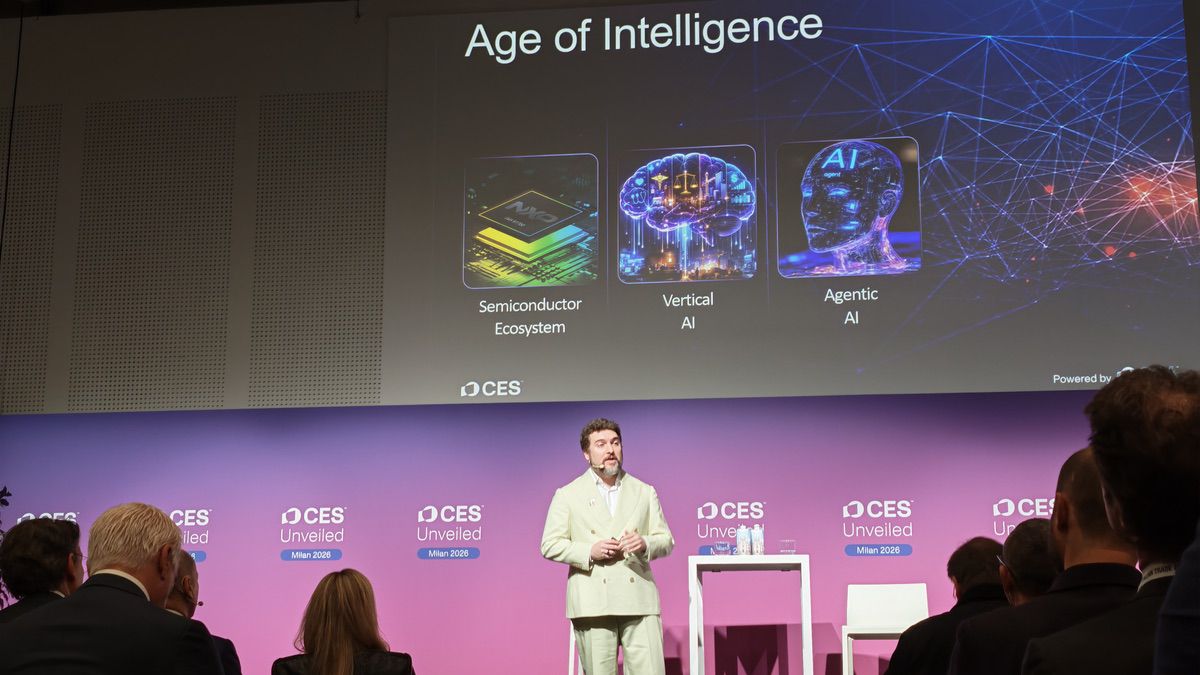
The next step is Agentic AI, which describes how a shift from the app economy to the agent economywhere instead of moving from one application to another you delegate it to an agent. It is the most disruptive transformation underway, and it will proceed sector by sector at different speeds.
On rules and safety, the CTA’s position is more complex than the debate suggests. “We welcome regulation, as long as it doesn’t hinder innovation. What we’re interested in are clear rules and a clear framework within which companies can operate”. The controversial target is not Europe but the United States, where fifty different state regulations coexist in the absence of a federal framework. For an American company it is already complicated, for a European company that wants to open an office overseas it becomes, in his words, “a tax on litigation, where you spend more time navigating the law than doing anything else”. As for the request to slow down development, he considers it impracticable, because if someone slows down someone else continues. The path he indicates is different, continuing to seek progress by working in parallel on guarantees and ethics, a task that he believes companies are capable of carrying out.
The appointment is for January, with an edition that the CTA presents as the richest in innovations for a long time, including a space dedicated to health, a new area of advanced manufacturing and the CES Foundry extended to three days. For Italy the test will be double, the startup that will emerge victorious from Milan and will have a place at Eureka Park, and the keynote entrusted to Antonio FilosaCEO of Stellantis. The showcase is therethe question that remains open is whether the Italian industrial system will be able to use it as a market and not just as a runway.