In a post from a few days ago, Chiara Ferragni published a photo from the profile of a French creator, without indicating its ownership. However, the influencer defended herself from the numerous criticisms by explaining that they were simple “inspirational photos” and not an attempt to appropriate them. Lawyer Giuseppe Croari explains what the possible risks are and what the rules are on the use of images on social media.
Interview with Giuseepe Croari
Lawyer expert in IT and new technology law and labor law
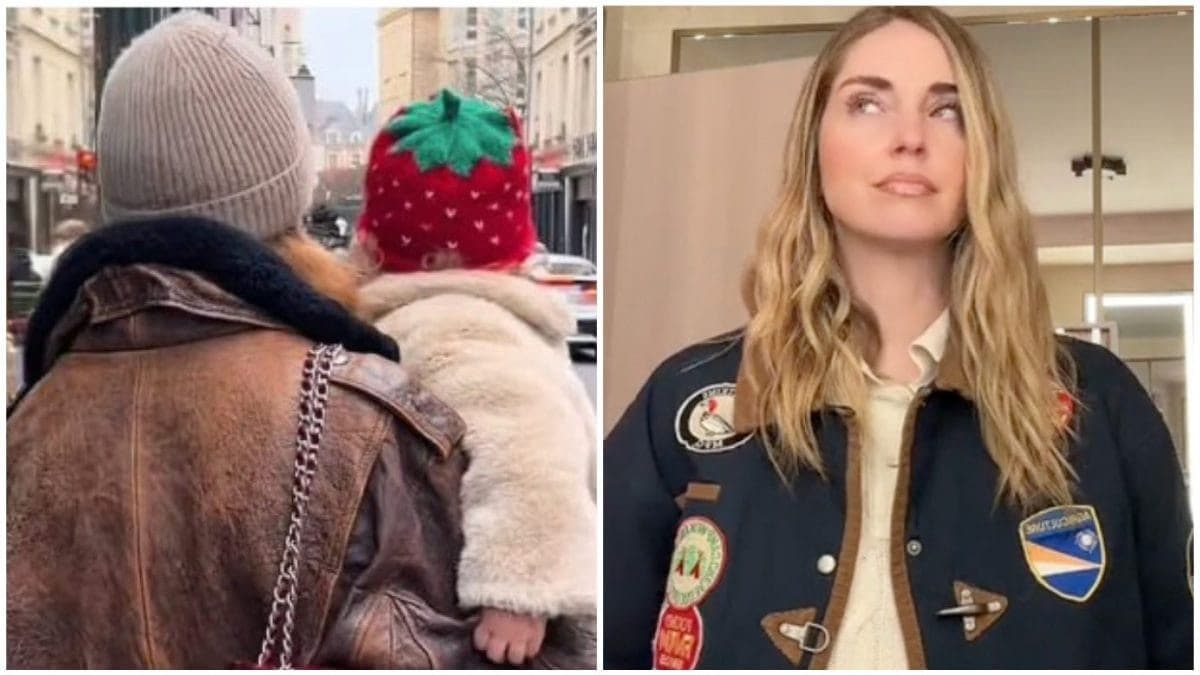
On the right is the photo at the center of the controversy
Maybe it’s because just over a year has passed since the Balocco case, maybe it’s one of his almost 29 million followers there has never been a shortage of haters, the fact is Chiara Ferragni it ended up in the center of a new social controversythe one taken after his followers noticed that in one of his posts the number one influencer in Italy would have used a photo that isn’t yourswithout tagging the profile from which it was taken.
The photo at the center of the controversy
The shot in question, one of many that make up a carousel published on Monday 6 January, in fact portrays a woman with a little girl in her arms while they walk. Both blondes. Most users would have had no doubt: the subjects in the photo are Chiara and her daughter Vittoria. Instead, some of his followers recognized the image: it is a screenshot of a video published by a French content creator, Iris de Richemont.
Hence the rain of comments, many critical, some defensive, both under Ferragni’s offending post and under the original post. “He only collects bad figures” or “Everyone here from the stolen photo”someone writes under the video uploaded by the French creator, which compared to her other contents had an explosion in the comments (about 300 compared to the usual 5-10). The fact is that Iris de Richemont herself confirmed to Fanpage.it that she had not received any request from Ferragni: “He didn’t ask my permission to take the photo, I sent her a message asking if she could tag me, because she hadn’t.”
We tried the app to create finished kisses, it can be used with anyone: even with those who don’t want you
Which images can be reshared
The tag finally arrived: it is now clearly visible in the photo, as is that of another influencer and creator (Genselle Seldon) to whom another shot included in the same carousel belongs – also reported in the comments by the followers, even if we know nothing else about any relationships between two o’clock – but the controversy has not died down. Chiara Ferragni herself eventually responded with a video on TikTok, in which while “Sere Nere” by Tiziano Ferro is playing, she writes in clearly ironic way: “When you have already published 17 thousand posts but then you post a slideshow with inspirational photos of writings on the walls, campsites, pizzas, strawberry hats, houses, books, cars, travel, newspapers and they accuse you of trying to pretend to be another person“. But it didn’t make many users laugh too much: “Usual communication errorwe are the ones who have misunderstood again”. The reference to the Balocco affair is quite evident.
But regardless of the controversy, take a photo from another user to reshare it on your profile is it legal or not? Fanpage.it asked it to Giuseppe Croarilawyer expert in influencers and legal IT.
Is what Chiara Ferragni would have done legitimate? Can photos taken by other users be used?
Behavior of this type, i.e. where a user of a social network (Instagram or TikTok) takes a photo from another profile and publishes it on their own account, can represent mainly from a civil point of view two types of offences.
The first?
The first is of contractual type towards the platform, as publishing a photo of others violates the license of the social networks themselves which is based on this axiom: you must own the property on the contents he publishes on his profile. There are no limits to what a user can post, but there are two conditions: it must respect the social media policy and there must be authorship of that contentbe it a video, a drawing, a photo or a mathematical formula, or the right to be able to exploit it economically (as happens with purchased or royalty free content).
Is the license violated even if the owner of the photo is tagged?
Absolutely yes. According to the license, the behavior of anyone who downloads a photo owned by others is illegal he shares it again on his profilethrough a download and upload mechanism. So the presence of the tag is not enough: if the photo you share is not yours, you are violating the license provided by the social network.
It is different if sharing occurs via the social network itself by means of the specific tools made available by the platform such as the “share” button which allows tracing the original owner and gives life to the “virality” of the content.
From this point of view, what are the risks?
In this case Chiara Ferragni, but anyone who publishes photos that are not hers, can suffer from the social network forms of penalisationsuch as a ban or a shadow man, or the obscuring of that post. But these actions come from the social network itself, so there must be someone who notices them and reports the content.
He also spoke of a second type of offence. What is it about?
Let’s take this specific case as an example. If it is truly as it has been reconstructed so far, Ferragni’s conduct could also constitute an extra-contractual tort. The owner of the photo may in fact have paid a professional to have that shot or video. Now, we know that a post on Chiara Ferragni’s profile is worth a lot, regardless of direct earnings: in this case therefore the influencer would have monetized (directly or indirectly) from content of which he did not have authorship or exploitation rights.
And from this point of view, what is the risk?
The person who owns the content in question or its exploitation rights can take action against the user who used it and ask for compensation. financial compensation.
So the point is about ownership rights of the photo?
Of course, but in this case not only that, because there are also at stake image rights of the subjects portrayed: it is true that the two subjects were not identified, but they were identifiable. That is, someone could have recognized them and traced their identity, as in fact happened.
This could create complaints from not only the person who took the photo but also the subject portrayed (very often they coincide, but not always)
So the rights to the photos we publish on social media remain with us?
When you post a photo on Instagram, the license provides that you assign the rights of use to the platform, which therefore belong to the latter, but the authorship of the photo they other rights connected remain up to you. In technical terms we talk about non-exclusive assignmentthat is, the user cedes the rights of use to the platform, but continues to be the owner, in the sense that he can continue to use his photo freely.
So how can we use images on social media safely?
My advice is to always post your own photos or ensure that they are royalty free, i.e. free of all rights. Always be wary of photos found online because they could originally belong to another user or company, who owns them, and when we post them on our profiles, we are exploiting content that is not ours. This is even more serious in the cases of influencers or creators with an important following because it could be monetized with a work whose rights belong to another person.