
An English lady risked having her house catch fire due to a fire that broke out after a lithium battery vacuum cleaner exploded. Accidents of this type are in fact increasingly frequent, which is why it is important to implement all the necessary recommendations to reduce the risk of explosion.
A sudden loud noisethen the smell of smoke and the flames. As Denise Groavea woman from Thames Ditton, a small town in Surrey, in the south-east of England, realized that her garage was catching fire after his vacuum cleaner suddenly exploded while he was under charge.
The one who noticed the explosion – the lady told the BBC – was her daughter who was alarmed by the sudden roar. When the two women entered the garage, where they had left the vacuum cleaner plugged into the electrical outlet to get it recharged, they saw that the device had completely dissolved. What caused the explosion, which generated the flames, was in fact a problem in the lithium battery inside the device.
Where are lithium batteries found?
Today lithium batteries are used in most electronic devicessuch as smartphones, PCs, tablets, but they are also the technology that powers them electric carse-bikes and electric scooters. However, despite their numerous advantages in terms of energy efficiencycharging speed and cutting environmental costs, in recent times, also due to their greater diffusion, cases of explosions of devices containing them are increasing.
Air fryers and fire risk: what you need to know and why some have been recalled
How they work
These batteries use lithium in the ion formi.e. having a positive electric charge. Each battery has two electrodes, between which the lithium ions constantly move: in the charging phase the ions move from the cathode (the electrode with lower potential) to the anode (the electrode with higher potential), storing energy, in the discharge phase, i.e. while the device is in use, the ions move in the opposite direction, thus releasing the electrical energy which is used to make the device work.
Because they can explode
Given the anomalous increase in incidents over the last five years, Surrey Fire and Rescue Service (SFRS), the Surrey County Fire and Rescue Service, warned citizens about the risks involved to incorrect use of lithium battery devices: from September 2024 to today alone, 55 fires have been recorded in the county, two more than the 53 recorded in all of 2023.
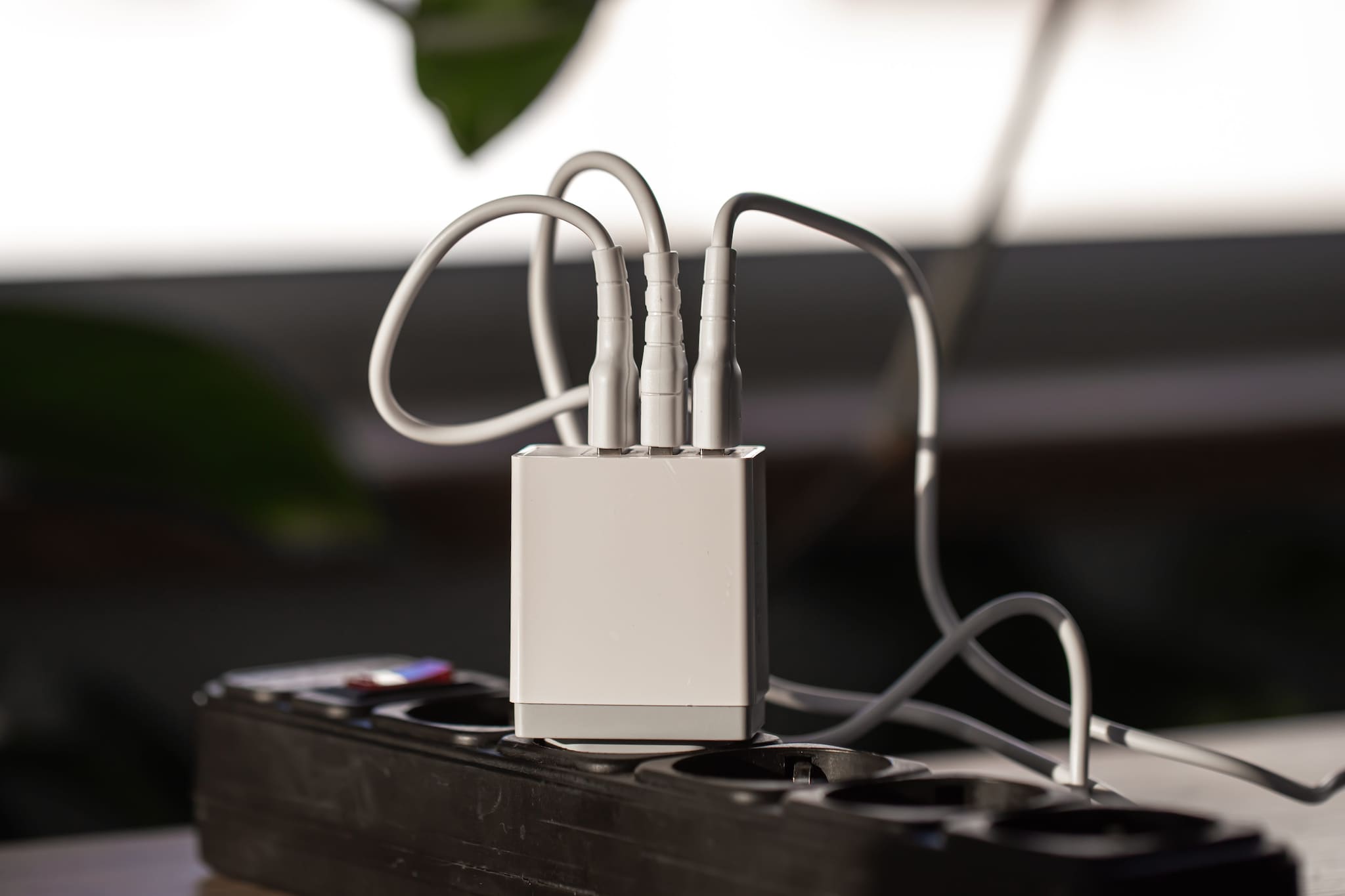
Typically, a problem with lithium batteries causes them to explode overheating which in turn can depend on a number of factors, including incorrect charging modefor example with chargers that are not compatible or different from those purchased with the device, a short circuit, the presence of a manufacturing defect or physical damage due to a shock.
How to reduce the risk of explosion
Among the recommendations indicated by the Surrey Fire and Rescue Service (SFRS) to avoid the risk of explosion, it is important to remember:
- Use the suitable battery chargerthe one approved by the manufacturer
- Do not overcharge the batteryalways disconnecting the device from the charger once it is fully charged
- Do not expose devices to heat sources
- Check if there is any damage, if the battery appears swollen than normal or if there are losses
- Dispose of devices and the lithium batteries inside them properly and do not throw them in the household waste.