
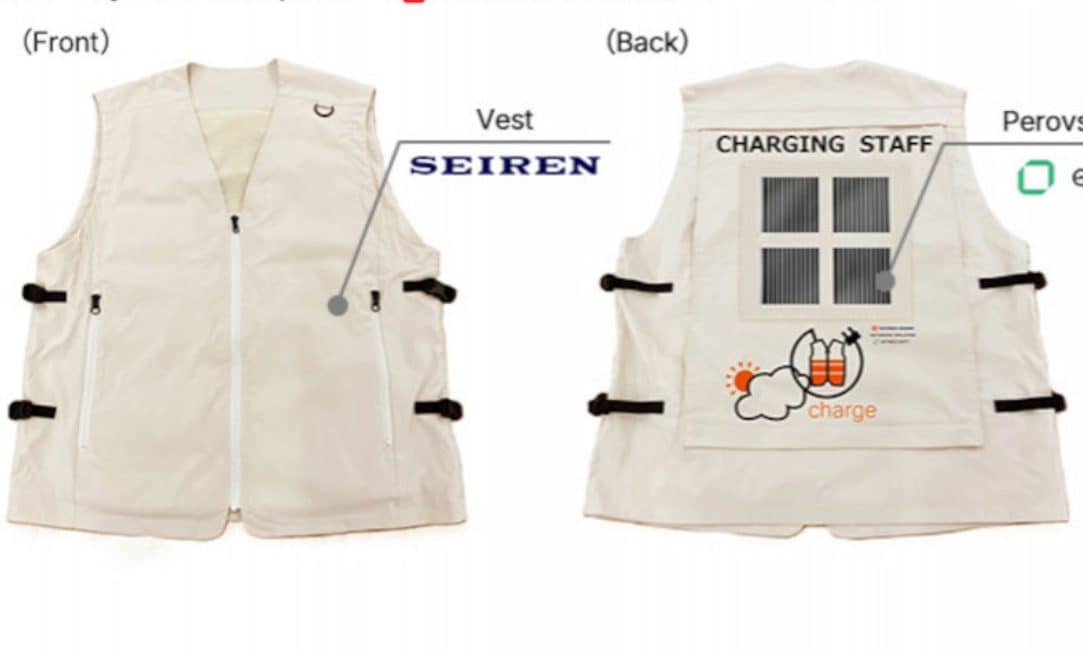
In Japan, hi-tech jackets have been used for many years with fans and other devices to protect themselves from the summer heat. At the Oska 2025 Expo, the staff is using revolutionary models based on solar cells in Perovskite. What it is.
The smart jacket. Credit: Toyoda Gosei
The staff of theExpo di Osaka 2025which will end on October 13 after six months of opening, wears details Experimental jackets equipped with thin and very light solar cells. The aim is to food fans And devices able to cool the body in the warm And damp Japanese summer, increasingly difficult to bear due to the climate change. For many years, in the land of Risingit is not uncommon to meet people with jackets even in this period of the year: these are smart clothing that hide batteriesfans and other devices designed to lower the body temperature. There are not few tourists who are surprised to see people “harnessed” under an infernal heat.
The original idea of these clothes is of an former Sony engineer, Hiroshi Ichigayawhich in the early 2000s launched the pioneering jackets and shirts on the market air conditioningproducts originally designed for workers who spend time in the open air in the hottest hours of the day – as workers and farmers – but which then became relatively common in the Japanese population. The jackets worn by the Expo staff represent aevolutionat least from the power point of view.
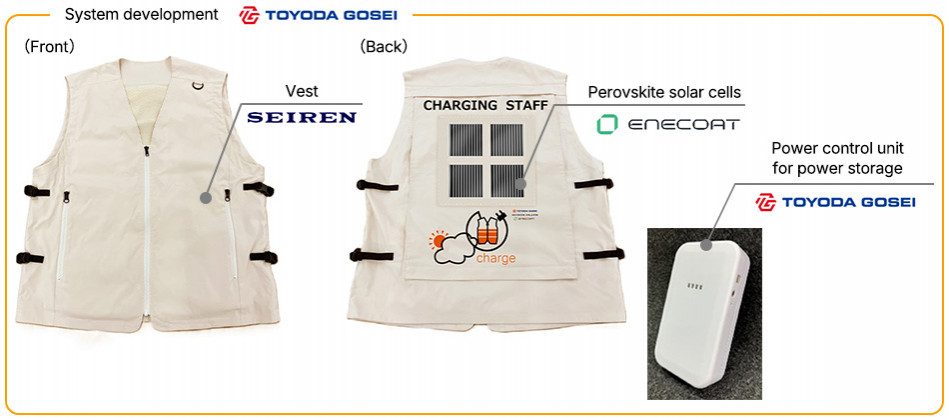
The company was putting them out Toyoda Gosei of the Toyota group, in close collaboration with Enecoat Technologies – specialized in the use of perovskiti – And Seiren Co., Ltd.a great reality oftextile industry Specialized in technical clothing, coatings for multiple products (also doctors and industrial) and patents for patents for peculiar sewing technologies. Perovskiti are a group of minerals that has shown a high energy efficiency; For this they have been converted into thin solar cells capable of replacing traditional silicon panels. They are not yet stable and have a significantly lower duration, given that heat, atmospheric agents and other conditions deteriorate them quickly, however it is possible to obtain thick rechargeable cells as a paper sheet and from the weight of few grams. Being very flexible, moreover, they can easily apply on a wide range of curved and unconventional surfaces, including those of the clothing. They can also transform windows into solar panels.
Because in this period we can no longer sleep well: the answers of the climatologist
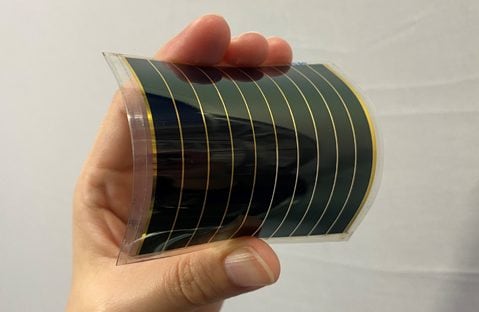
Panel in Perovskite. Credit: Enecoat
The garments designed by Japanese companies are experimental and will be used in the coming months to evaluate the duration and efficiency in a real environment, outside the laboratory. They are not only designed to cool, but also for heat the body in the presence of low temperatures and make it work sensors capable of monitoring different vital parameters. Toyoda Gosei has developed a technology capable of controlling and storing theelectricity generated by the solar cells of Enecoat Technologies, while Seiren Co., Ltd. has conceived an ad hoc system to fix solar cells to clothes without the use of cables.
According to what reported by the CNN, these devices powered by the cells in Perovskite are completely recharged in 5-10 hourseven in conditions of weak light or cloudy sky. They manage to recharge even inside, exploiting sources like i LED. During the performance of the Expo, the researchers are collecting precious data on the duration of the devices associated with smart clothes, such as a neck fan and a battery.
The times of the marketing of clothes fed in Perovskite are not yet clear, not only for the limited duration of the cells, but also for the risks related to the release of toxic substances – such as the lead – in case of breakage. Before arrival on the market, it will be necessary to solve problems related to stability, durability and safety.