
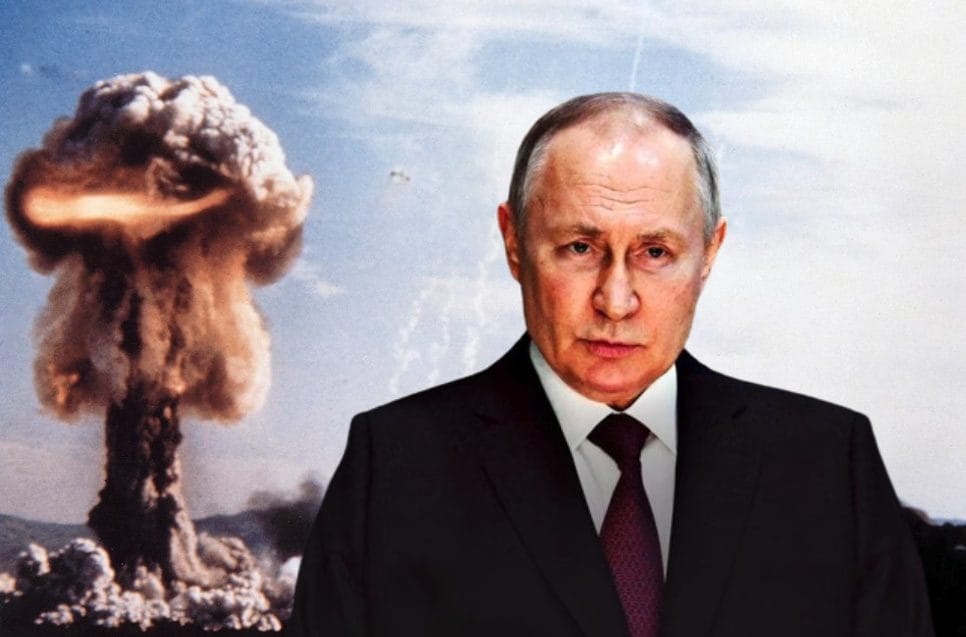
Is called Burevestnik. A name that in Italy is being translated as “storm bird”. It is the new missile unveiled by Vladimir Putin. A weapon that according to the president of Russia is “invincible”. Indeed, “it has unique characteristics and there are no analogues”. In the reconstructions that have emerged in the last few hours, there are two unique characteristics. The missile is fast and above all it is able to move with unpredictable trajectories from commercial radar systems.
The test was done on October 21st. The news was released in the last few hours. The Russian general Valery Gerasimov stated that the Burevestnik was able to travel 14,800 km in a long test 15 hours. The missile has a dual propulsion system. A first stage to lift off from the Earth and then a nuclear-powered engine that kicks in when the missile begins to follow its trajectory.
The full name of the missile reported by Reuters is 9M730 Burevestnikin the Russian arsenal there are other missiles that they have chosen as “Burevestnik”. According to NATO it will be called instead SSC-X-9 Skyfall. According to data reported by Corriere della Sera, the entire missile measures 12 meters but is reduced to 9 meters after losing the first stage in the initial stages of flight.
Because November 3, 2025 on social media is the day of the Third World War: the new conspiracy theory
Technical analyzes on the 9M730 Burevestnik
The New York Times has reached out for comment Jeffrey Lewisnuclear weapons expert at Middlebury CollegeVermont. His comment on the new device was cutting: “It’s a little flying Chernobyl. This is a terrible development.” Also Pavel Podvigan analyst of the Russian arsenal, has a similar opinion: “This is what an arms race looks like.”
The missile will not be so easy to produce. John ForemanBritish diplomat, explained in an interview with Fanpage.it that “I believe that its entry into service is expected only in a few years”. And again: “The Burevestnik has purposes of strategic deterrence, not coercion.”
According to the Status Of World Nuclear Forces report published in March 2025 by Federation of American Scientists at the moment the estimated number of nuclear warheads in Russia is 5,459. While the United States has them 5,177. Together the two countries possess the87% of nuclear warheads in the world.