
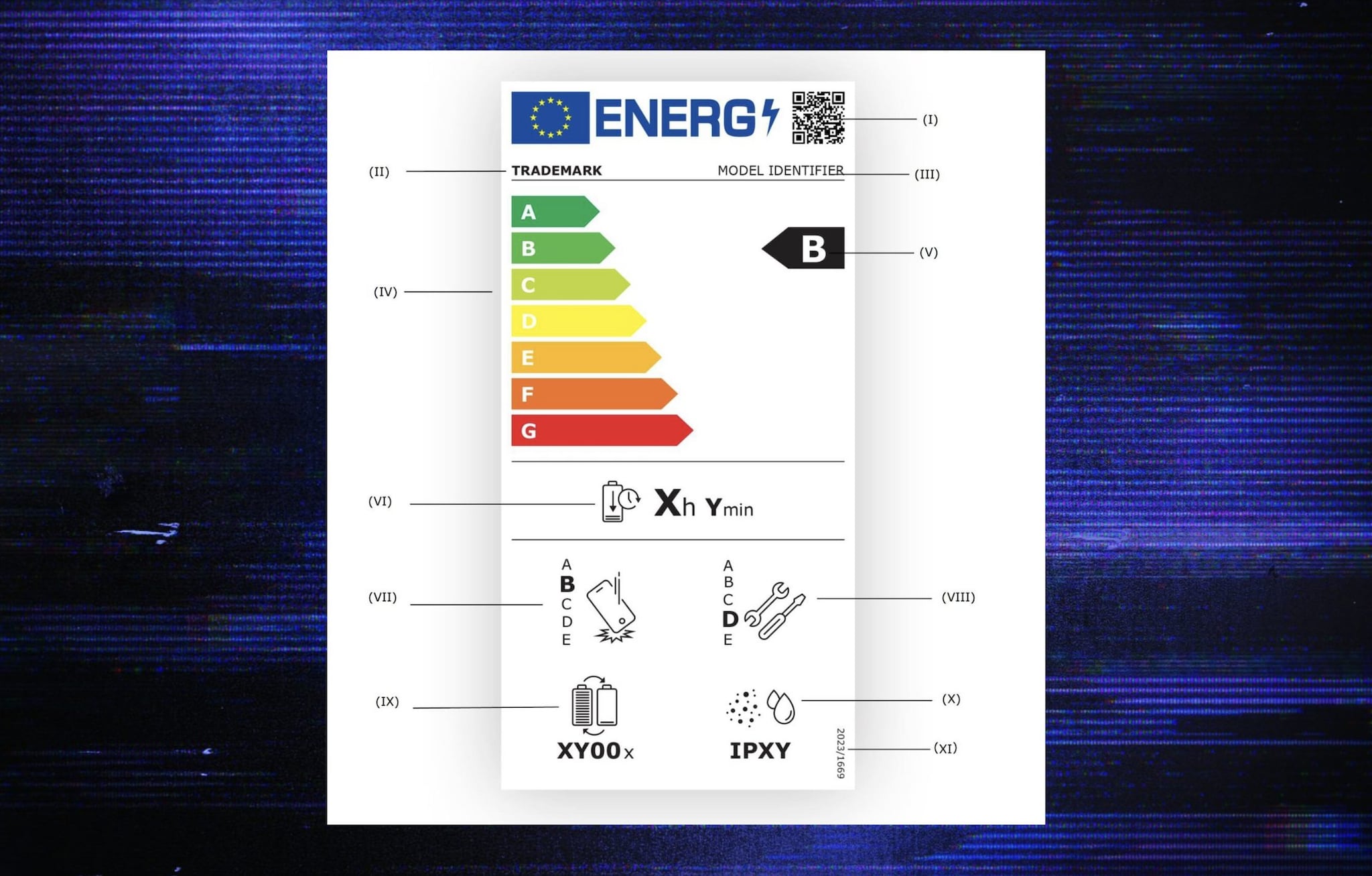
From 20 June it has become mandatory for smartphones and tablets manufacturers to display an energy label on each product. It is a rectangle in which various information on the device is enclosed. It starts from the energy class up to impact resistance. The parts concerning the battery is interesting: both autonomy and resistance over time is clarified.
From today smartphones have One more label. It is rectangular, has a white background and in Italy it was presented as energy label. In fact it is a label that extends the quantity of information that a user can know from the device that is purchased. The project starts from the European Union and concerns both the smartphone that tablets.
Certain. Perhaps The design is not the best But it is certainly clear. The energy label contains 9 fields in which information can be found. Inside there are several elements that can guide the purchase of the device. It starts from a QR codewe move on to the energy class and then you arrive at a series of stairs that define battery life and impact resistance. Here you find them all explained, from top to bottom.
The voices of the energy label
The first element we see in the energy label is the QR code. If you have some time it could also be The only element you need. Just frame it to find all the data on the product starting from the results of the tests that have been carried out. After the QR code we find a graph that shows the Energy efficiency classes. This is very familiar to consumers since it was adopted by the European Union for Provide information on a large basket of products. It is a graphic based on IEEtheEnergy efficiency index which does from to a G.
A month of iPhone 16e: there is everything you need to enter the next era of phones
At this point we find Five small graphics who make explain specific characteristics of the smartphone. The first is very interesting because it reports the battery lifemeasured in hours. As HDBLOG points out, this part of the label could not please the marketing offices. Here in fact the battery is tested according to parameters that are the same for all devices and above all in conditions of intense use.
Then we have others four infographics. We have the class of Reliability to the falla criterion that measures the resistance of a device on a five -level scale. Then there is the reparactability classa criterion that is linked to the Right To Repair campaign of the Euorpea Union.
And then again a graph that represents the battery life But in another perspective: cycles full of charge. This value measures the number of cycles that can be done with the smartphone battery before its capacity descends to 80%. The last graphic designer represents the level of resistance to dust and liquids. Here the measured value is the IP code that consumers already know.
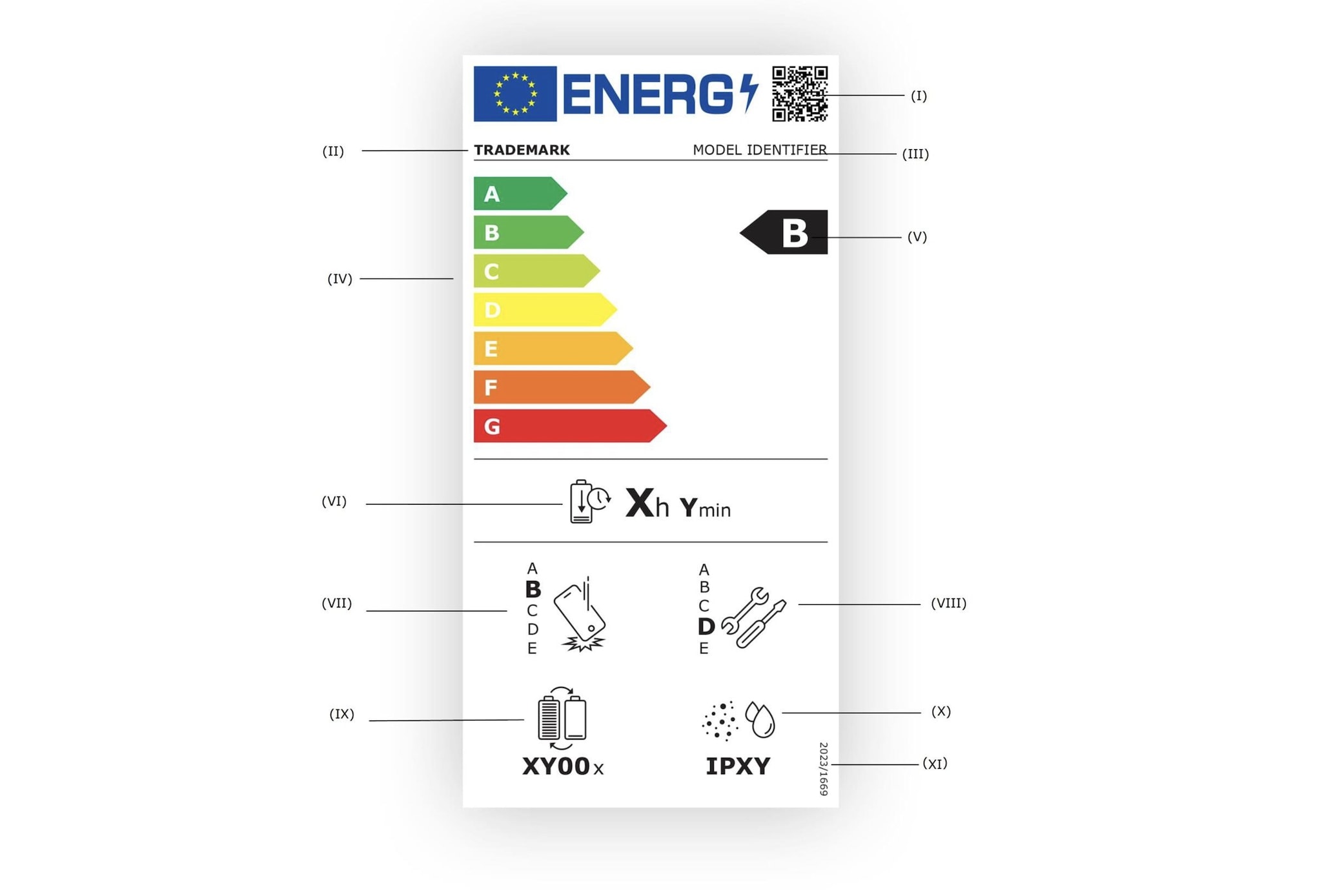
Energy label | The information found in the energy label