
When the preview code arrived for Pragmatathe new video game from the Resident Evil studio, was underway mission Artemis II. Which, when you think about it, is very evocative: the initial screen of the game shows the Earth seen from the Moon, which appears small, shrouded in darkness, in contrast with the silvery soil of our satellite. An image similar to the photo taken by the Orion shuttle on April 10th. A suggestion of how video games manage to embody society’s dreams and fears. Why Pragmata talks about space, artificial intelligence, corporatismeven if he is unable to get to the bottom of his reflections. But let’s go in order.
The protagonist of Capcom’s action-adventure title is Hugh Williamsa space engineer sent to the Moon together with other colleagues to investigate the malfunction of an industrial outpost of Delphi, a private company. Silence and solitude reign in the halls of the station. Then the unexpected: a lunar crash. The ground cracks, the lights turn red in alarm. Some of Hugh’s companions are overwhelmed by the collapses and external pressure. But that’s not all: due to the landslide, the artificial intelligence that regulates the outpost becomes hostile, eliminating the last survivors. Only Hugh remains, desperate.
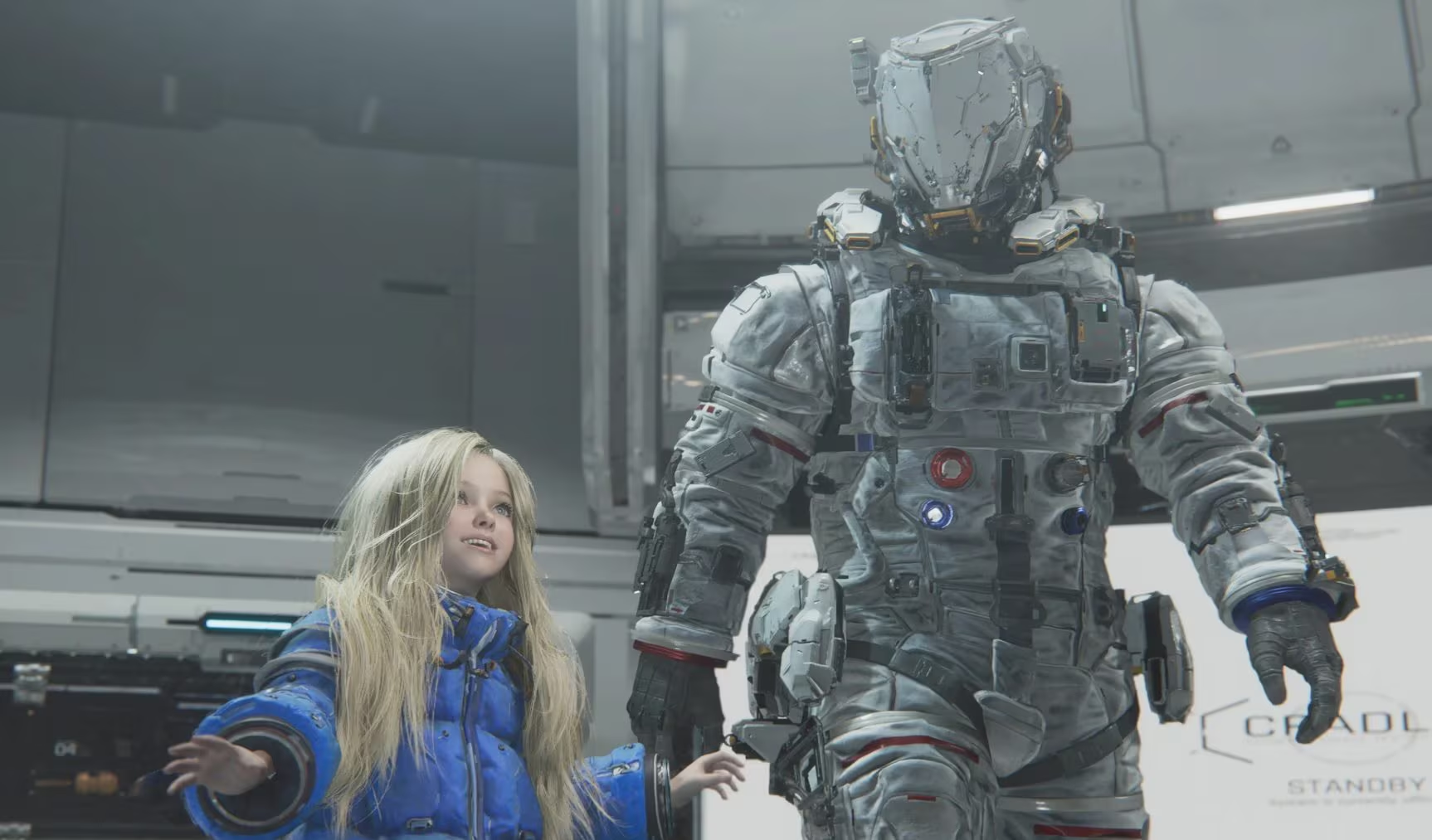
Luckily he comes to his rescue Diana, a little girl out of the ordinary. She has big light eyes, long blonde hair and an irrepressible enthusiasm for everything new. Children’s classic. So far nothing strange. What makes Diana special, however, is her nature: she only has the external form of a child, because in reality she is a support artificial intelligence, capable of hacking and digitally interacting with the spaces of the Delphi outpost. Intrigued by Hugh, she decides to help him in his mission to contact Earth to request help. It starts like this a lunar journey between robots and hostile AI, hacking, but also tender moments which pay homage to our planet as a place of feelings, memories, colors and life. In one word, of humanity.
The Italian video game that raised 600,000 euros before even coming out: the Neoran Valley case
The gameplay: how to play Pragmata
The couple is a recurring theme within the recent gaming scene. Attention, a couple understood not as lovers, but as father-daughter. From BioShock 2 a.m The Last of Usin the last fifteen years video games have used this narrative (and interactive) device to highlight the contrasts between the two sides until reaching balance. An experimentation that also connects to the gaming target audience, i.e. male gamers who are now fathers, who grew up with video games. Which is why video games are full of father figures and fewer mother figuresas we have already analyzed in this article. Returning to Pragmata, Hugh’s adult rationality contrasts with Diana’s childish curiosity, triggering scenes and exchanges of great sweetness and empathy. And this happens despite knowing the artificial nature of the little girl right from the start. This contrast also regulates the gameplay, which is rather structured but still immediate.
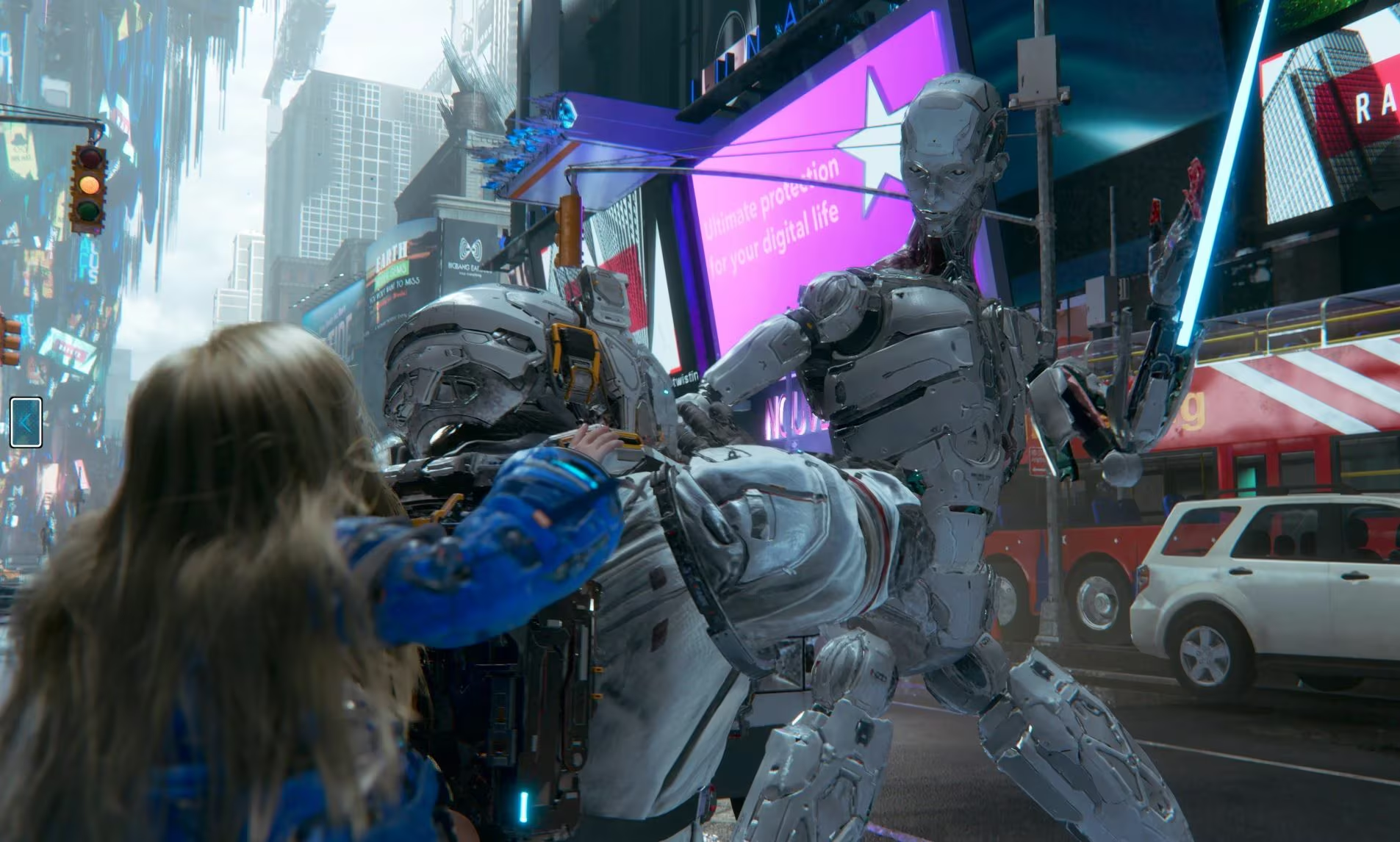
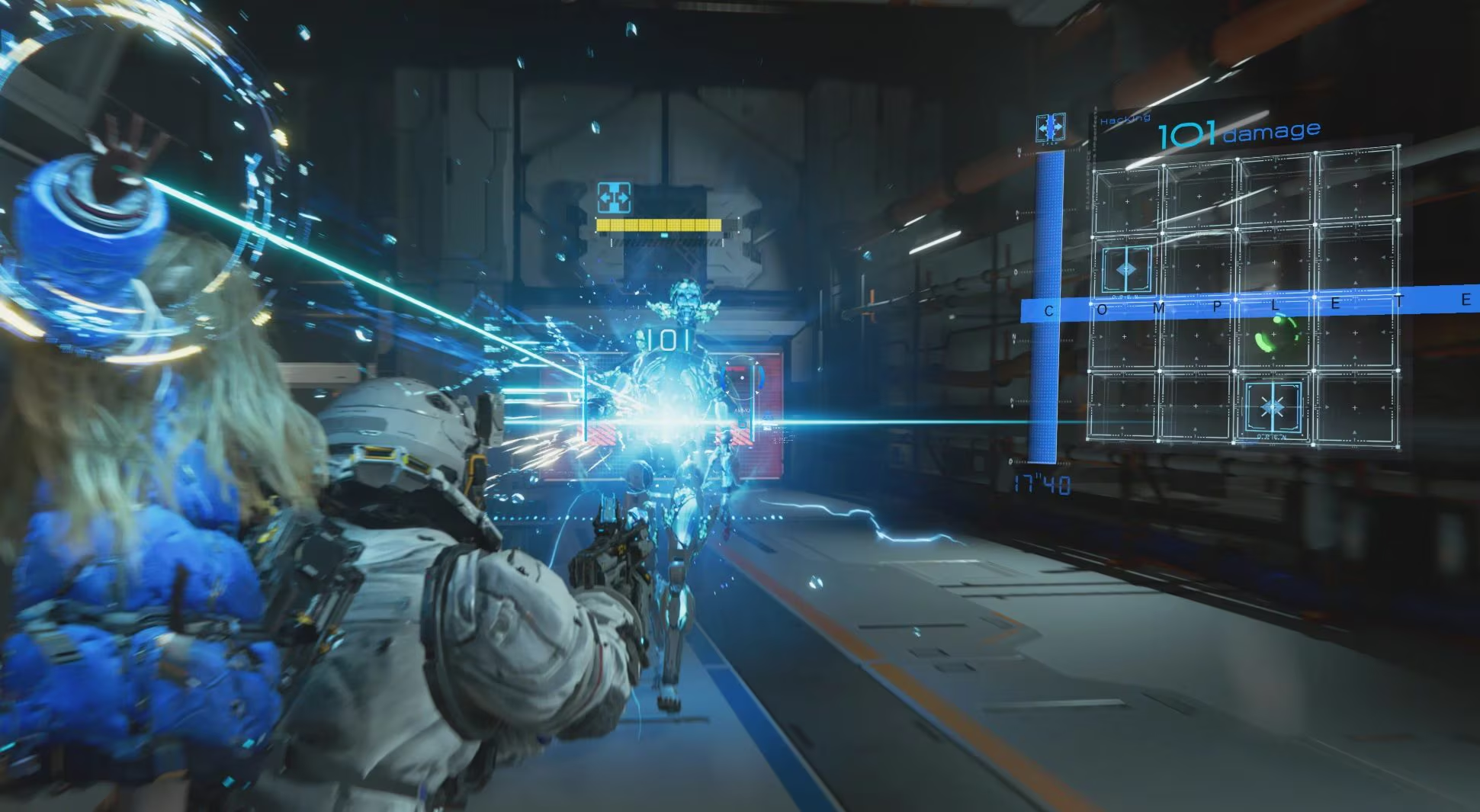
In fact, Diana can hack the enemies that populate the lunar outpost, while Hugh resorts to brute force with weapons. This gives rise to a very dynamic gameplay flow, made up of button mini-games, synergy of weapons and attacks, dodging and jumping. This approach might feel overwhelming at first, but once you get familiar with it, you get into it flow typical of video game jargon, all in all satisfying but what dare little in variety. To slow down the pressing pace of fighting and exploration, Hugh and Diana’s refuge. A place of peace, which welcomes artifacts from the Earth to display, such as carousels, colored markers and more. A small cross-section of humanity, during which you can play hide and seek, run, but also upgrade your equipment. In short, Pragmata manages to merge two opposing souls, whether of the protagonists or of the gameplay, in a very delicate way.
What Pragmata is missing: our review
The final result is a title that involves, moves, capable of building an authentic bond between the protagonists and those who play. Yet, just when she seems about to really land the blow, Pragmata retreats. It touches on enormous themes, such as the autonomy of AI, the impact of robots on human work, the loneliness of space, but without ever allowing itself to be completely penetrated by them. It is a precise choice, which gives back a pleasant experience, cared for, but also restrained. In the end, what remains is a delicate journey, made up of small moments and a relationship that works, but which is rarely imprinted in the memory with force. And maybe that’s exactly what it is Pragmata paradox: It tells of a future dominated by technology, but it’s when it looks at simpler humanity that it really shines.
Maybe, sometimes, even this is enough. Especially if we think about the current state of the gaming industry, increasingly linked to sequels and remasterings of old icons to the detriment of new stories, characters and gameplay ideas. Despite everything, Pragmata manages to creatively enrich the world of video games. After all, the million copies sold a few days after the launch it is proof that the public needs new ideas, not necessarily revolutionary ones.