
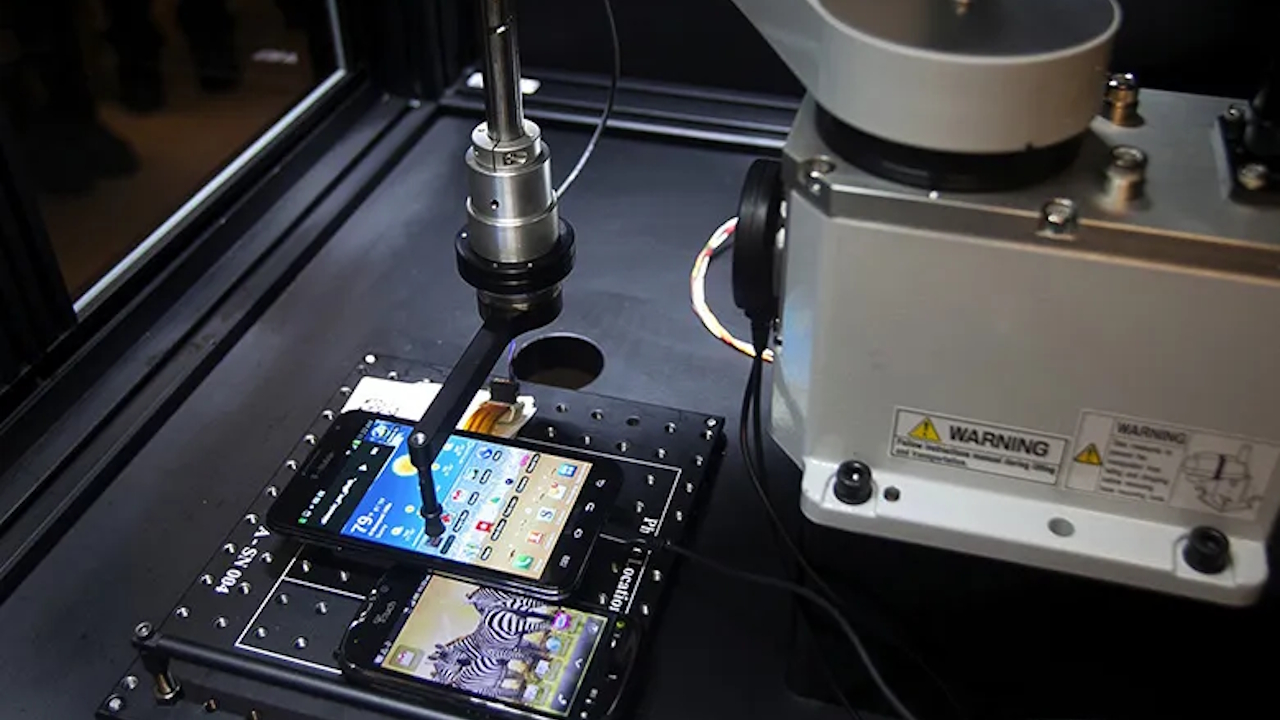
On trial for organized criminal activity against Huawei in Brooklynthe FBI has reconstructed the path of the information and components on Tappythe robot for automated testing of smartphones: from requests from the Shenzhen headquarters to the physical removal of a piece in the T‑Mobile laboratory in Bellevue, where a Huawei employee removed it and placed it in a backpack.
Emails, company records and a 54-second surveillance video confirm to the jury that a component was removed and placed in a backpack. This occurred in 2013, while internal communications confirm that T-Mobile would not voluntarily share technical details.
What Tappy is and why it matters
Tappy is a proprietary T-Mobile device used for quality assurance pre-launch: a mechanical arm with a rubbery tip reproduces taps, swipes and typing on the displays. This way it measures completion times, battery drain and recurring faults. Hardware and software specifications were covered by NDA, as were laboratory access rules, with explicit prohibitions on reverse engineering.
According to the indictment, between 2012 and 2014 Huawei engineers systematically attempted to obtain Tappy specifications: photos, measurements and licensing attempts after T-Mobile’s refusal. On May 29, 2013, a Huawei employee allegedly hid a piece of the robotic arm in a laptop bag and took it out of the laboratory. Only after the discovery by T-Mobile was the component returned, but in the meantime images and data had already been transmitted internally. On Wednesday, the FBI screened a 54-second excerpt in court in which the employee is seen reaching behind the robot, extracting the piece and placing it in a black backpack.
Emails, tracked employees and the line of defense
“T‑Mobile would not share details about the robot’s technology/documentation”supporting the thesis that Huawei continued to collect information despite knowing of T‑Mobile’s refusal. Huawei has pleaded not guilty: the defense claims, in fact, that it involves isolated conduct by individuals, not a structured criminal enterprise.
Huawei when they think they’re not being watched:
stealing the T-Mobile robot parts, exhibited to jury today in EDNY trial. Inner City Press is covering the trial https://t.co/U0u2nikvRT toward a book, including on surveillance by some set to speak at 9/22 #UNGA pic.twitter.com/TSGn7gsfTl— Inner City Press (@innercitypress) September 17, 2026
The Tappy case is one of the fronts of the organized criminal activity trial that Huawei Technologies and three subsidiaries face 12 counts residues (after the dropping of two charges before the trial) including conspiracy, theft of commercial secrets, bank fraud, money laundering and obstruction of justice, with conduct found over a period of approximately twenty years. In addition to T-Mobile, named victims include Cisco Systems, Fujitsu, Quintel Technology and CNEX Labs.
The political context: technology, sanctions and US-China pressure
The Huawei case is part of a broader tension between Washington and Beijing over the control of critical technologies. The US administration has progressively tightened sanctions and export restrictions against Huawei because it is concerned about the risks to national security and ties with the Chinese military and intelligence apparatus. Pre-trial documents and written statements under oath from the FBI refer to possible connections between Huawei executives and state structures, although the judge reiterated that “China and the Communist Party… are not on trial”. For the prosecution, the pattern of conduct strengthens the thesis of a company that operated as part of an industrial strategy supported by the State, but the defense rejects any geopolitical interpretation and insists on isolated episodes linked to the individual behavior of employees.
Source: The Bureau.