
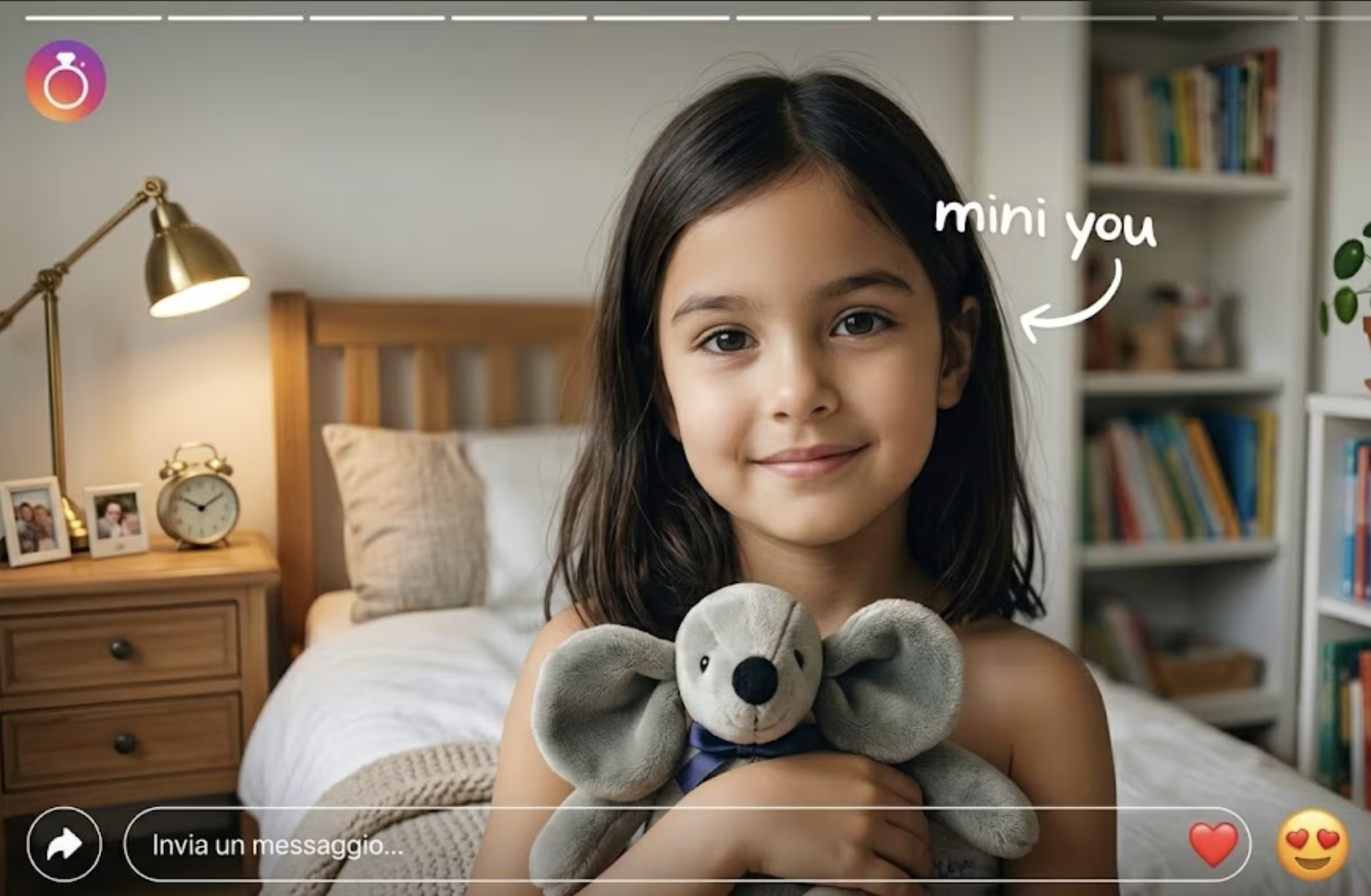
The new trend on Instagram, Mini You, in which you publish a child’s photo and a current one, is a real gold mine for generative artificial intelligence. An estimated 40 million images are shared, which at this moment could be “prey” to voracious algorithms for facial recognition software and other apps.
Remarkable. The number of contents that we publish on social it is decreasing year after year. The chains of tags they are just a memory of the first one Facebook. No one would throw a bucket of ice on their head like that Ice Bucket Challenge. What we knew as social networks are increasingly similar to social networks platforms of contents. Instead of changing from one channel to another of the televisionor from one section to another of Netflixwe move from content from a creator to that from a media company. Something right survives in the Story of Instagram. Quick to publish, temporary, great for raising some low-cost interactions. And this is where we saw one of the few trend of the last month: the Mini You.
In short. The function is that of It’s your turn. A user creates a theme and then others can choose to repeat it, following the instructions for which that theme was made. The Mini You theme is particularly simple to make. The screen is divided into two parts. In the upper section of the screen you put one of ours photos as childrenone in the bottom one current photo. The theme will add two writings on its own: Mini You and You Now. Story done. A few seconds to load it and then expect likes and comments on how much you have changed. Amazing biology, right?
Who spread the Mini You filter: the Add Yours Extra page
In recent weeks the Mini You theme has been used by over 22 million people. We went back to the source. This was released by an Instagram page called Add Yours Extras. She has 356,000 followers and specializes in exactly this type of content. All his posts and stories are a recap of stickers and themes produced directly from the page. The last ones that can be seen are frames to publish the best shots of the day in the Stories. Add Yours Extra monetizes via le subscription. By paying a subscription from 3.99 euros per month it is possible to access a series of contents ranging from personalized badges dedicated to subscribers to chats where you can discuss with the community of followers who follow the channel.
Instagram launches Muse, but the new AI has a problem: it allows strangers to use your face
The problem of artificial intelligence: the aging process
Nothing strange. At least until now. The problem is another. Let’s do the math: the Mini You theme has been used by over 22 million users. Let’s also remove those who used it differently from how it was intended, i brands who wanted to show product changes or information pages that made more use of them editorial. We can easily estimate that 20 million users they used it to publish a Story in which two photos are placed side by side. A photo of them as babies and a photo of them as adults.
We are therefore talking about a total of 40 million Of Images correlated with the same criterion: Image A – Child and Image B – Adult. This heritage is accessible to anyone, if you have a public profile. Just tap the sticker with the filter on a Story that is using it and you immediately have access to all the Stories published in the last 24 hours with the same filter. Monitor everything for a few days and you’re done. Now we are not sure whether they are already there algorithms working on these analyses: but putting this data in public is like leaving a plate of raw meat in the middle of the savannah. Sooner or later someone will come and pick her up.
There are many uses, especially forgenerative artificial intelligence. In July 2019, the photos published with it exploded FaceAppa Russian application that aged every shot. Think how accurate its algorithms can become with all this data made available. Or again. Think about the algorithms of surveillance. With all this data it will be even easier to estimate how the face of a person, even after many years.