

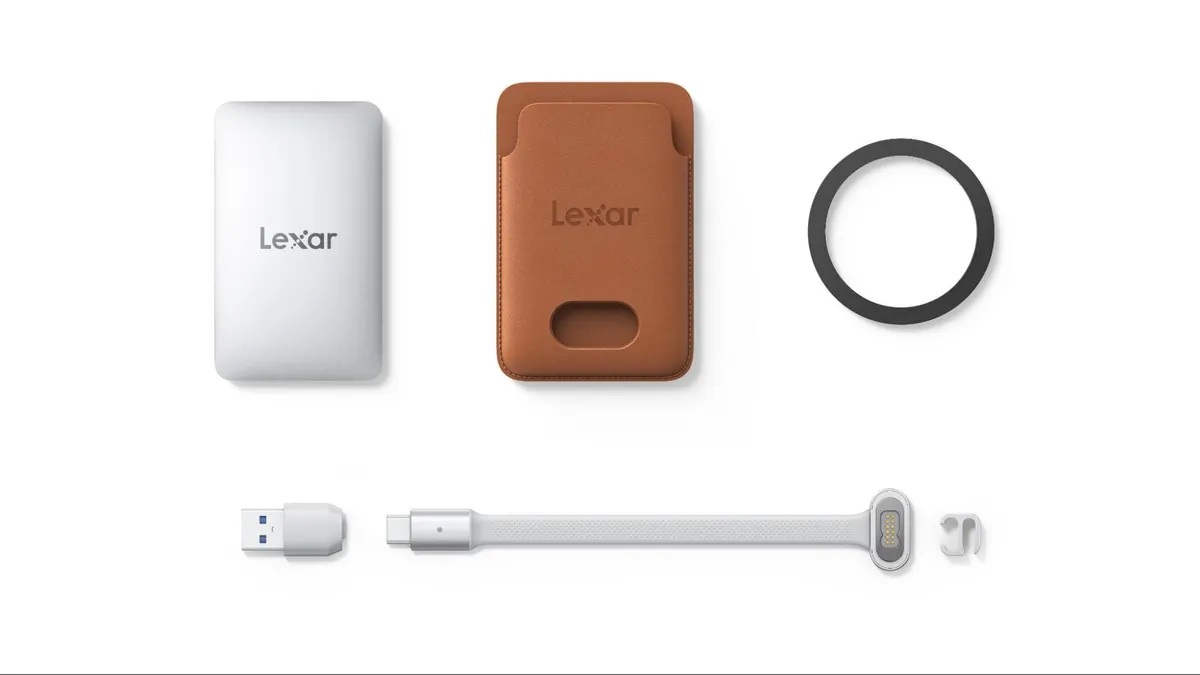
On the occasion of IFA 2026, Lexar celebrated its 30th anniversary by presenting Museswhat it calls the world’s thinnest portable SSD. In fact, Muse focuses entirely on size: the occupied area is suns 80 x 48mmfor one who often stops at just 3.8 mm.
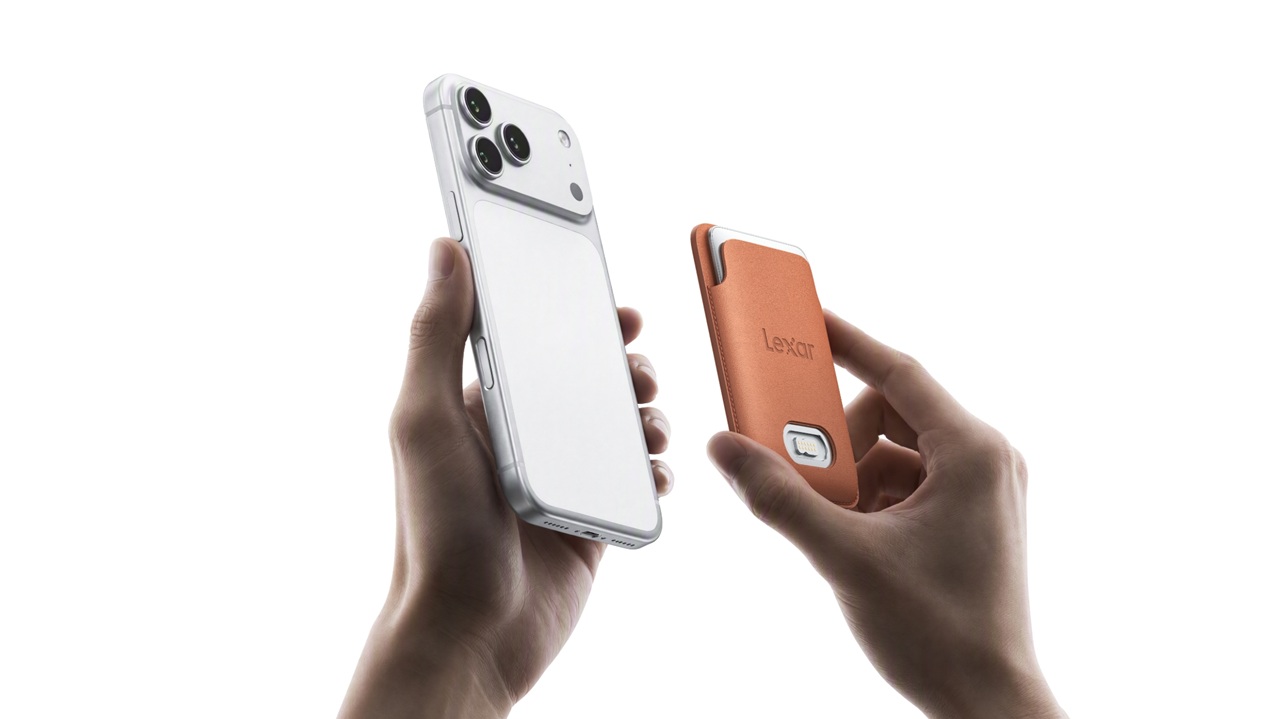
Interestingly, the design is designed for use with smartphones: the edges are tapered so as not to compromise the grip of the device. Furthermore, from a purely aesthetic point of view, this solution makes the drive appear even thinner than it actually is: from the side perspective, the SSD appears little thicker than a sheet of paper. An ideal proposal, in short, to be fixed to the back of the smartphone it can quintuple the storage capacity of top-of-the-range models.
For fastening, however, a case with a magnetic ring compatible with the systems must be added MagSafe and similar. Among other things, the magnetic cover features the size of a credit cardso it can also be used to transport cards in the absence of the SSD.
The unibody is precision machined from a single block of metal. Inside there is a place Custom ultra-thin PCBalong with a high-density NAND layout and an internal structure designed to make the most of the available space.
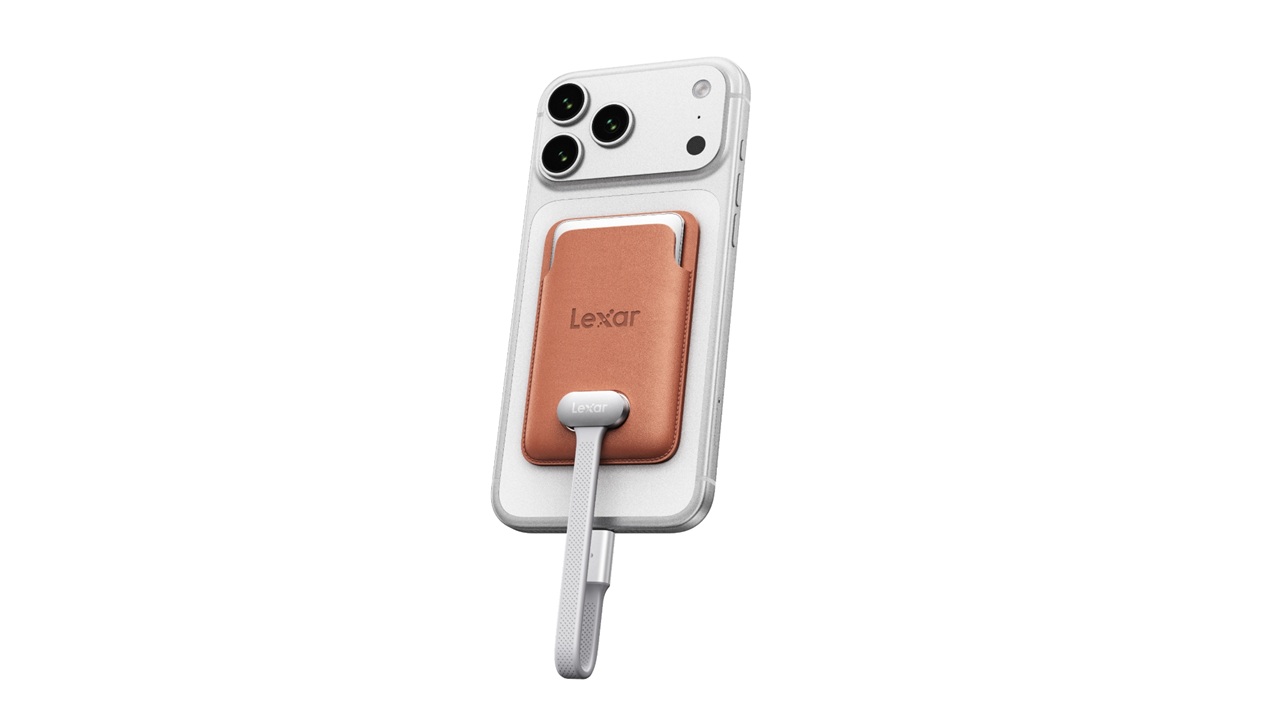
To achieve these dimensions, Lexar has adopted a proprietary connection cable called SnapLink. The cable connects directly to the SSD through a magnetic-based system pogo pina solution that allows the thickness of the main unit to be kept very low. The other end has a USB Type-C connector which guarantees universal compatibility.
For the record, it should be noted that the magnetic connector adds further thickness to the unit. However, it is a small portion that does not hinder the grip and which, in any case, still maintains a lower thickness than most portable SSDs on the market.
On the specifications front, the manufacturer declares a maximum speed of 1,050 MB/s read and up to 1,000 MB/s writing. Lexar also indicates specific software support for iPhonewith an application that allows you to automatically back up your videos.
At the base of the unit is the SPU Gen5 controller, which stands for Storage Processing Unit, developed by Longsys and made with a production process 5 nm. The architecture is of type DRAM-less and is supported by proprietary technology Lexar Luma Bridge.
The latter intervenes in the management of workloads through intelligent planning, the prefetch predictive and optimized cache management. The goal is to address model-related loads Mixture-of-Expertsincrease the management of KV Cache and contain I/O latency.
One of the main uses concerns video recording directly to external memory. On compatible iPhone models, Muse supports direct recording Apple ProRes in 4K up to 120 fps. This allows you to use the SSD as external storage space during video acquisitions characterized by high requirements in terms of capacity and writing speed. In this regard, it will be interesting to understand the cooling capabilities and real performance during prolonged use or transferring large files.
Lexar plans to market Muse in cuts from 512GB and 1TB. The arrival on the market is expected in fourth quarter of 2026. The price has not been communicated at the moment, but the combination of extremely small dimensions, declared speeds and the positioning as the thinnest portable SSD in the world suggests a product oriented towards a premium price range.