
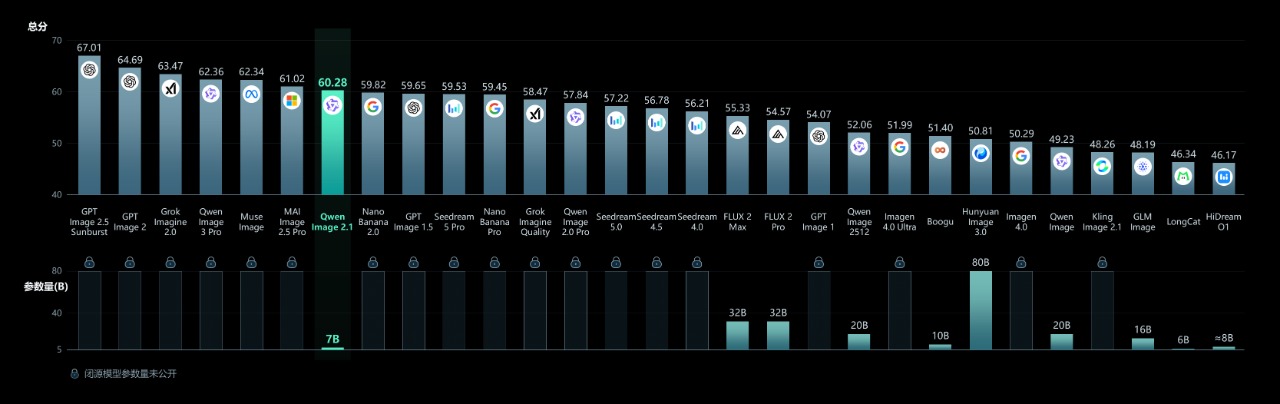
Alibaba published the weights of Qwen-Image-2.1the new model of the Qwen family dedicated to image generation and editing in a single workflow. The release, dated September 20, arrives with a detail that weighs more than any other: the visual generation component barely matters 7 billion parametersa fraction of many closed competitors.
Under the hood works an architecture from 32 layers DiT (Diffusion Transformer) single stream, supported by a Qwen3-VL text encoder with 8 billion parameters for prompt interpretation. Image encoding passes from a 64-channel RGBA VAE with 16x spatial compression, the component that allows the model to work natively with transparency instead of simulating it in post-production.
Qwen-Image-2.1 generates output up to 2048×2048 pixels and supports multiple aspect ratios, with peaks up to 2752×1536 on landscape formats. Native transparency in RGBA allows you to isolate a subject on an empty background or intervene on just the text of a layer without reconstructing the entire composition, a function that has so far been the preserve of dedicated photo editing tools rather than text-image generators.
Editing with ten references and localized changes
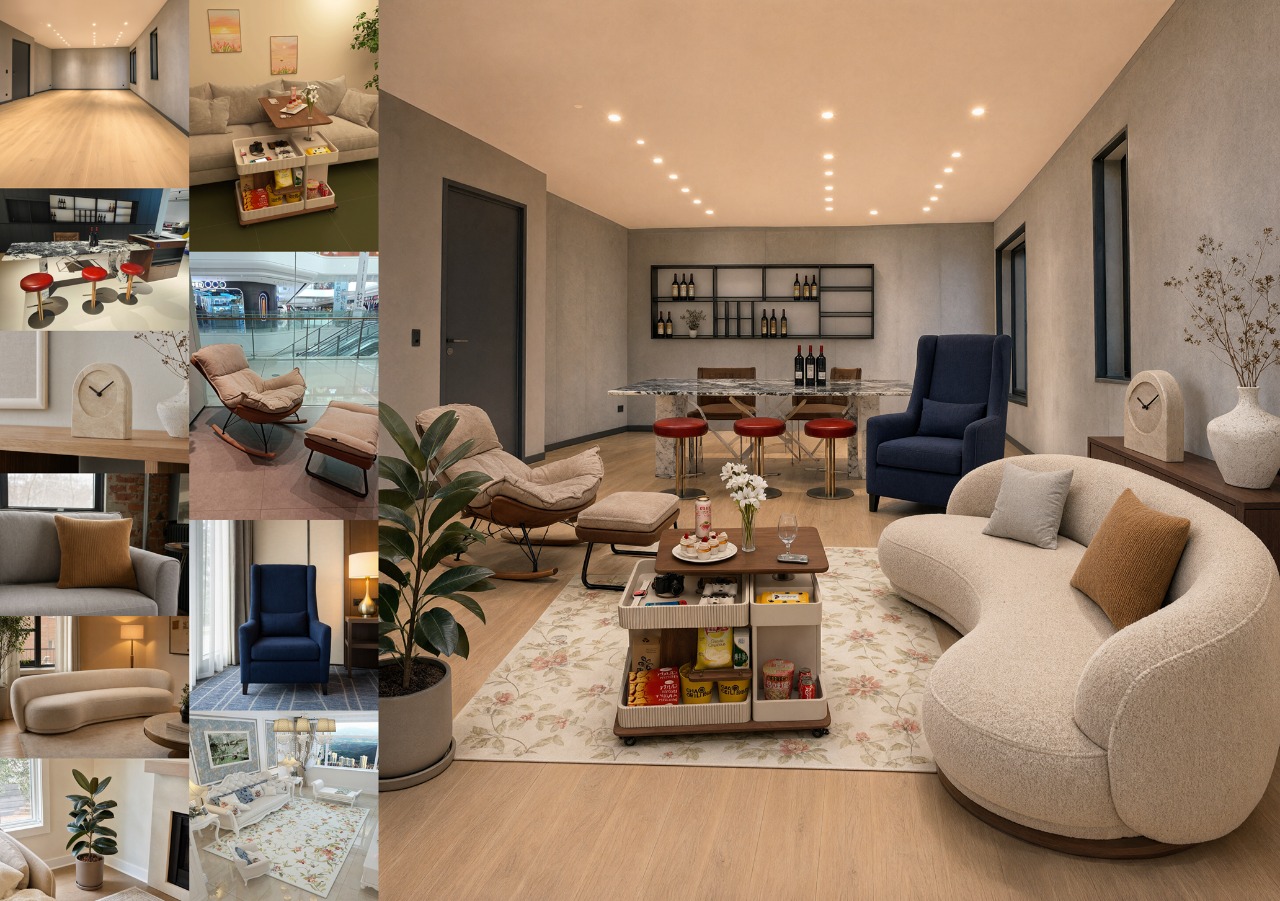
On the editing front the model accepts up to ten reference images in a single step, designed for group portraits, virtual clothing fittings or furniture compositions that keep the identity of people and products consistent between one shot and another. Localized changes are guided with circles, separate masks or hand-drawn annotations directly on the source image.
Alibaba declares a score of 60.28 for the model on the internal open source ranking, ahead of Nano Banana 2.0 and GPT Image 1.5. It is a data to be taken with caution: it comes from the team’s own benchmark, and the independent validation remains to be verified before considering it a comparison on equal terms.
The distribution follows the Qwen Research License Agreementwhich authorizes use, modification and redistribution only for non-commercial research and evaluation: anyone who wants to use the model for commercial purposes must negotiate a separate agreement with Hangzhou Tongyi Laboratory, the company that holds the license.
The weights can already be downloaded from Hugging Face and ModelScope, while community support arrived almost simultaneously with the release: Diffusers integrates a dedicated pipeline (QwenImage21Pipeline) and ComfyUI offers native compatibility from the day of launch. To complete the picture there are optimizations for inference via vLLM-Omni and SGLang, aimed at those who want to run the model on consumer hardware rather than on dedicated clusters.
