

For over 20 years Europe has kept telecommunications divided into 27 national markets, and it has done so above all in the name of security. Today that same argument leads to the opposite conclusion, because no country alone has the size to guarantee technological autonomy, and therefore security. The Nokia Innovation Day 2026hosted in the headquarters of Vimercate.
It was he who opened the proceedings Stefano GriecoCEO and VP of Nokia Italywho immediately clarified that the day was not intended to be a showcase of products, but a discussion on how to translate the sector’s ambitions into decisions. The technology arrived later, in the research and development laboratories.
Integrate the market to defend security
Connected remotely, Enrico Lettapresident of the Jacques Delors Institute and of AREL-Single Market Lab, spoke for the third consecutive year, returning to the single market, the theme at the center of the report he delivered to the European institutions in 2024. Compared to the appeal of a year ago, the picture has changed. On 24 April, Parliament, Council and Commission signed the joint roadmap One Europe, One Marketwhich he collects 42 sizeseach with a binding political deadline, and sets the deadline for completion at the end of 2027. According to Letta, the process was also accelerated by geopolitical and supply chain tensions, which no state can address alone.
The roadmap takes up the matrix that Letta himself had presented to the heads of state and government at the informal European Council last February. On the one hand three sectors remained outside the single market, namely energy, connectivity and financial markets, on the other three transversal instruments, the most concrete of which is the so-called 28th regime, renamed by the Commission EU Incan optional corporate law valid throughout the Union. That fragmentation also weighs on citizens, Letta recalled, is known to anyone who has tried to purchase a service online in France without a telephone number with a French prefix.
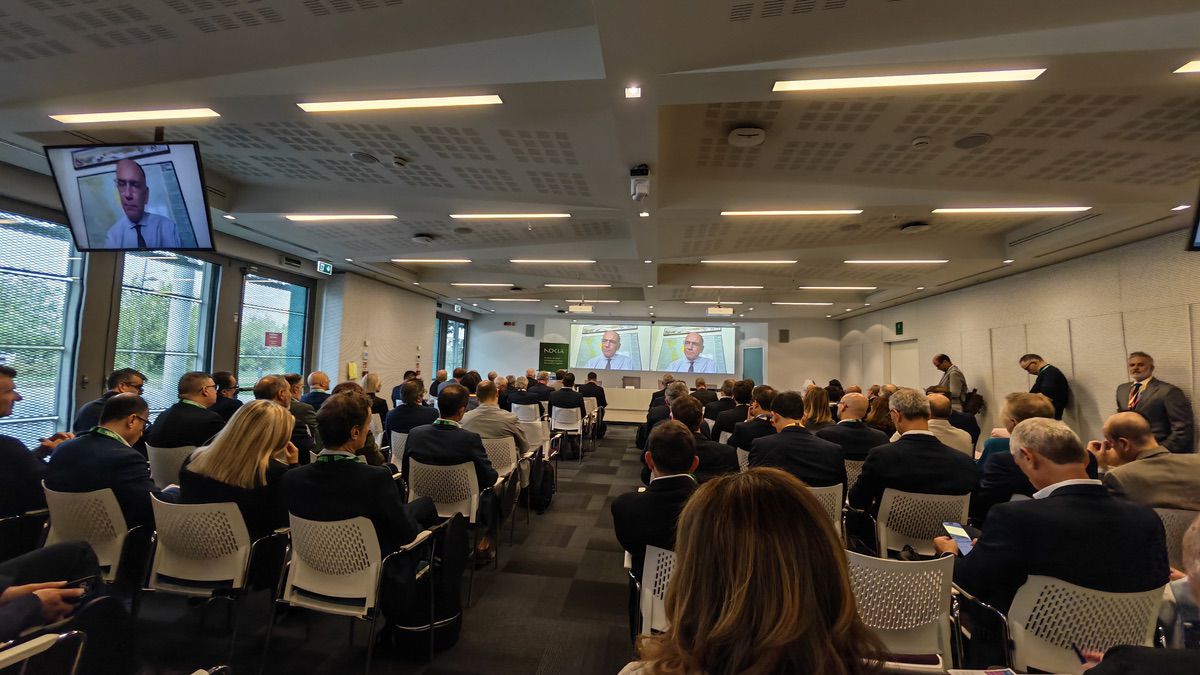
The passage that most concerns telecommunications, however, is another. When, about 25 years ago, it was decided to maintain the networks on a national basis, the main motivation was security, because in this way the networks remained under the control of individual states. Today the reasoning has been reversed. A small country can be innovative and competitive, Letta observed, but it is difficult to be autonomous, and without autonomy there is no security, which by now it is only built on a European scale.
In closing, Letta pointed to Nokia as an example of what Europe needs. “Nokia is a European champion and must become even more so, because Europe needs European champions”he said, underlining that not all continental champions have to be born between France and Germany and that they can also grow up in countries such as Finland and Italy.
From digital dependency to AI networks
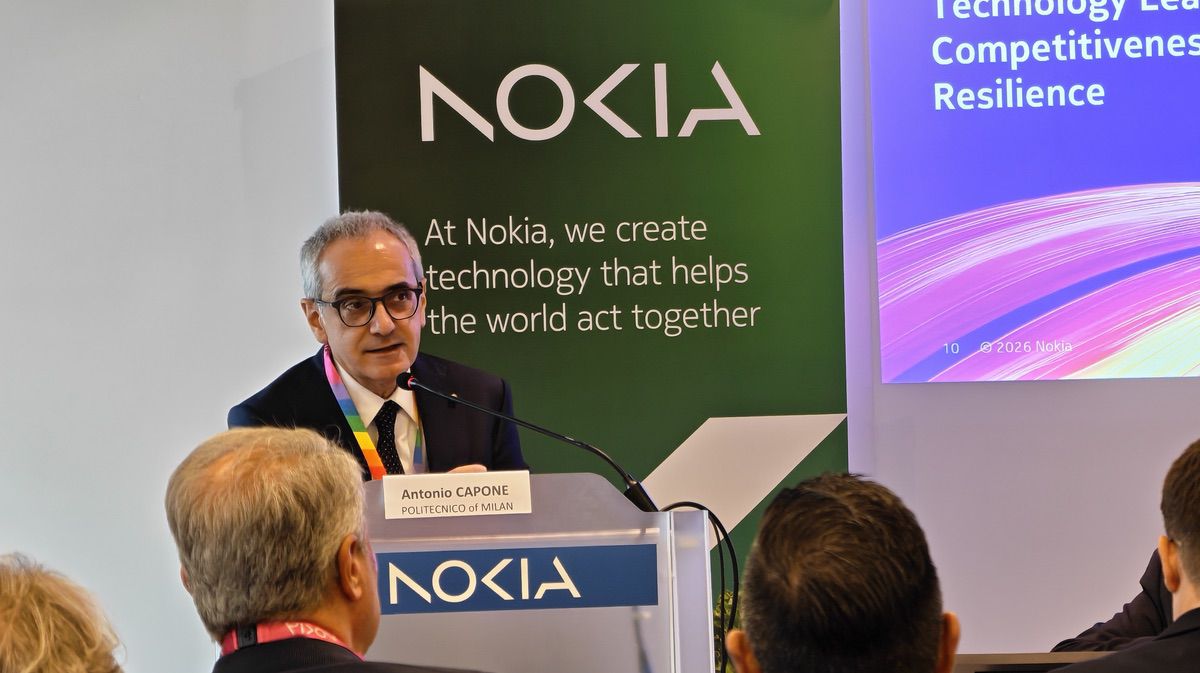
The round table moderated by Antonio Capone of the Polytechnic of Milan began with a paradox. The network works so well that it has become invisible, like electricity, and the value has shifted almost entirely to the services that pass through it, putting investments in infrastructure at risk. In Europe the effect was more marked, because the market is fragmented and the continent depends on external suppliers for applications. Telecommunications, Capone recalled, are among the few links in the digital chain still under European control.
The first obstacle to greater autonomy is financial. Raffaele Orianidean of the LUISS Business School, explained that European savings are abundant but reach risk capital too little. Technology companies that need to grow often find funding outside Europe, often even moving their headquarters elsewhere. Oriani then highlighted the dependence on large AI developers, whose business models do not stand up at current prices and are therefore destined to cost more when customers cannot do without them.
If capital conditions the growth of technology companies, the spread of AI to the rest of the economy also depends on data. Stefano Venturispecial advisor to Assolombardaexplained that small and medium-sized businesses are no longer wondering whether to adopt AI, but how to do it, and that a single company’s data is too little to exploit the most advanced solutions. For this reason, the association has started a project that aims to increase the productivity of the territory by 10%, starting from the sharing of industrial data between companies and supporting small companies with use cases, training and tutoring from the larger ones. The Finnish ambassador to Italy Matti Lassila he cited the example of his country, where almost every relationship with the public administration now passes through the smartphone.
Moving from companies that use technology to those that produce it, the problem changes form but not substance. Bernard PailleuxCOO of Nokia’s Network Infrastructure division, described an investment rush for AI that puts pressure on the entire supply chain, starting with memories, because demand grows faster than production capacity. The experience of recent years, according to Pailleux, teaches that efficiency and resilience are not the same thing and that the ability to withstand a crisis must be built before it arrives, with long-term relationships between suppliers and customers.
For the European Commission he spoke, also remotely, Thibaut KleinerDirector Future Networks at DG Connect. Kleiner started from the growth gap, with the European economy expected to grow around 1% in 2026 versus 2.5% for the US economy, driven by more than a third by AI. However, AI itself opens up a possibility. When it leaves screens and enters factories and objects, connectivity can no longer be considered a simple means of data transport and becomes an integral part of a continuum between network, cloud and edge. And in this scenario, quality industrial data, which European companies produce in abundance, counts.
The technological sovereignty package presented in June, which includes among other things the Cloud and AI Development Act and the Chips Act 2, introduces four levels of sovereignty based on verifiable criteria. “Sovereignty does not mean autarky”Kleiner specified. He did not hide the delays accumulated with 5G, with around 600 pilot projects launched but only a few hundred private networks active in Europe, compared to tens of thousands in China. With 6G, the first standard of which is expected in 2029, the objective is not to repeat the mistake, and the Commission would like to see the first concrete applications as early as 2028. Finally, the Digital Networks Act aims for a single authorization to operate throughout the Union.
In the Nokia Bell Labs, where the devices are put to the test
After the plenary sessions the visit moved to the laboratories, which work for the entire group in Vimercate. In Italy Nokia employs around 1,300 people, over 1,000 of whom in the Brianza headquarters, and half of these are involved in research and development, largely in optical networks.
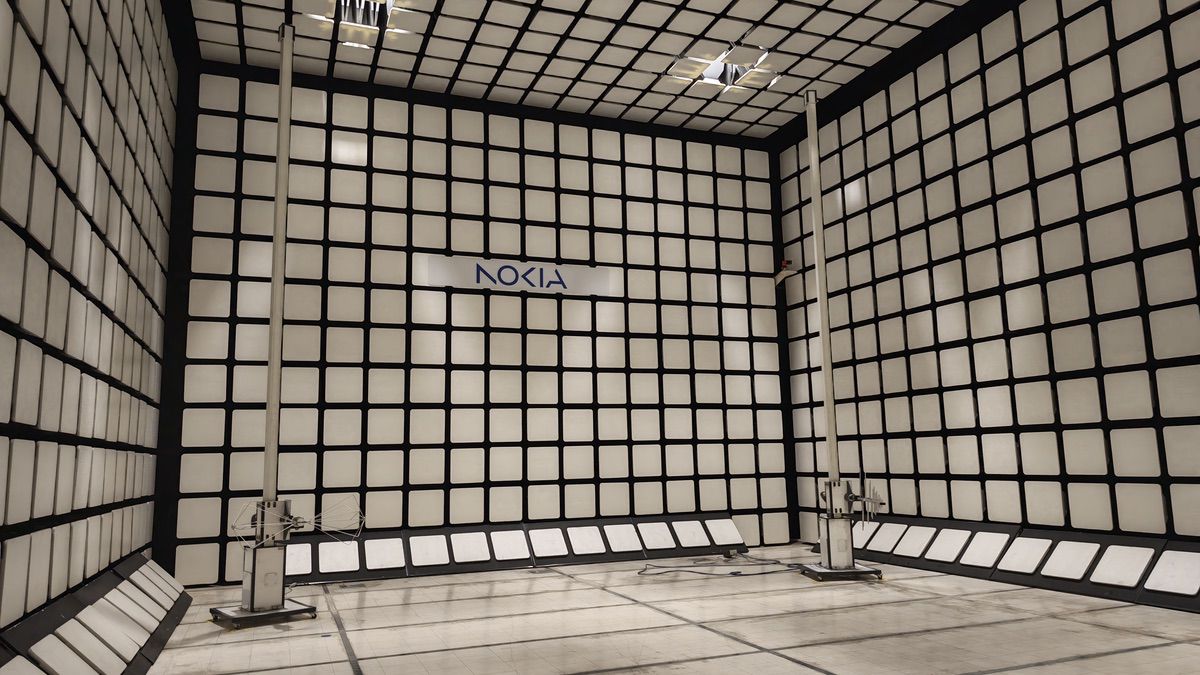
The first stop was the dei building Nokia Bell Labsseparate but adjacent to the headquarters, where Beniamino Gorini led the visit to the anechoic chamber. Here the products undergo electromagnetic compatibility tests, which verify that a device does not disturb other devices and continues to function in the presence of interference. The walls are covered with 75,000 ferrite elements that absorb radio waves, and the measurements range from 10 kHz to 40 GHz. The thresholds are much more severe than those envisaged for consumer electronics, because a television is asked to withstand a field of 1 volt per meter and a network device of 20. The reason, explained Gorini, is that if the home TV breaks down the problem concerns a family, while if it stops a base radio station thousands of users remain without service.
Next to the anechoic chamber there are the laboratories for climatic tests, from -40 to +150 degrees with cycles that last weeks, the vibration benches that simulate an earthquake of magnitude 8.5 and the salt spray cells, where the outdoor units remain for 60 days. Before a product reaches the market they are needed three to four months of testing on pre-series samples.
The new generations of coherent DSPs born in Vimercate
In the laboratory dedicated to optical transmission, the Bell Labs team designs the custom-made chips (ASIC) and programmable circuits (FPGA) that form the heart of transponders, the devices that transform the electrical signal into light. Grieco retraced the evolution of Coherent DSPsthe processors that encode information about light and correct distortions accumulated along the fiber. The first chip, developed around 2010, handled 100 Gbit/s per carrier, while the PSE-6s today it reaches 1.2 Tbit/s, i.e. 12 times as much in about 15 years. Upon acquisition of Finallycompleted at the beginning of 2025, features a 3 nm 800 Gbit/s DSP, optimized in terms of cost and performance.

The effect can be seen by comparing two cards with the same dimensions. The one based on the third generation of DSP, from 2015, offered two 200 Gbit/s lines, while the current version with PSE-6s reaches 2.4 Tbit/s, six times the capacity in the same spaceconsuming much less energy for each bit transmitted. The new high-capacity platform carries four 1.2 Tbit/s lines on each of them, and a card with 16 800 Gbit/s interfaces, for a total of 12.8 Tbit/s, is already under development in the laboratory. Above all, connections between data centers are driving demand.
The visit ended in Nokia Innovation Hubthe space where the company welcomes partners and customers, with a demonstration that takes DSPs beyond broadcast. In fact, the distortions corrected by the processor tell what happens to the cable, and Nokia has chosen to exploit them instead of discarding them. With the fiber sensingvariations in the polarization of the light reveal stresses and vibrations in the cable, and machine learning algorithms distinguish the trace left by an earthquake from that of an excavation. There tomography of fiber instead exploits the unique way in which chromatic dispersion and non-linear effects accumulate, and allows the type and length of each section, the losses and the gain of the amplifiers to be reconstructed on an operating link.
The two parts of the day tell the same story. In the room, European sovereignty was discussed as a question of size, capital and common rules. In the laboratories it took the form of chips designed in Italy and adopted by Nokia all over the world. It is on this basis that Nokia claims the role of European supplier capable of covering the entire network. If Europe really needs continental champions, as Letta recalled, their solidity is also measured in their ability to transform research into products competitive on a global scale.