
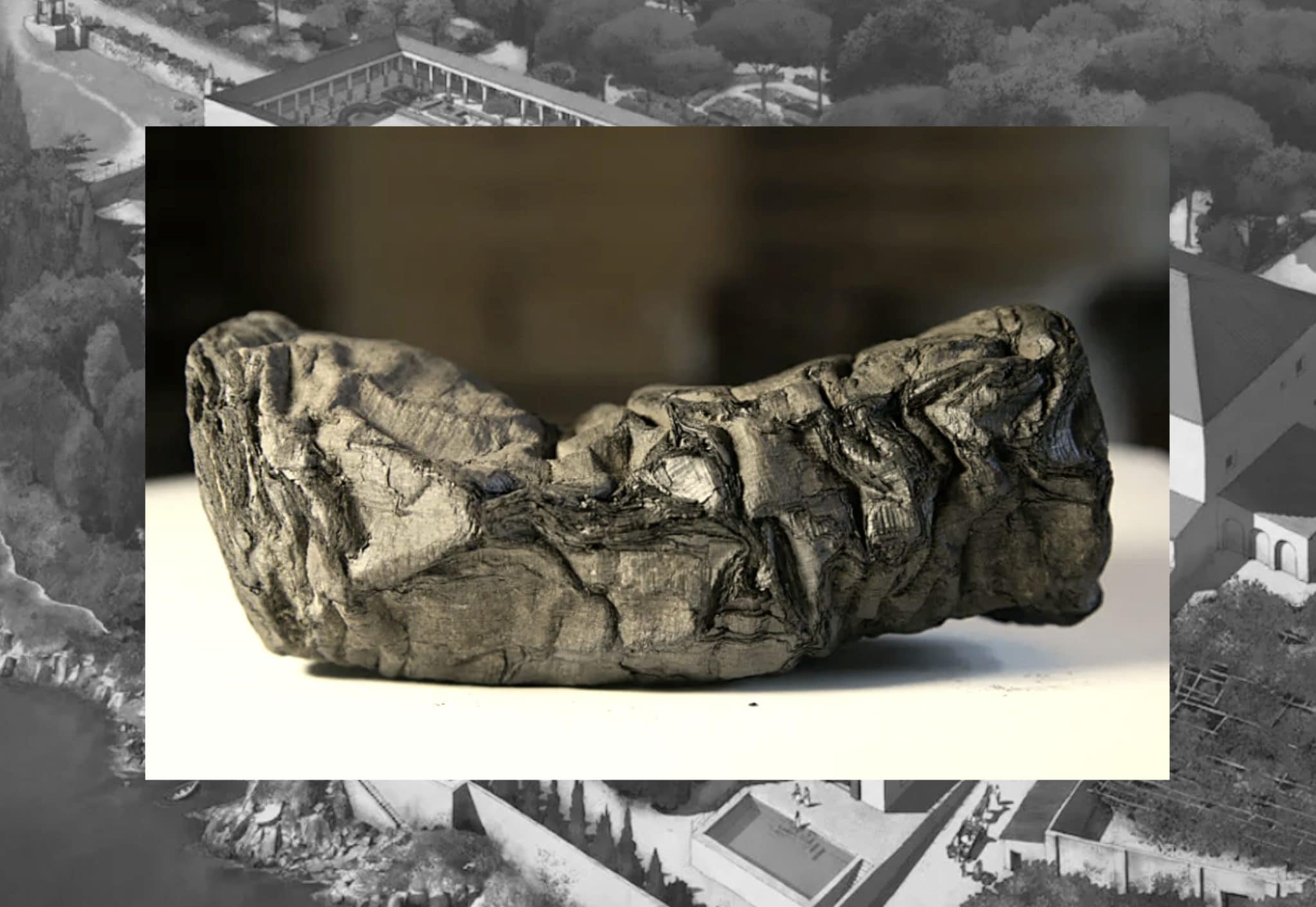
The Herculaneum papyri are 1,800 documents that remained preserved after the eruption of Vesuvius in 79 AD. Some are in excellent condition, so much so that they have been read and analysed. Others, however, are little more than pieces of coal. For these, the University of Kentucky has opened the Vesuvius Challenge, a challenge to analyze papyrus not yet opened with artificial intelligence.
The role of artificial intelligence in scientific research is set to grow. They demonstrated it Nobel given in the last year. The one for Physics was given to John Hopfield and Geoffrey Hinton for their studies on neural networks, the discovery underlying the algorithms that drive artificial intelligence. Not only that. The Nobel for chemistry also went to two scientists who work with artificial intelligence: Demis Hassabis and John Jumper, both studying the structure of proteins with the project Google DeepMind.
For this reason, CNN has dedicated a long report which includes all the discoveries made with artificial intelligence in 2024. From new carvings found in the Nazca desert to analyzes of whale language. However, the first case cited in this report concerns a study on Italian finds: i papyri of Herculaneum.
What is written in the Herculaneum papyri
Looking at them carefully it seems impossible to read anything into them. The Herculaneum papyri were found in the Villa of the Papyrithey too were incinerated by the eruption of Vesuvius 79 d. C. There are 1,800 in total, in various states of conservation. Some have opened beds, others could destroy themselves as soon as they are picked up.
We tried the app to create finished kisses, it can be used with anyone: even with those who don’t want you
For samples not yet deciphered theUniversity of Kentucky opened the Vesuvius Challengea project that aims to analyze the content of papyri with artificial intelligence. The idea is to use algorithms based on machine learning to analyze the results of X-ray analyses.
In October 2023, a single word had been deciphered: “Purple”. And subsequently 2,000 characters were analyzed, divided into 11 columns of text. In the parchment analyzed up to this moment there should be a philosophical text never revealed until now: attributed to Philodemus of GadaraGreek philosopher of the 1st century BC