
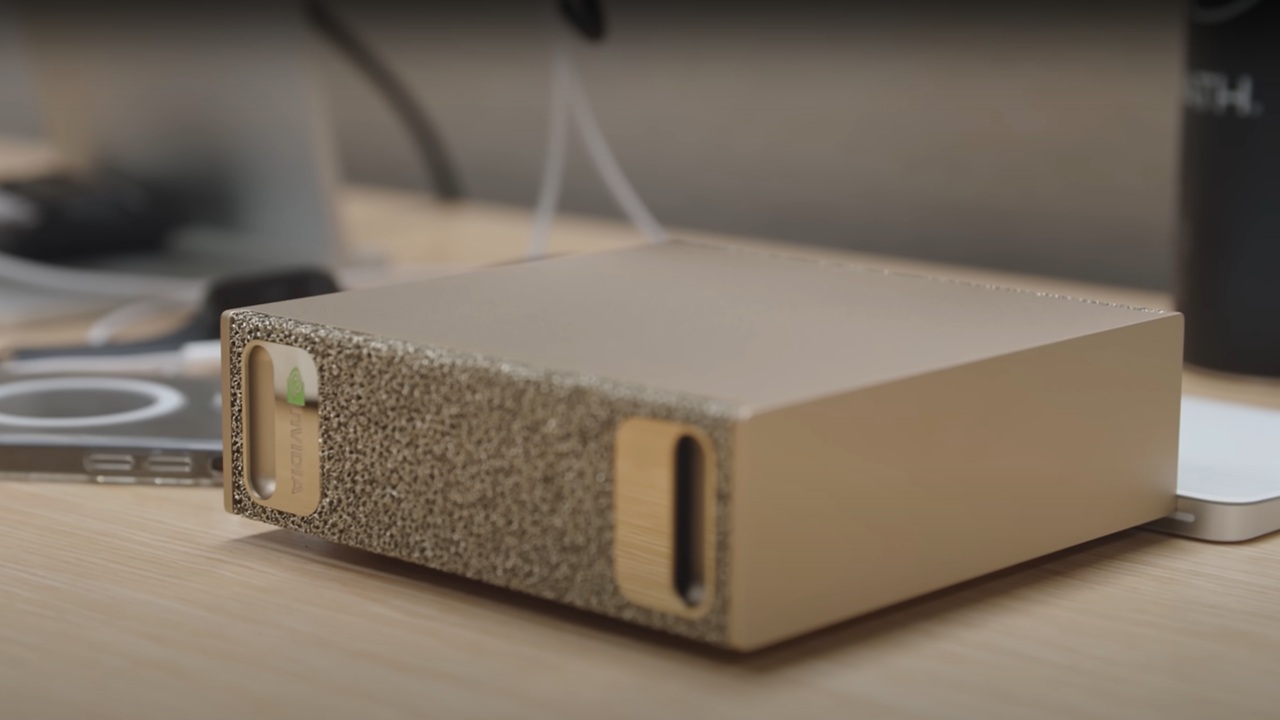
Perplexity and NVIDIA announced Portable Computersone version of Perplexity Computer designed according to a “local-first” approach e designed to perform activities directly on the device of research, analysis, reasoning and management of AI agents. The software debuts in preview on NVIDIA DGX SparkNVIDIA’s compact desktop system dedicated to artificial intelligence, with the goal of keeping sensitive data and operations locally and resorting to the cloud only when necessary.
DGX is based on the platform Grace Blackwell GB10. The system integrates a 20-core Arm CPU and an NVIDIA GPU with 128GB of unified storage. Installing Portable Computer can be done via a one-click process from the Perplexity application.
The initiative arises from the growing availability of models powerful enough to be able to directly manage activities based on confidential data, such as private code bases or company documentation, directly on computers. Portable Computer then runs Perplexity Computer entirely on the deviceallowing you to analyze files, summarize documents and execute complex workflows without consuming credits for activities managed by local models.
The system uses Qwen 3.8 27B or PPLX 27B on DGX Spark, a post-trained version of Qwen developed by Perplexity. NVIDIA Nemotron 3.5 Lightning, an open model with 30 billion parameters, is also expected to arrive in the model selector. It’s not just the model that runs locally: the orchestrator, planner, tool router, scheduler, persistent task queue, and local search index also run on the device.
The architecture was designed to complete most operations locally. The model can read files on your computer, search documents and code, perform actions on the system, and keep processes active over time. When a task requires capacity that is not available locally, Portable Computer can escalate to the cloud instead.
This mechanism allows, for example, to keep confidential details of a financial document on your device and use the cloud later to retrieve updated market information or previous comparable transactions. The local orchestrator can turn to cloud services when web access, browser usage, connected applications, or one of more than 15 frontier models available for advanced reasoning tasks is needed.
Passing content from your device to a cloud service also requires user permission. The goal is therefore to separate sensitive information that may remain locally from requests that, by their nature, require updated data or superior processing capabilities.
Portable Computer can also interact with external applications and services through dedicated connectors. Those listed include Google Drive, Gmail, Slack, and GitHub. In a practical scenario, the agent can locally analyze new reports on GitHub and compare them with bug reports arriving via Gmail, then prepare a Slack message with the top three issues and a proposal for assignment to managers.
The local component isn’t just about data and text processing. Portable Computer also integrates Perplexity search when you need to access external information, offering deep search and search modes with citation-based results. This way you can keep workflow execution local and use the Web only for the part of the task that requires up-to-date information.

Dictation was also designed to work on the device. Portable Computer uses NVIDIA Nemotron 3.5 ASR Model for local transcription, allowing the user to give instructions while consulting a document or working on a code base without sending the audio to the cloud. The transcription and subsequent file operations therefore remain on the computer.
On the security front, Perplexity indicates a similar setting to that of the cloud version of Perplexity Computer: Code and tool execution occurs within isolated sandbox environments, with controlled access to local files and linked applications.
The software is initially available to Pro and Max plan subscribers using DGX Sparkwith a first version intended for Linux. Support for Windows is expected to Septemberwhile Perplexity subsequently plans to bring Portable Computer also on PCs equipped with NVIDIA RTX GPUs.