
The NCA is the National Crime Agency of the United Kingdom. In a series of guidelines it has explained everything that can happen when a photo of a minor is published on social networks. The suggestion is to never share them: at most create groups of close friends.
Sensitivity is changing, maybe nnot fast enoughto. Previously, every moment was published, perhaps also inspired by creators who documented the lives of their children with dozens of photos and videos. Now it’s hard to find parents who still they publish whole photos of their children. Sometimes they are of shoulderssometimes their faces are obscured by an emoji. Maybe it would be better to remove them altogether. In the last few days the National Crime Agency of the United Kingdom has published a series of new guidelines explaining that parents should never publish photos of their children online. We leave you here the full document, written together with the Internet Watch Foundation (IWF).
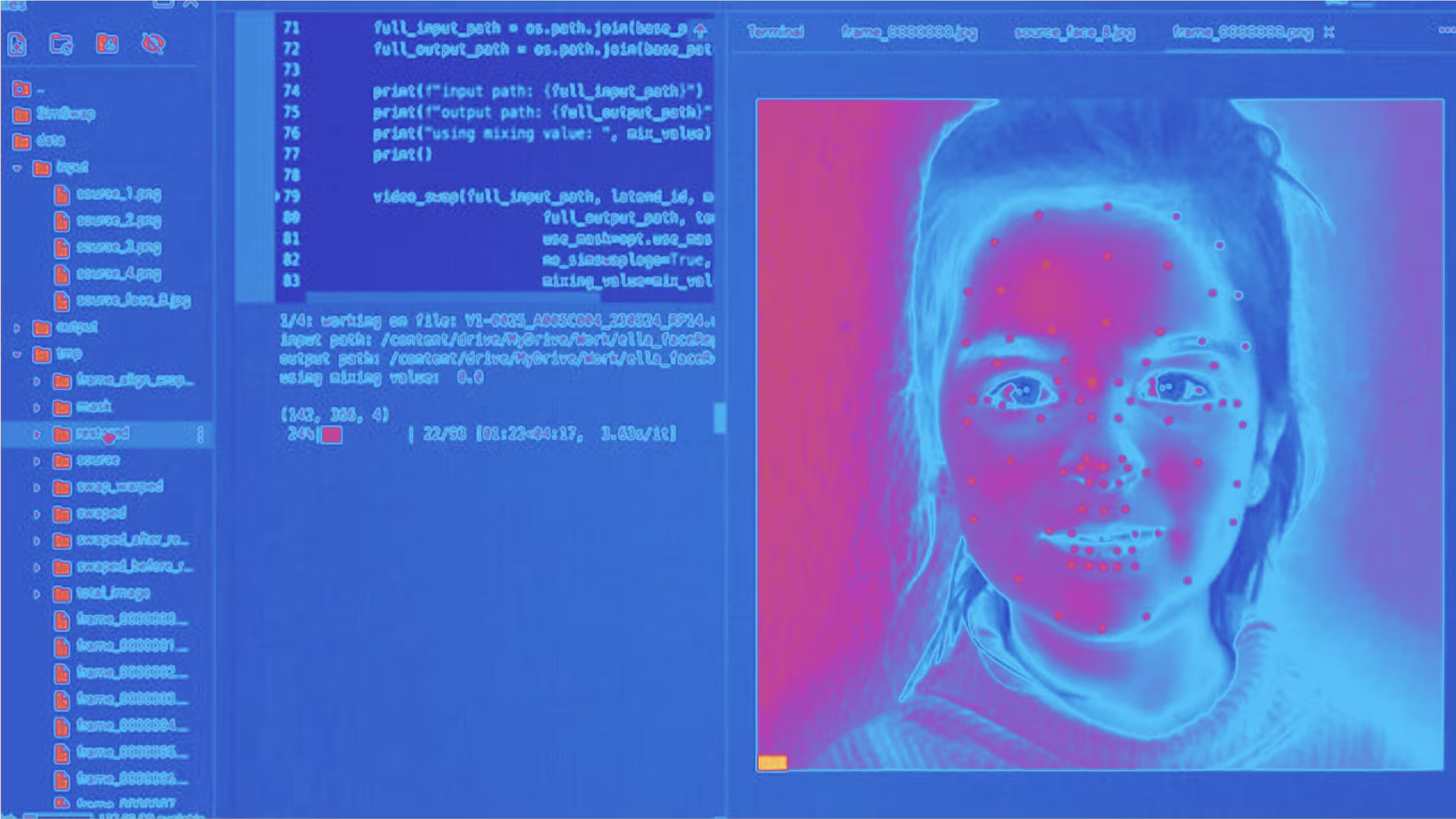
Until now the risk was above all that of expose minors. Build them a digital identity, attract sexual predators, reveal their movements and habits. But now the problem is another. In recent years we have seen the growth ofimpact of artificial intelligence in the production of images disseminated without consent. It’s a phenomenon that we have documented several times: today it doesn’t take much to create a deepfakea fake image where a normal shot is transformed into a nude thanks to algorithms.
Once upon a time there were photomontages, of course. And there were entire archives dedicated to famous people, as the CFake case revealed in recent weeks. Now artificial intelligence can turn any shot into a pornographic video. And it’s something he can do whoeveradjusting some indication as if he were working with ChatGPT. Sometimes you don’t even need to put in too much effort: all you need is an app. Only to January 2026 a huge case has opened related to Grokthe artificial intelligence of
Restrictions removed from Mythos: Anthropic’s most powerful artificial intelligence returns to Italy
All this also happens with photographs of minors. According to data from the Internet Watch Foundation, in 2025 child pornography material generated by artificial intelligence increased by 14% compared to the previous year. According to IWF analyses, they have been identified 8,029 images And video realistic ones made with artificial intelligence. Dan Sextonone of the IWF managers, explains that the only way is to not publish photos of your children on social media: “I don’t know what else to say to parents. I would be very cautious because there is no protection. If you want to share the images as much as possible, use the Close Friends function.”
Control over licenses for the use of images
In this analysis it is suggested a next step. There National Crime Agency he also suggests checking the agreements that have been signed for the management of image rights with schools and sports clubs. That privacy sheetso to speak, which is usually made to sign by parents to allow the school or football team to use his image on social media or websites. Here you are. On this too, parents are asked to pay more attention, understand what the image is used for and, if necessary, have it removed from public portals. Explains Tom Dysonalso from the IWF: “If you wish to have a photograph of your children removed from a website or social media, you can do so without any problems.”