
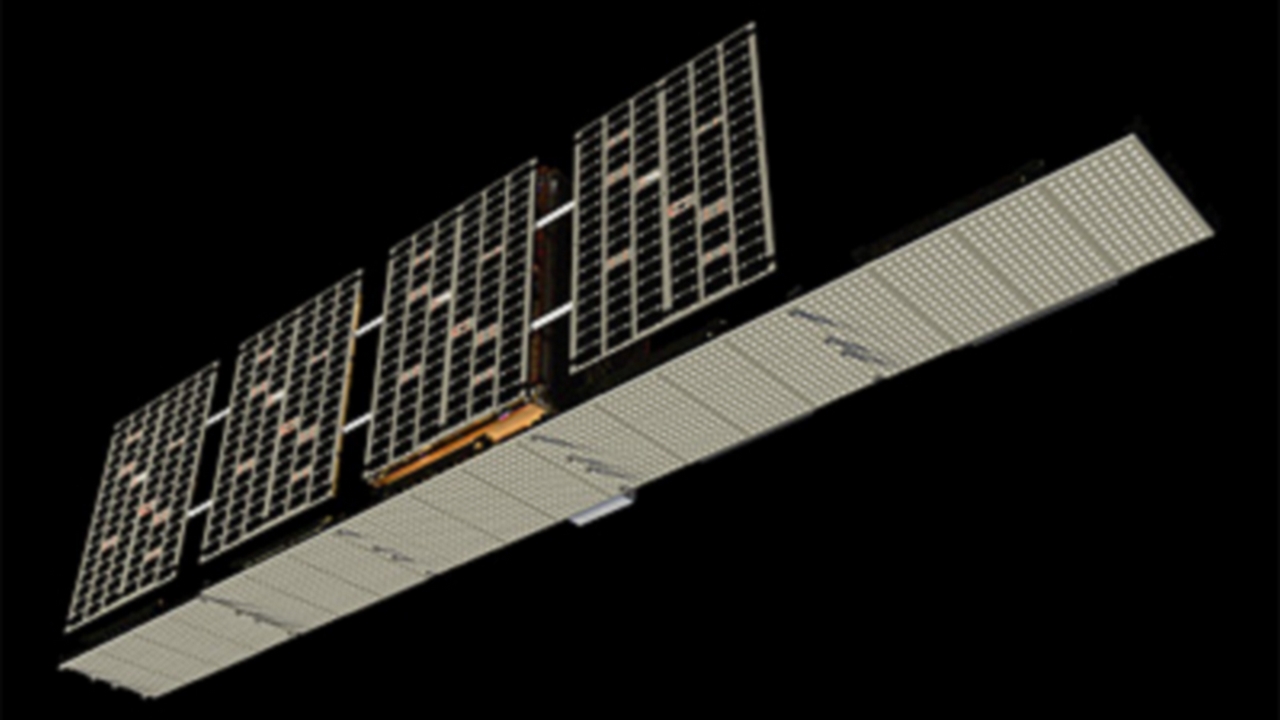
The Space it is not only scientific research, cooperations or commercial operations but can also be employed for military purposes and for the acquisition of strategic information during conflicts. A recent example concerns the operations of Russian spy satellite Kosmos 2612 and of ICEYE-X36 satellite. The latter belongs to the US branch of a Finnish company (ICEYE) which allows theUkraine to have synthetic aperture radar (SAR) data in preview and in a priority manner.
Low-Earth orbit hostilities between the two objects began some time ago and were noticed by anyone with access to the TLE (Two Line Elements) data, which is public. Now the situation is evolving quickly with the Russian spy satellite Kosmos 2612 which would be located very close to the ICEYE-X36 satellite without having permission and, potentially, creating a dangerous situation.
The Russian spy satellite Kosmos 2612 is tracking the ICEYE-X36 satellite
According to what the astronomer reported Jonathan McDowell (expert in tracking objects in orbit), the Russian spy satellite performed a flyby a few kilometers away and at a relative speed of 20 km/h on the morning of October 16. A further update showed how Kosmos 2612 has performed an orbital maneuver and is now 5 km (or less) from the ICEYE-X36 satellite. As written by McDowell in a post on X “As far as I know, this is the first rendezvous in LEO between two active satellites where the owner of one of the two satellites has not given approval”.
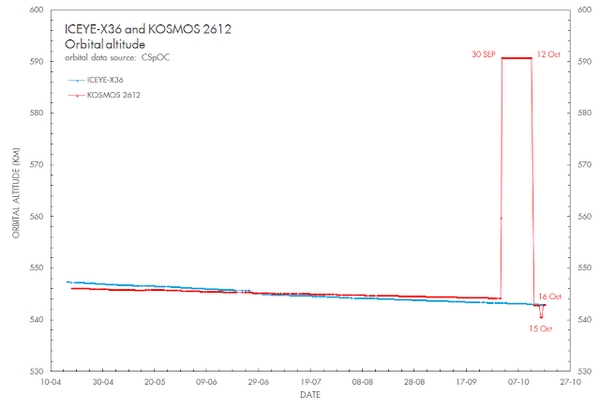
Another analysis was also carried out by Marco Langbroek (expert in satellite and orbital trajectories analysis). In a recent post on his blog, Langbroek reaches conclusions similar to those of McDowell and other analysts, also adding that in the next few hours the two satellites could be a few meters away from each other.
We currently don’t know if Kosmos 2612 wants to carry out an ASAT (anti-satellite weapon) attack of some kind, whether it is just an operation to intimidate an important source for the enemy or is gathering information. ASAT attacks could occur in several ways, as recently explained by the Space Force, and could cause serious problems in LEO.
Even just approaching a satellite without having the consent of the satellite operator could be problematic. Even though the relative speeds are low, the damage from a collision could be huge, creating a cloud of debris. An attack of some kind would also be observable by independent bodies or agencies and would be a serious threat to future operations in space.