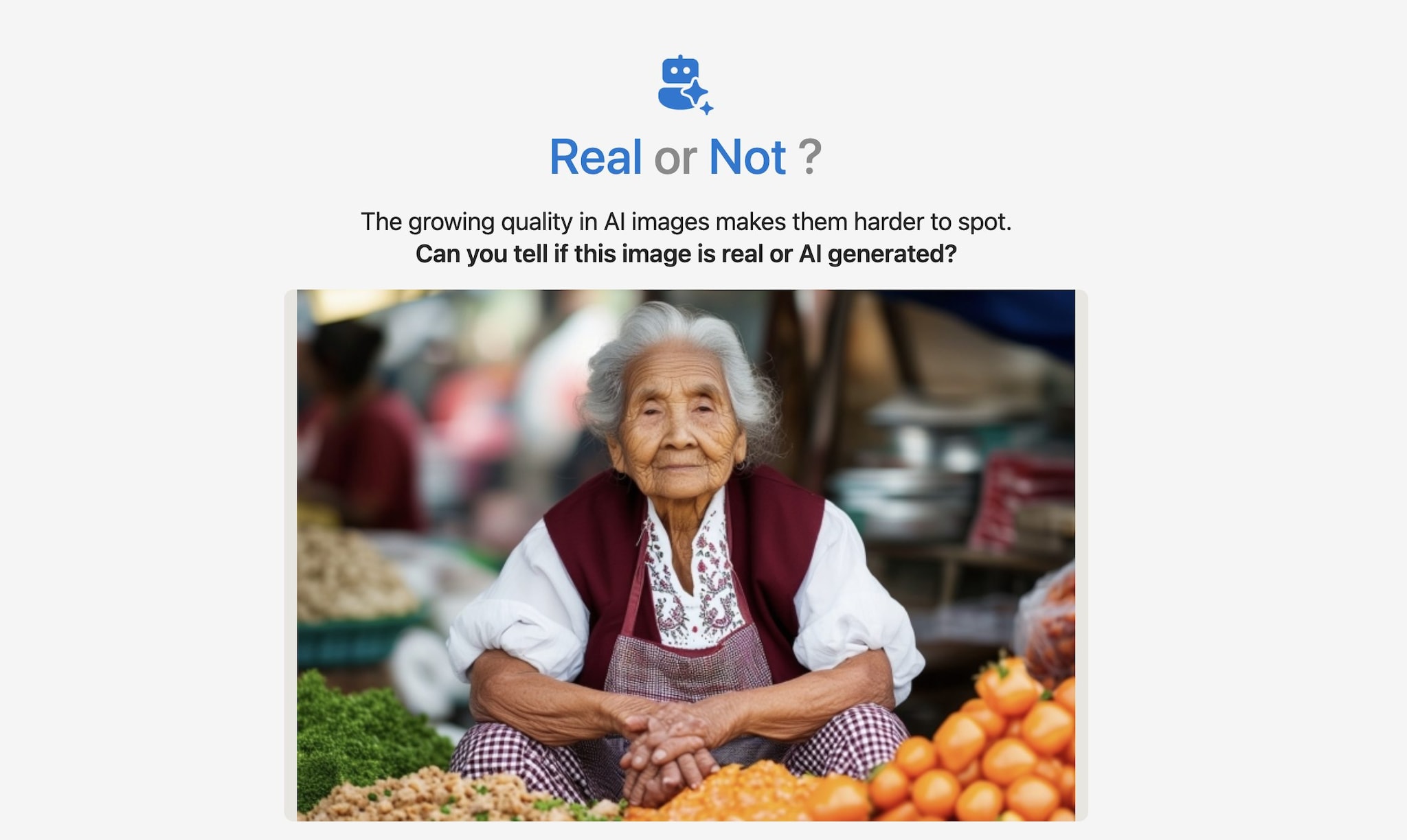
15 photographs. For each photograph two choices: Real or artificial. In the end a score. Microsoft has published its test to check if users manage to distinguish the images taken by humans and those created by artificial intelligence. It is a simple test. Every time you click a Microsoft image he immediately tells you if you have given the right answer or the wrong answer.
Not only that. In the end, beyond the total score, the percentile of the answers in which you find yourself also tells you. The test shows only photographs, even if with Several types of subjects. There are portraits, night photos, landscapes, moving subjects, war scenes, travel or still lifes. There are also images that seem to come out of the Stock Archive of a magazine. The test was officially launched in theAugust 2024. In the last few days it has been fished by the Italian media.
How to do the Microsoft test on artificial intelligence
The test appears on a neutral domain: realornootquiz.com. There is not much more, you can rightly take the test and then understand the result. At most once finished You can repeat the test. Do not be fooled by the sequences of answers. The choice of images is completely random. You may also find in front of ten images made by artificial intelligence before a real one.
What are the works that will not disappear with artificial intelligence: Microsoft’s study
We have redone the test several times. We admit it: it is complex. We have not succeeded even once a guess all answers. Some images created with artificial intelligence, especially when it comes to landscapes, still lifes or objects are difficult to understand. Simpler instead with portraits.
Human beings they can still be recognized. Of course, it is more difficult than once when anyone could understand that the images of Donald Trump arrested were a fake. Yet something still remains. The skin is glossy, almost smooth pixels after Pixel. The reflections of the lights in the eyes are too bright and the expressions always clear, symmetrical, clear. They rarely show an uncertainty, unlike us.