
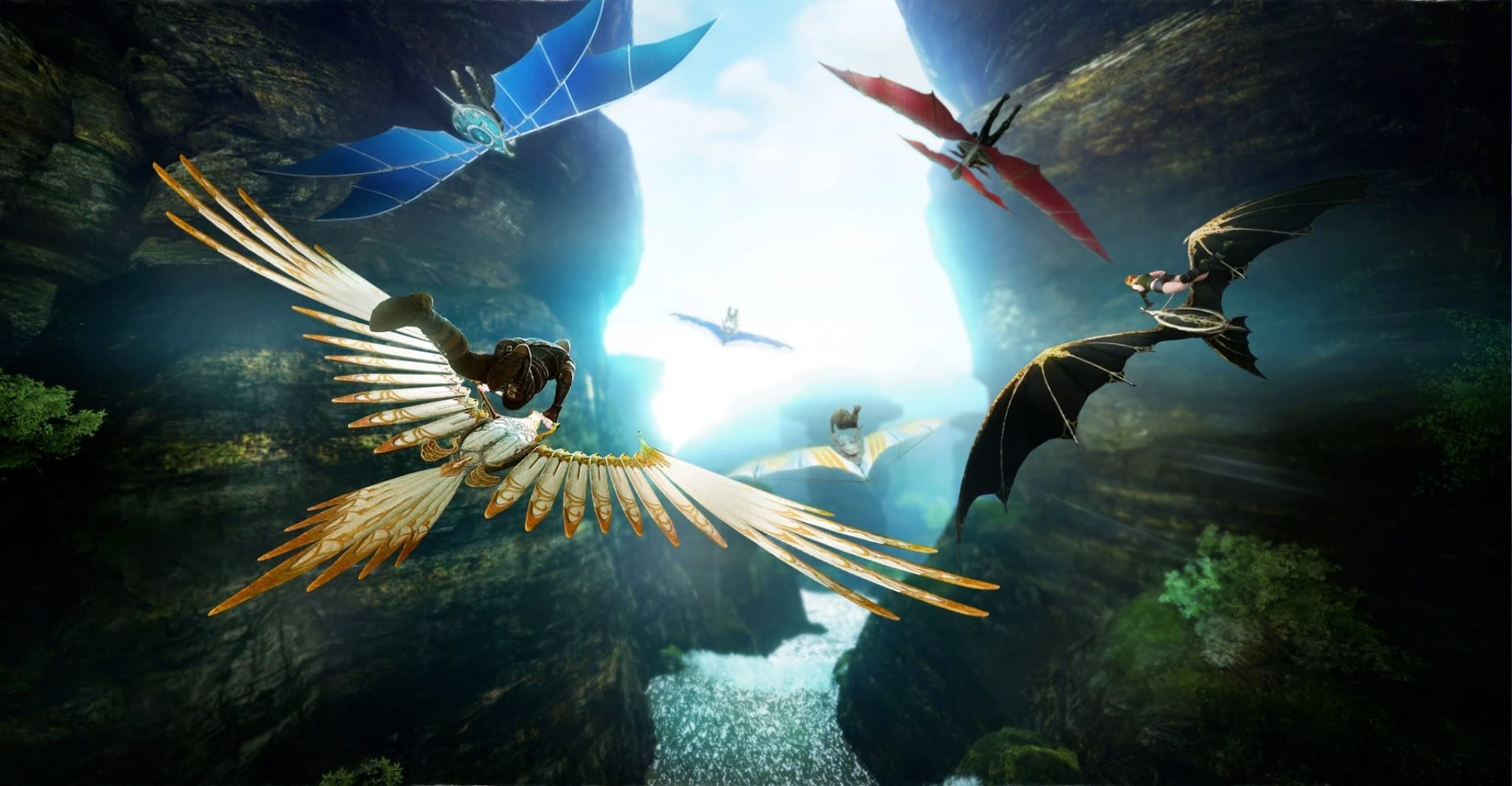
In the Australian film These Final Hoursthe Earth is about to be destroyed by a meteorite. In the 12 hours before the Apocalypse, people decide to no longer respect social norms. The result is murders, orgies and violence. But would this really be the case in reality? Not exactly. In 2017, a group of researchers carried out a study on social behaviors in an apocalyptic context through a video game: ArcheAge. We are talking about an mmorpg title, i.e. a massively multiplayer online role-playing game, developed in South Korea by XLGames. The study was recently taken up by sites specialized in science, such as IFLSciencegiven the increasingly uncertain current context. A test that leaves some optimism.
The social experiment on ArcheAge
In games mmorpgdevelopers often release closed betas. They are temporary trial versions, limited to a small number of users. At the end of the testing period, everything is reset: progress, characters, inventories. In short, un true digital doomsday. Through the analysis of 270 million actions performed in the game — missions, combat, trading, chat — researchers studied how users behave when faced withimminent Apocalypse of the closing of the ArcheAge closed beta.
The first surprising fact is the absence of social collapse. Most players continue to play as normal. Chats, on the other hand, show a slight increase in positivity: in channels dedicated to group activities, such as expeditions or raids, the tone gradually becomes friendlier. It’s not all roses and flowers though. About four in ten players show a anomalous behavior compared to routine. The change is evident both in those who stay until closing and in those who stop playing before.
Why GTA 6 has been delayed again: the developers have more than one problem
The latter are nicknamed “churners”. Aware that they will not return, these users free themselves from inhibitory brakes and become more aggressive. For example, cases of player killing, i.e. the killing of other players, are increasing. It is a behavior permitted by the rules of the game but normally risky, because it can lead to penalties and the loss of objects. Yet, when you don’t expect a tomorrow, risk loses all meaning.
This is a example of online disinhibition. Those who stay until the end, however, do not show this drift. On the contrary, we observe a increase in social interactions: more messages sent, more invitations to join a group, more exchanges of objects. It is as if the imminent end does not push chaos but the need for community.
If there is one behavior that everyone shares, it is the abandonment of activities oriented towards character progressionsuch as quests, leveling up, improving skills, accumulating resources. All these stocks fall dramatically. The famous phrase attributed to Martin Luther, “if the world ended tomorrow, I would still plant my apple tree”, is not confirmed in the behavior of the players, who stop “planting” anything.
The beauty of humanity in video games
The authors of the analyzed article, which is titled “I Would Not Plant Apple Trees If the World Will Be Wiped: Analyzing Hundreds of Millions of Behavioral Records of Players During an MMORPG Beta Test”, remind us that a video game is not real life. No physical danger, no concrete loss. However, virtual worlds are important to those who inhabit them: they require time, effort and sometimes even money. Their total destruction therefore has a psychological weight. The ArcheAge study shows that even when the future disappears, most people remain cooperative and maintain positive social interactions. Only a minority loses their inhibitory restraints, but overall a surprisingly human picture emerges.
This is not an isolated case. Other video games have shown how virtual communities can reflect the best of human beings in the most critical moments. During the pandemic, Animal Crossing: New Horizons it has allowed millions of players to build relationships, exchange gifts, and share creativity and even grief. Even titles like Stardew Valley and Minecraft encourage collaboration and caring for others, demonstrating that digital worlds can become spaces of solidarity and positivity, even when everything around them seems to be falling apart.