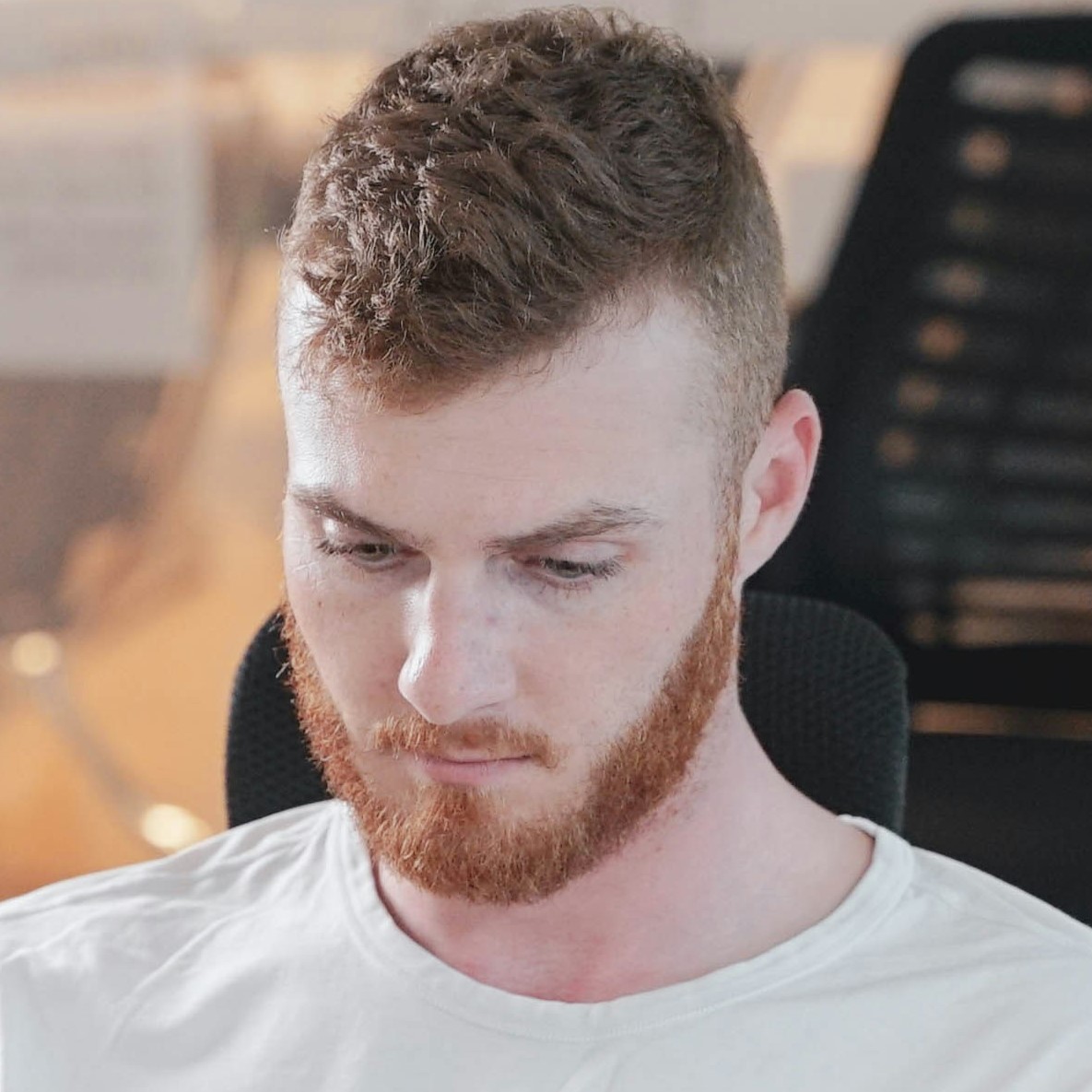
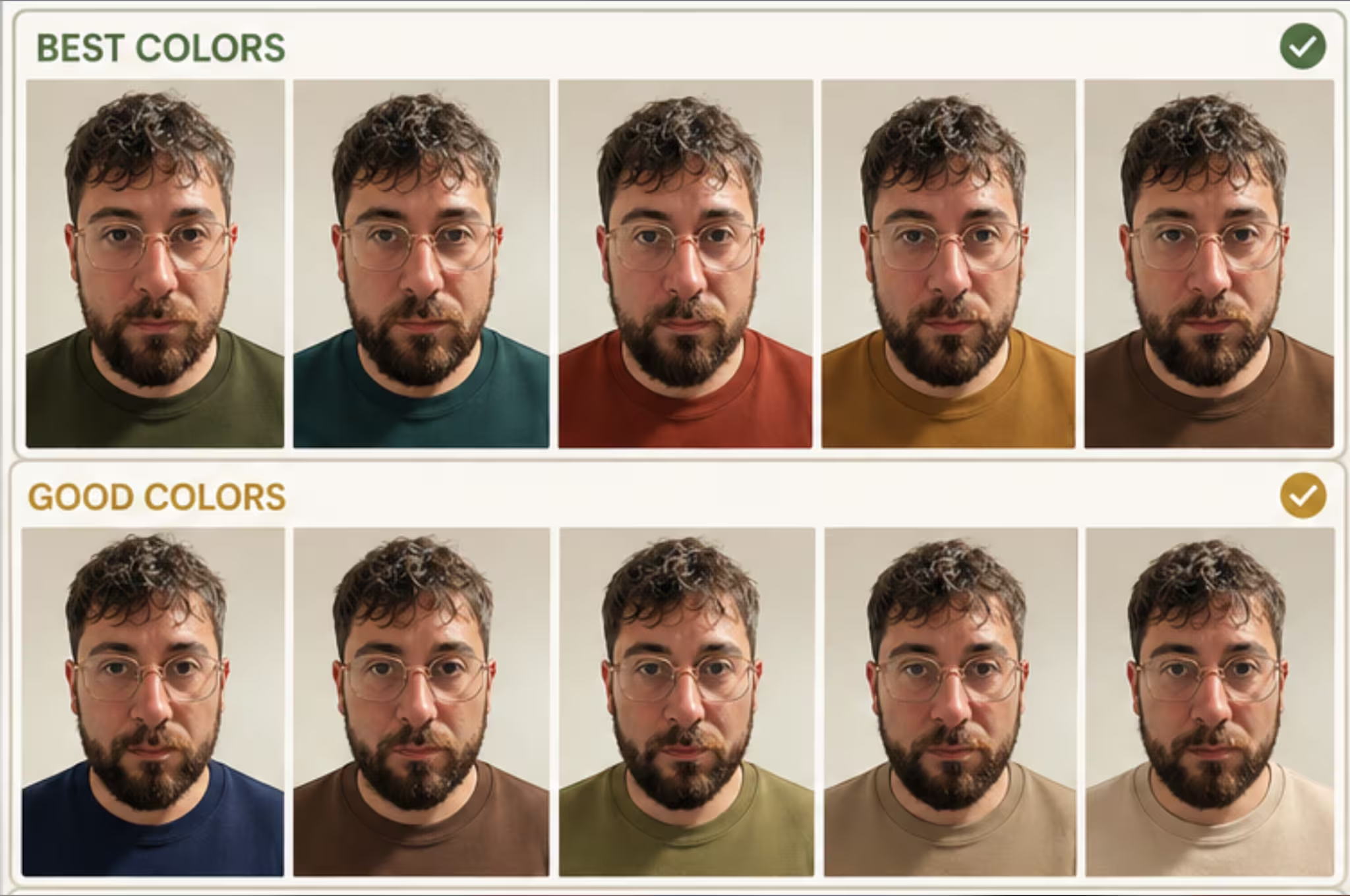
During the usual daily scrolling in the last few days, I happened to see some posts on social media that have caught my attention: my lazy eye, typical of someone about to slip gently into an afternoon nap, was awakened by colored rectangles and placed in a gradient palette. I bat my eyelashes and, almost unconsciously, I go from slouching after coffee to position of the pro gamerwith the smartphone instead of joypad.
I read the copy and I discover that that grid of colored squares with the face of a total stranger were created with a prompt fired on ChatGPT Images 2.0: the model that improves the management of text within images, fonts and above all visual reasoning. What I was seeing, in fact, was not simply a well-ordered post or a styled screenprint Andy Warholbut a full-fledged image consultancy session. If there has always been the certainty that AI could take away our journalists’ jobs, now too Enzo Miccio and Carla Gozzi they must start shaking.
How to carry out your own armochromia consultancy on ChatGPT
Under the post I saw, there was this prompt: “Create a color analysis chart staff using this portrait. Show a color comparison of the clothes to highlight which colors best suit the subject. Create a hairstyle analysis chart using this portrait. Show a comparison by placing hairstyles side by side to highlight which ones best suit the subject”. I deleted the part about make up, but seeing the results I perhaps regretted it. After the classic copy-paste without reading a line of the prompt, I also uploaded a photo to the same message. Even though I have said the word in my life “armochromia” much less often than terms like “very precipitately”I don’t know why, I felt I couldn’t give up my little scheme.
OpenAI changes the rules on data processing: it will now also be able to receive information from advertisers
Within seconds I had one palette consistent with my complexion. Alongside, a complete guide on hair and beard cuts. What came out looked like a synthetic image consultancy sheet. Not a fantasy simulation, but a believable, orderly layout, designed to take practical decisions. The graph showed my face with different colored hairstyles and clothesclassifying them between those that suit me best, those that are acceptable and those to avoid. Not that it convinced me much, given my low self-esteem, but the fact of becoming a sort of Barbie who changed clothes and hair glued me to the screen. Maybe I should talk to mine about it psychologist.
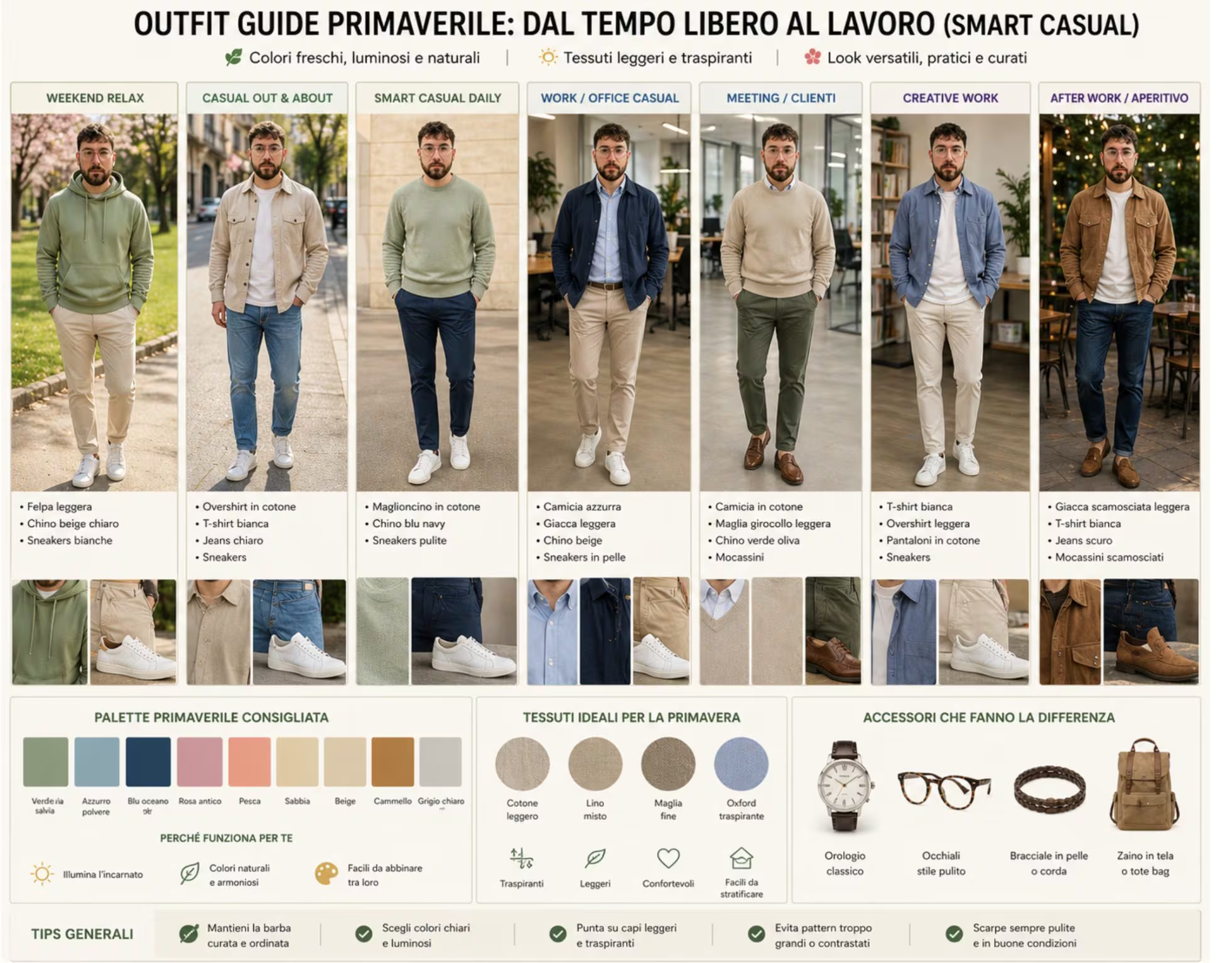
A guide organized down to the smallest detail
It’s not just one question of generating imagesbut to see them organized in this way before your own eyes. The new model manages to put text in the right places, maintain consistency between face variations, build readable visual comparisons. Once I understood the mechanism I tried to push myself further. I asked for one outfit guidefrom free time to informal work, always starting from my photo. Then I narrowed it down to the spring season. ChatGPT has constructed a sequence of plausible combinations: light sweatshirt and chinos for the weekend, overshirt and light jeans for going out, thin sweater and clean sneakers for everyday life, shirt and light jacket for the office. All consistent between palettes, fabrics and contexts. Thinking about it, I could prepare my clothes the night before, following the little plan: avoiding long half hours looking at the wardrobe like when you contemplate the empty refrigerator when looking for a beer.
In recent days these small personalized cards are appearing more and more often online. There are threads circulating on Reddit dedicated only toarmochromy generated with ChatGPT. On TikTok there are those who have their faces analyzed to choose the frame of their glasses or the length of their beard. On X you can see comparative collages between seasonal palettes built with the same graphic scheme. The format is always the same: a photo, a well-done prompt and the guide to improving your physical appearance is done. And despite rumors going around that the version 2.0 by Images still makes a lot of mistakes, I feel like for this set it’s pretty accurate.
It’s a silent but noticeable transformation. ChatGPT is no longer just used for writing or answering questions. More and more often it becomes a tool for building tailor-made visual materials, small personal decision-making tools. Color palettes, haircut simulations, seasonal guides for dressing better. All things that until recently required time, research and often even someone who did it professionally. I started out of curiosity. I ended up with a complete guide on what to wear this spring. It probably won’t be AI that gets rid of us, but our laziness.