
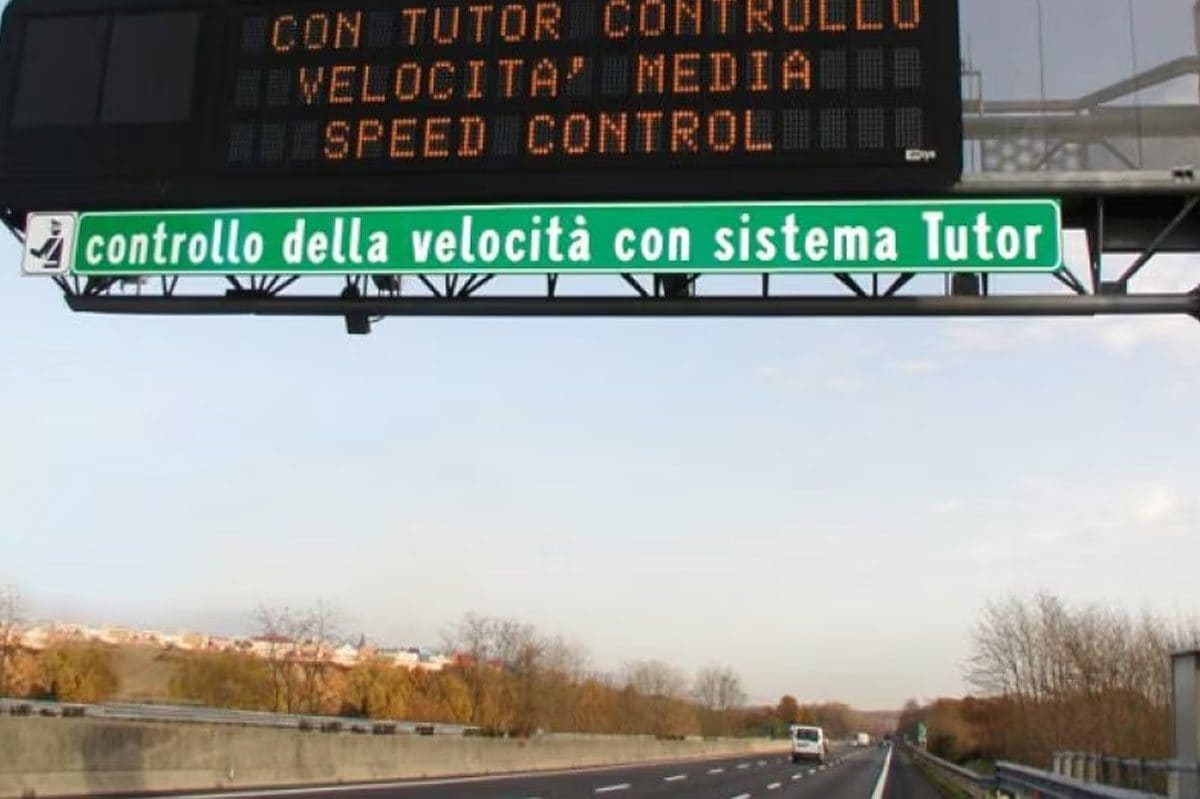
Tutor 3.0 are the updated version of the system for the assessment of the infringements on the highway, more precise and difficult to circumvent compared to previous models and old speed cameras: these devices detect the average and instant speed, integrating the new N -Navigard technological platform, which combines technologies capable of ascertaining not only the exceeding of the limits, but also the circulation on unauthorized lanes, the hazardous overtaking by the vehicles heavy and other violations of the highway code.
The new tutors 3.0 are the new generation of systems Assessment of infringements on the highway Developed by Movyon, the group technology company for Autostrade per l’Italia: progressively activated from 7 March 2025 on 26 new motorway sections, the new 3.0 guardians are devices more precise and difficult to get around Compared to previous models and old speed cameras, for the highest performances of its technological components.
These road devices, approved by managerial decree n. 305 of 20/06/2024, they detect the average and instantaneous speed, By integrating the new Navigard technological platform, which combines technologies capable of ascertaining not only the overcoming of the limits, but also to detect the circulation on non -permitted lanes, the dangerous overtaking by the heavy vehicles e Several other violations of the Highway Code.
The new tutor system is composed Full-HD cameras, radar, peripheral servers and a central systemdistinguishing the type of vehicle (cars, cars with trailer, motorcycle, trucks, trucks and buses) even in case of rain, fog or transit between the lanes or in emergency lanes, calculating the average speed travel between two portals and detecting instantaneous speed in the points where the data are collected. In case of exceeding the permitted limits, the central system questions the archives of the motorization and car hire, to trace the holder and the driver of the vehicle: the violations are then ascertained by the traffic police, which fills out the report that is notified to the offender.
How the new tutors work: technology
The new tutors 3.0 active on the highway integrate the Navigrad technological platform which, thanks to a complex system of algorithms, manages data from different technologies: In addition to the failure to comply with the speed limits, the platform also controls the respect of the emergency lanes, the right obligation by the heavy vehicles and the allowed mass limits and, by 2026, will be able to detect the presence of vehicle vehicles and other types of obstacles in the galleries longer of 500 meters. “In addition, it will be possible to monitor the route of vehicles that transport dangerous goods, reporting their transit along motorway sections not allowed to circulate on non -permitted lanes“Species Autostrade.it.
The new tutors are among the main technological systems of the platform e they combine radar (sensors) and advanced cameras (detection unit). Installed on infrastructure (portals) positioned at a variable distance, they work according to a configuration that provides a pair of sensors and a camera for each lane: the radar system detects the category of the vehicle, the presence of trailers and associates the relative speed limit, activating cameras that photograph The rear plate of the vehicle, recording date and time of the passage under each portal, even at night, in case of rain or presence of fog and reduced visibility.
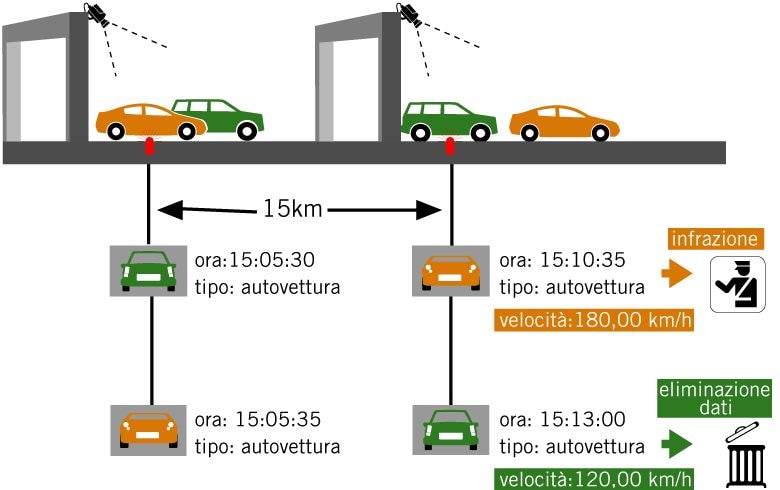
The operation of the tutor for the calculation of the average travel speed between two portals / Credit Autostrade per l’Italia
This information is transmitted to peripheral servers and therefore to the central system that, To detect the average speedanalyzes the data recorded by two consecutive portals, combining them for each vehicle and calculating the travel time for that specific route. If these times exceed those allowed, the system question automatically The archives of the motorization and car hire to trace the holder and driver of the vehicle respectively. In the mode of detection of instantaneous speedthe system instead takes into account only the speed at the point where the information is collected, proceeding with the same automatic verification operations.
The violations are then ascertained by the traffic police, taking into account that the investigations of violations in medium and instant mode cannot be carried out jointly for the same routeto avoid the application of multiple penalties for the same infringement. In cases where the data of vehicles whose travel times and instantaneous speed do not exceed those allowed in the section in question, the information collected they are immediately eliminated to ensure respect for privacy.
What changes compared to the old tutors
Tutor 3.0 are one updated version of the previous modelswhich integrate radar systems and advanced cameras: the cameras of these new guardians, in particular, they are full-hd, with high frame rate and capable of capturing multiple imagesto increase the performance of the ANPR (Automatic Number Plate Recognition) system, the technology that allows a clear reading of the plaque, in any condition of visibility, even at night.
The new tutors 3.0 are also equipped with New functions which go beyond the detection of the average and instantaneous speed, not yet approved by the Ministry of Transport, and therefore For now do not use For the purposes of ascertaining the violations of the Highway Code: these include the recognition of dangerous goods panels (with identification of the Kemler code and UN Code of the goods transported) transported by heavy vehicles, and sending the central system of transit and class data to the central system of all vehicles detectedsuitably anonymized for the production of aggregate statistics and traffic data.
What is the difference with speed camera on the highway
The speed cameras, fixed or mobile, are devices for the detection of instantaneous speed of a vehicle that traditionally use two laser photocells that activate one after the other based on the passage of the vehicle. The time between the transition from the first and second photocell is used To calculate the speed of the vehicle.
The tutor is instead a system based on radar systems, capable of detecting both instantaneous and average speed speed On a specific stretch of road: the detection of the average speed, in particular, increases the safety of travelers, because it is capable of punish systematically dangerous behaviorsby changing the wrong habits perpetrated by those who drive, while also reducing the risk of being fined in the event that, for example, during the travel of a route between two portals, the maximum permitted speed for a very short moment is exceeded, as can happen for a overtaking.
In all cases, the presence of these different speed detection devices is reported with special signswhich also indicate the detection technology adopted. Otherwise, it is possible to contest any penalty, within 30 days of receiving verbal reception.