
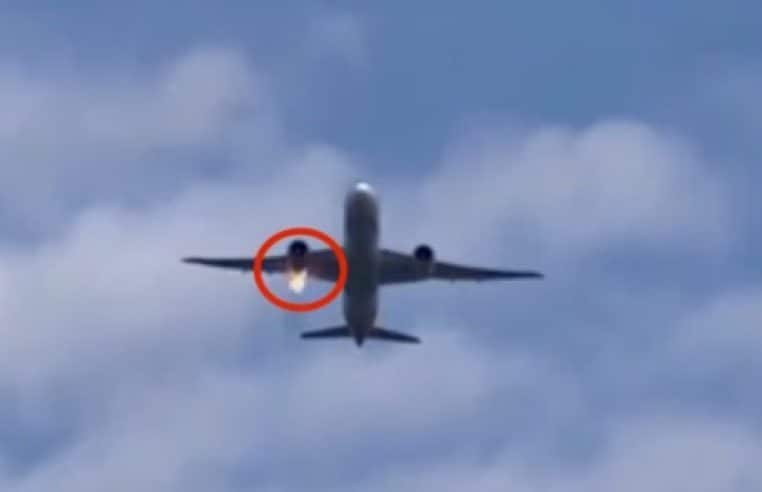
Planes can also fly with just one engine, if the other (or others) are faulty or even on fire, as happened to a Boeing 787-9 Dreamliner that took off from Rome – Fiumicino and headed to China. How is this possible.
Around 10:00 on Sunday 10 November 2024, moments of pure terror were experienced on board a Boeing 787-9 Dreamliner of Hainan Airlines, due to an engine that caught fire immediately after takeoff. THE’airplane of line, starting from“Leonardo da Vinci” Airport Of Rome – Fiumicino and headed to Shenzhen, in Chinafortunately he managed to turn back and land without any consequences for passengers and crew, despite the intermittent flames – clearly visible in the videos that have gone viral on social networks, such as the one shared by Welcome to Favelas – and the thunderous roarwhich also frightened those who witnessed the accident from the ground. In fact, after the activation of the emergency procedures, the aircraft discharged some fuel in the Tyrrhenian Sea and returned to a runway at the Roman international airport, without problems (there were also no inconveniences or delays for the other scheduled flights). It is believed that the accident was caused by a bird strike, that is, a collision with one or more birds.
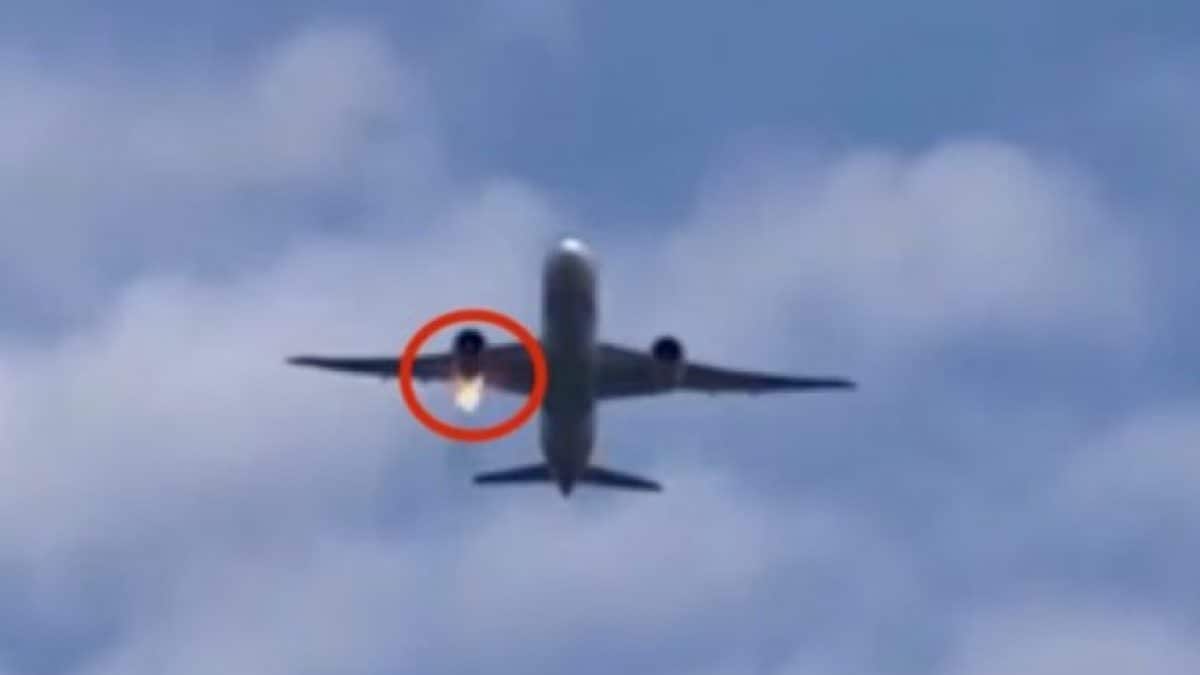
Flames from a plane in Fiumicino (Frame from the Welcome to Favelas video)
What is Bird Strike
The bird strike is a very frequent phenomenon, especially in periods of migrationwhen numerous birds are traveling to reach their wintering or breeding sites; they are used near many airports falconers precisely to keep people at a distance birdswhich can be sucked in by engines jet especially during the very delicate phases of takeoff And landing. An accident similar to that of the Boeing 787-9 Dreamliner would have occurred on Saturday 16 September 2023 at Caselle airport (Turin), unfortunately with a tragic outcome. THE’Aermacchi MB339 from the Frecce Tricolori involved in the possible bird strike, he crashed onto a nearby road, fully hitting a passing car and causing the death of a woman girl five years.
Because a plane can fly with a burning engine
The substantial difference between a possible air disaster and safety after a bird strike lies above all in the number of engines of the aircraft involved (but not only). Having only one, after the possible impact with the birds the military jet of the aerobatic team involved in last year’s accident would have lost power and, no longer being able to maintain altitude, would have fallen to the ground with the well-known and dramatic consequences. A large aircraft like the 787-9 Dreamliner of the US company can instead count on two large turbofan engines and only one of the two would have been hit by the birds. Bird strikes are unlikely to have catastrophic results on large aircraft due to the presence of multiple engines. These planes, in fact, are designed with redundant systems in order to allow flight also with only one engine running. The power guaranteed by a single engine is in fact sufficient to keep the aircraft in motion stable flightwithout any consequences; in fact, multiple engines are one of the most effective safety systems, keeping in mind that breakdowns and accidents such as bird strikes are always lurking. There is little that can be done if a plane crashes due to the lack of sufficient thrust to counteract the force of gravitational attraction of the Earth.
How dare you talk about chemtrails in front of the hundreds of deaths in Valencia
The Boeing 787-9 Dreamliner is equipped with engines of different models, depending on the version: two General Electric Genx-1B or two Rolls-Royce Trent 1000. Each of them is capable of delivering a power greater than 340 kN (over 76,592 lbf), which is precisely sufficient to keep the large, almost 63 meterscharacterized by a maximum autonomy of almost 16,000 kilometers and a capacity of up to almost 300 passengers. In addition to the redundant systems provided by multiple engines, there are also other systems that can “save” an aircraft with one or more engines on fire. In fact, they are present inside them sophisticated fire prevention systems which is not only able to put out the fire, but also to confine the flames preventing them from spreading to the rest of the aircraft. As explained by professionalaviation.it, these systems can be activated manually by pilots (warned by smoke and flame sensors) and release extinguishing agents like thehalon. As an additional, passive safety procedure the aircraft are built with self-extinguishing materials to prevent further spread of flames.
The reason why the pilot of the direct flight from Rome to Shenzhen downloaded the fuel at sea was not directly linked to the risk that the plane could catch fire in flight due to the burning engine, but to prevent any problems after the emergency landing (less fuel on board, less risk of fires and explosions following a possible sudden impact with the ground)