Beauty filters prohibited to minors on the one hand aim to protect minors, and on the other to anticipate severe sanctions and fines for violations of online safety regulations.
In the coming weeks, children under 18 will no longer be allowed use beauty filters on TikTok. Those that allow you to smooth your skin, artificially enlarge your eyes and plump your lips. The latest options integrated with artificial intelligence have become increasingly performant and risk increasing pressure on teenagers and triggering states of anxiety and depressive episodes.
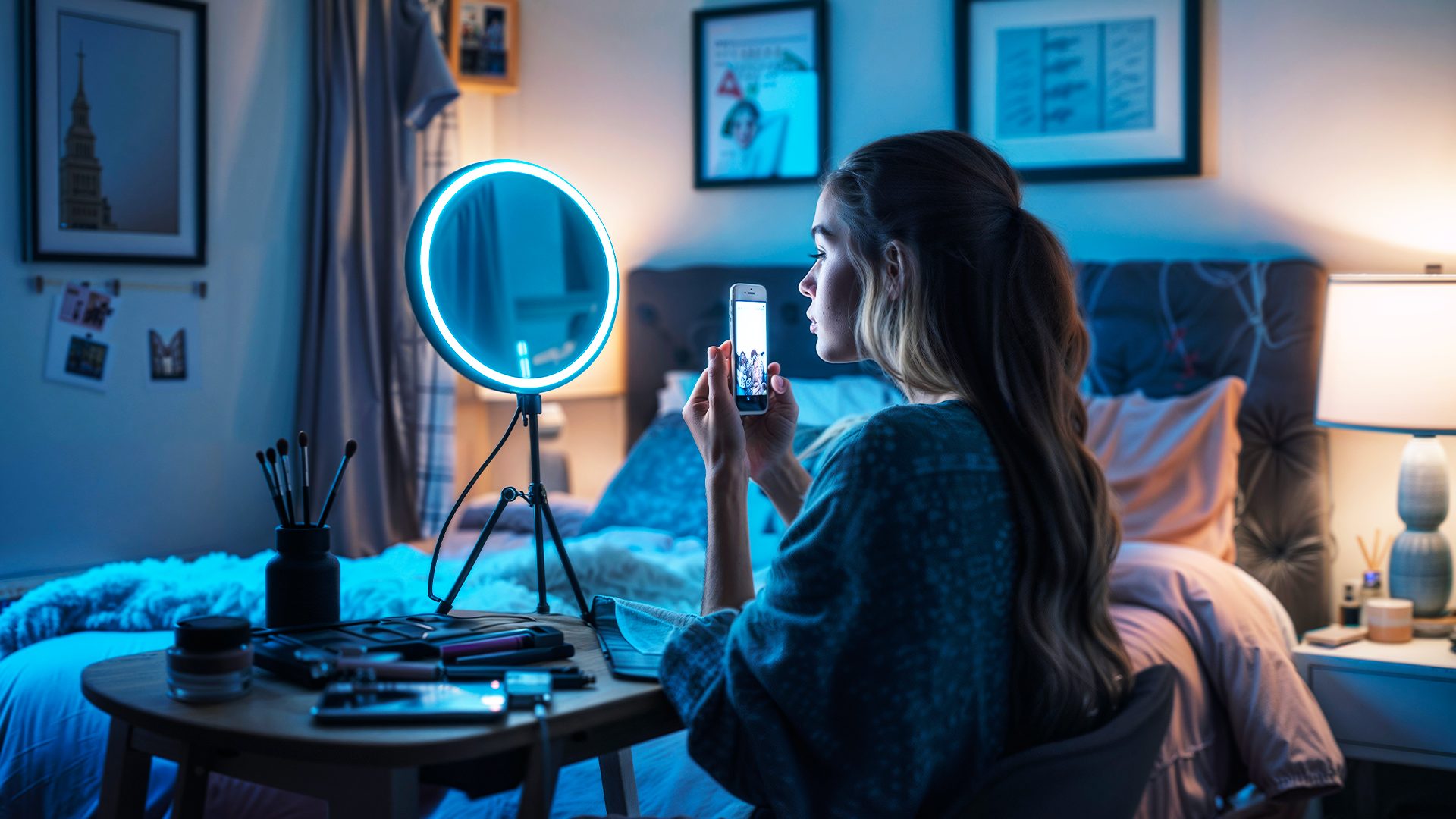
Filters have existed for years but if before they were a fake, funny, at times grotesque technology, in short a mask, they have now evolved. Looking into the internal camera, the reflected face is not exactly ours. Beauty filters, like Bold Glamour, don’t just put mascara well or hide a pimple, they create a psychological rift by revealing what for TikTok it is the best version of ourselves.
What are the risks of beauty filters on social media
Filters risk increasing pressure on teenagers. They go to feed anxiety, stereotypes and self-esteem problems. According to a study by the SatisFACE project of the Vita-Salute San Raffaele University and the Cussb (University Center for Statistics for Biomedical Sciences), 49.2% of young people declared edit photos which he publishes on social media. The filters make things even worse psychological pressures of imposed beauty.
By retouching images or applying filters, people lose awareness of their body on the one hand, and control of their image on the other. This disconnect between the mirror and the social profile, especially in adolescence, could also trigger states of depression and anxiety among children.
Blocked filters and age verification: the new measures on TikTok
TikTok also announced that it will strengthen its systems for block users under the age of 13 on the platform. Before the end of the year will launch a trial of new automated systems that use machine learning to detect people who violate its age restrictions.
Chloe Setter, TikTok’s head of public policy on child safety explained: “We hope that these new tools will allow us to detect and remove content even more quickly.” People blocked by mistake will be able to appeal. “It can obviously be annoying for some young people,” Setter added, but the platform will take an “approach that puts the safety first“.
Because social networks are applying new security measures
R-rated beauty filters and age verification are part of new online safety policies announced by the platforms. On the one hand they want to protect minors, on the other they want to anticipate severe sanctions and fines for violations of online safety regulations.
Andy BurrowsCEO of the Molly Rose Foundation, an association for suicide prevention, explained to the Guardian: “It is no coincidence that these changes are announced largely for comply with EU and UK regulationsBurrows added: “TikTok should act quickly to fix systemic weaknesses in its design that allow a torrent of harmful content to be algorithmically recommended to young people aged 13 and over.”
TikTok isn’t the only one. Last week Roblox announced that it would prevent minors from accessing the most violent, vulgar and frightening content. Instagram has instead launched “teen accounts” for those under 18, who allow parents and guardians to monitor social media activity.