
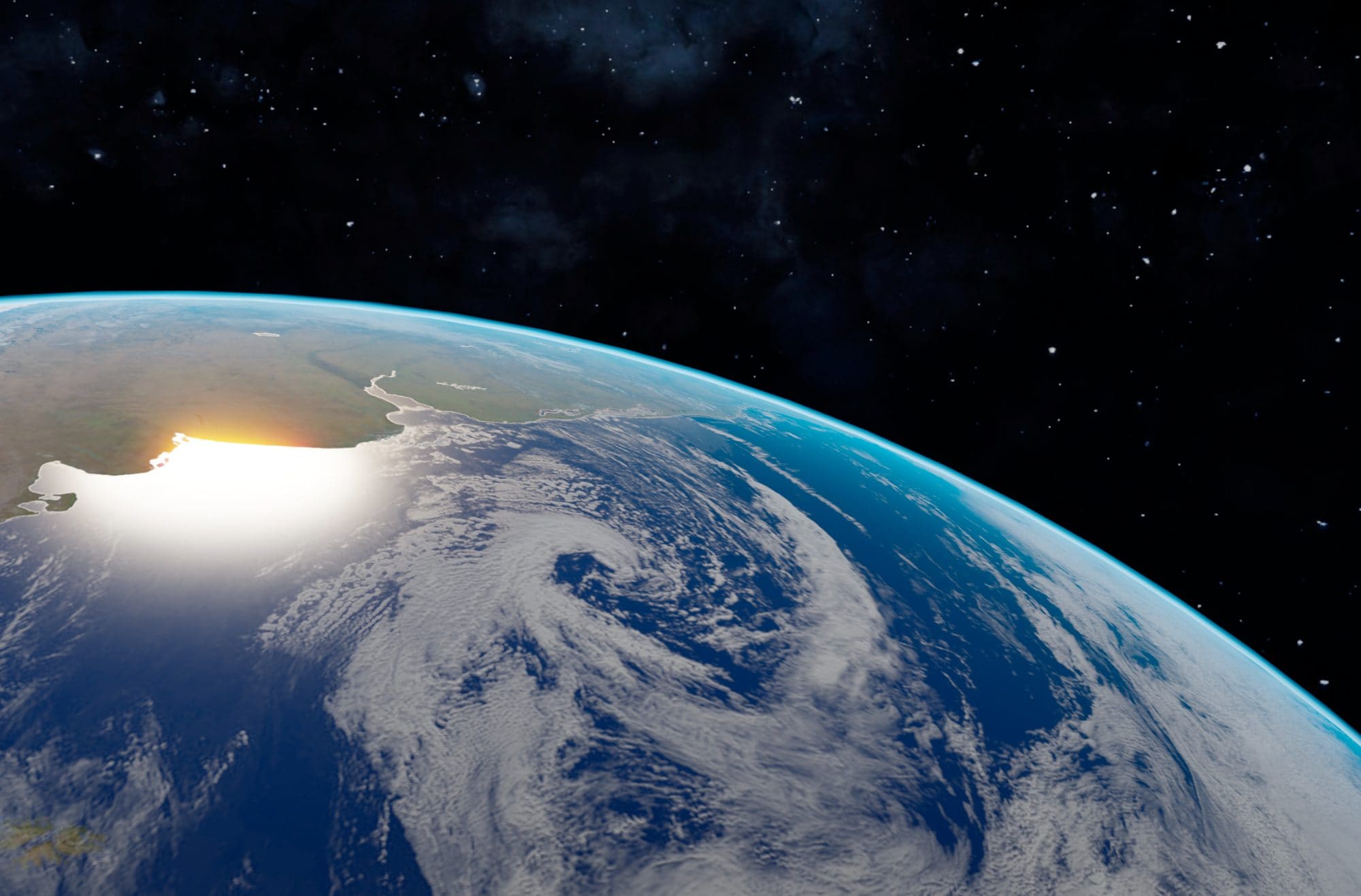
New AI models, such as GenCast, try to predict the movements of the Earth’s atmosphere using past weather data. Not only that, they also run faster simulations using less computing power. However, there is a problem: considering global warming, it will still be difficult to predict extreme events.
Every day we rely on weather forecast to make decisions. Whether or not to bring an umbrella, move away from a flood risk area, or prepare for a heat wave. Until now it has been very difficult to calculate them correctly over time. Despite complex mathematical equations and masses of data analyzed in real time. However, artificial intelligence could solve the problem. According to a new study published by DeepMind in Nature, a new model called GenCast it could predict weather conditions reliably even 15 days later.
“It’s an impressive result,” he explained to CNN Peter Dueben, machine learning expert and responsible for earth system modeling atEuropean Center for Medium-Range Weather Forecasts. “It’s a big step.” GenCast uses Google’s DeepMind artificial intelligence, and its predictions were much more accurate than those produced by traditional models, according to the study.
How weather forecasts are made
Traditional weather forecast models are based on mathematical equations complex models that model the physics of the atmosphere and use hundreds of millions of data points from real-time meteorological observations. This way they can predict what the weather will be like in a day, a week or a month. These processes of numerical meteorology they were used for the first time at the beginning of the 20th century. The calculations were done manually, the method was slow and tiring. Then in the ’50s and ’60s the first computers arrived, but only in 1974 was the first model inaugurated weather forecast.
The fake photo of Meloni and Schlein playing together in Burraco: is this the future that awaits us?
Today, supercomputers allow extremely detailed calculations and predictions to be carried out, but for a short period of time. New AI models, like GenCast, take a different approach. In fact, they try to predict the movement and changes of the Earth’s atmosphere using past weather data. Not only that, they also run faster simulations using less computing power. GenCast is capable of running dozens of simulations simultaneously, according to the study. “The model, in addition to generating different possible futures, also allows calculations the most probable ones“explained Ilan Price, lead author of the new study and senior researcher at DeepMind.
How GenCast works
The researchers trained GenCast on 40 years of weather data, until 2018. They used the model to predict over 1,300 weather combinationscalculating temperatures, precipitation and wind speed. GenCast produced more accurate predictions than traditional ECMWF model by more than 97% in a period of 15 days, according to the study. “It showed an improvement in accuracy from 10 to 30% in forecasts in the range from three to five days” explained Price. The results mark a “turning point in AI-based weather modeling technology.”
What are the possible problems with the new models
GenCast isn’t perfect. “The machine learning model knows nothing about physics,” Dueben explained, and it predicts the future based on past data, they are therefore more extreme events are difficult to predict which for example did not occur in previous years. Considering global warming and the climate crisis this could be a problem. Not only that, according to Düben, artificial intelligence models can begin to invent physics that is impossible on Earth. “You can be as skeptical as you want about machine learning predictions in principle,” Dueben pointed out, “but these models will have a positive impact on our weather forecasts. There’s no doubt about it.”