
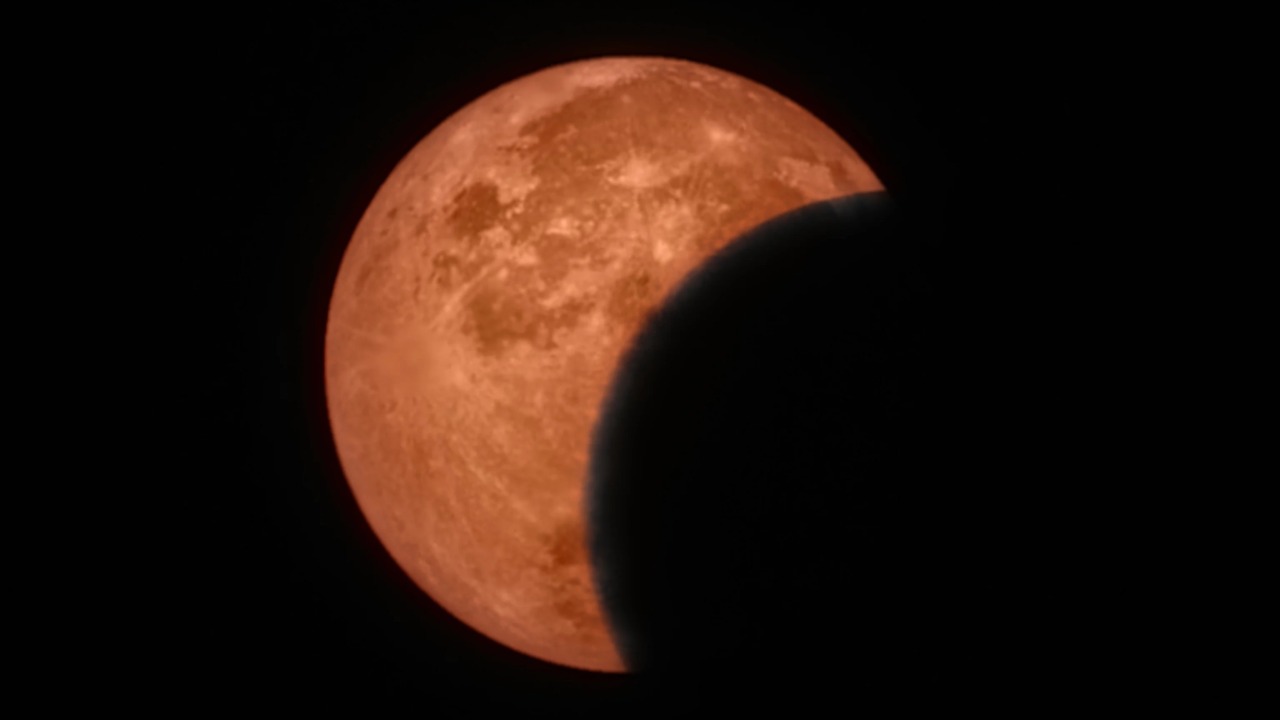
During the solar eclipse on August 12, Xiaomi 17 Ultra has made a macroscopic error of scene recognition, mistaking the solar disk for the lunar surface. The photographic processing algorithm detected a spherical shape at high magnification and autonomously applied textures, craters and geological reliefs typical of the Moon on a red-orange Sun. The behavior has exposed the limitations of super-resolution systems based on neural networksprogrammed to embellish astronomical shots even at the cost of altering physical reality.
The story was told on the Frandroid YouTube channel. The phenomenon did not remain isolated and several similar reports appeared on social networks after the astronomical event. Using the highest zoom levels, where physical sensors give way to digital magnifications up to 100x or 120xsoftware processing intervenes invasively to reconstruct the missing details.
The system on board the top of the range device has evidently classified the image as a night shot of the Moon, activating the preloaded synthetic rendering procedure to enhance the craters. The practice of using generative models to enrich celestial photographs is nothing new in the mobile sector. For years, manufacturers have used algorithms trained on thousands of high-resolution images of the Earth’s satellite, with the aim of returning sharp edges when the optics reach their physical diffraction limits.
lmfao @Xiaomi AI turned my solar eclipse into a moon pic.twitter.com/hweym1X508
— Víctor Pérez (@vpx_tech) August 12, 2026
The limits of predictive photography and generative rendering
This software management favors commercial aesthetics over the fidelity of the signal captured by the image sensorexposing devices to real false positives. The visual misunderstanding manifested itself particularly clearly due to the peculiar conditions of the eclipse. The attenuation of the direct brightness and the use of protective filters led the Sun to take on a warm tone and sharp edges against the dark background, inducing the software to artificial vision in a gross misclassification.
Instead of just containing background noise, the image processor has recalled predefined graphic patternsprojecting a lunar geological map onto the solar photosphere. Not all acquisitions completed during the eclipse produced the same visual distortion. When the algorithm did not reach the minimum confidence threshold for automatic recognition of the Moon, the images maintained a correct rendering without artificial details.
The case forcefully reignites the debate on the opacity of treatments computational photography adopted by manufacturers (not just Xiaomi), where the boundary between optical optimization and synthetic generation continues to become increasingly blurred.
For those seeking technical rigor or simple documentary authenticity, the episode highlights the risks associated with excessive reliance on the automation of modern cameraphones. The uncontrolled action of machine learning demonstrates how, in the absence of rigorous manual control or crude shot formats devoid of neural embellishment, the final image risks becoming a plausible illustration rather than an optical testimony of the real sky.