
Xiaomi Pad 8 Pro And Xiaomi Pad 8 they share several key elements, starting from the display 11.2 inches with resolution 3.2K and refresh rate a 144 Hzin addition to the battery from 9200mAh and functions HyperAI. The Pad 8 family is therefore born with an already very complete setup, but the Pro version raises the bar on performance and charging.
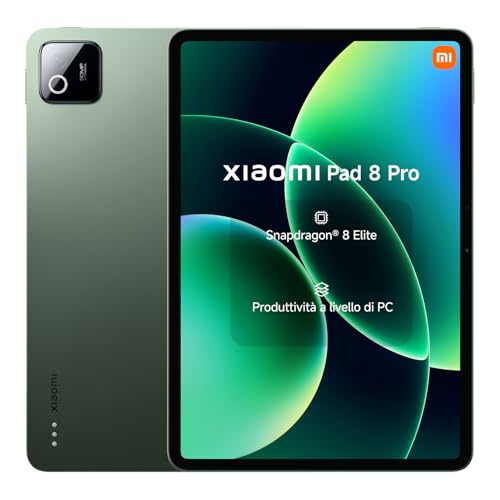
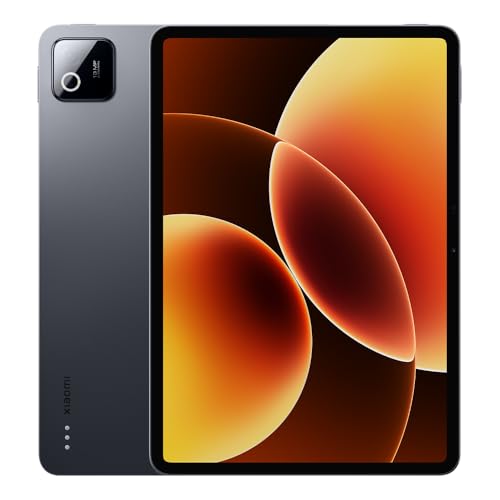
The most obvious leap concerns the mobile platform: Snapdragon 8 Elite on Pad 8 Pro e Snapdragon 8s Gen 4 on Pad 8. The former offers a higher margin in heavy scenarios such as editing, advanced multitasking and graphically intense games, while the latter remains oriented towards high performance but more balanced in the relationship between speed and efficiency.
Charging also changes significantly. Xiaomi Pad 8 Pro supports 67W HyperChargeWhile Xiaomi Pad 8 stops at 45W with charger included. On a 9200 mAh battery this detail can make the difference for those who often use the tablet away from home or on the move and want faster recovery times.
From a memory point of view, the Pro version offers 12+512GBagainst 8+256GB of the standard model. Here too the positioning is clear: more space and more margin for apps, large files, work documents and multimedia content on the higher model.
| Specify | Xiaomi Pad 8 Pro | Xiaomi Pad 8 |
|---|---|---|
| Price | €599.90 | €479.99 |
| Color indicated | Pine green | Black |
| Processor | Snapdragon 8 Elite | Snapdragon 8s Gen 4 |
| RAM | 12GB | 8GB |
| Internal memory | 512GB | 256GB |
| Display | 11.2 inches | 11.2 inches |
| Resolution | 3.2K | 3.2K |
| Refresh rate | 144 Hz | 144 Hz |
| Drums | 9200mAh | 9200mAh |
| Fast charging | 67W HyperCharge | 45W |
| Operating system | Xiaomi HyperOS 3 | Xiaomi HyperOS 3 |
| AI functions | HyperAI | HyperAI |
| Audio | 4 Dolby Atmos compatible speakers, volume up to 200% | 4 Dolby Atmos compatible speakers, volume up to 200% |
| Design | Ultra-thin metal unibody | Thin, lightweight and durable unibody |
| Thickness | 5.75mm | 5.75mm |
| Weight | 485 g | 485 g |
The design remains very refined on both variants, with a thin and light unibody chassis. Both have a thickness of 5.75mm and a weight of 485 gelements that make them comfortable to hold for long sessions.
The audio part is rich in both models, which from this point of view share the same specifications. They both have 4 symmetrical stereo speakers. The speakers are positioned in pairs on the two short sides of the tablet (two on the right and two on the left) to guarantee an immersive stereo effect both vertically and horizontally. Both support decoding Dolby AtmosHi-Res Audio certifications (also Wireless) and integrate a software mode to push the volume up to 200%.

On the software and productivity front, both offer desktop experience, floating windows, split-screen mode and interconnection via HyperConnect. Also present Xiaomi HyperAIuseful for working between devices and exploiting smart system tools more smoothly.
The comparison, in practice, is simple: Xiaomi Pad 8 Pro it is the most powerful and complete choice, with more memory and faster charging; Xiaomi Pad 8 instead, it maintains a lower price and remains very interesting for those looking for a large, fluid and already well-equipped tablet without going up the price range.