
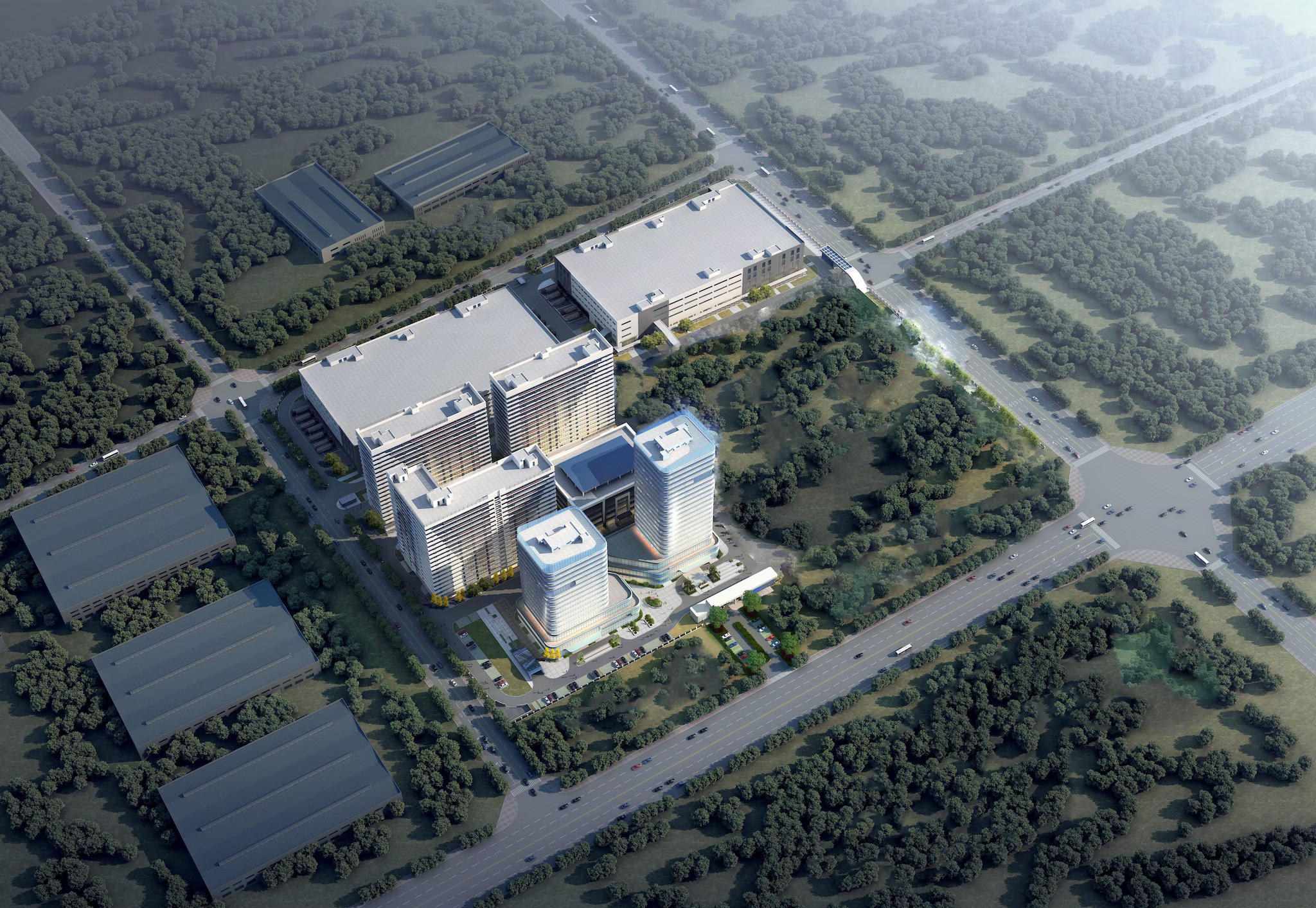
Behind many smartphones sold by the most famous brands are companies that design, test and produce millions of devices for the global market. They are almost unknown companies that do not have much interest in being in the spotlight: one of these is the Chinese Longcheer Technology.
When we buy a smartphone, we usually start from the brand, check the cameras, memory, battery and finally the price. It is natural to think that each model was designed and built entirely by the company whose logo appears on the packaging, in many cases, however, the reality is very different and more complicated. Behind a significant part of the phones on the market in fact, companies that are almost unknown to the general public workthese are companies capable of designing components, carrying out tests, choosing hardware platforms and producing millions of devices which will then be sold under much more famous brands.
A smartphone is almost always associated entirely with the company that sells it. In reality, a manufacturer can develop every detail of the device by itself, but it can also entrust part of the work to external companies. In some cases only assembly is delegated, in others, the partner also takes care of the design, component selection and preparation of the phone for large-scale production. The brand can also simply limit itself to establishing the price, the target audience, some characteristics and the type of experience it wants to offer. This is the case of Longcheer Technology, a Chinese company that deals with this sector for many brands that come from Beijing.
This does not mean that the logo applied to the body is merely decorative, indeed it is always the brand that decides the commercial positioning, personalizes the software, organizes distribution and manages updates, assistance and repairs. The least visible part it’s about what happens before it hits the stores.
Luca, collector of old mobile phones: “I have 5,000 of them, all with buttons. The most precious is an Olivetti”
The work behind the scenes at Longcheer Technology
Longcheer Technology is a Chinese company founded in 2002, its name does not normally appear on devices, but the company works on smartphones, tablets, laptops, earphones, smartwatches, headsets and smart glasses. The average consumer has probably never heard of it, even though they may have already used a product passed through its laboratories or production lines. In fact, Longcheer works for groups that sell millions of devices every year. The phenomenon is much broader than one might imagine. According to Counterpoint Research, in 2024 approximately 44% of smartphones shipped worldwide has been involved in design or production activities entrusted to ODM companies. It means that almost one phone in two has passed, at least in part, through structures external to the brand that then marketed it.
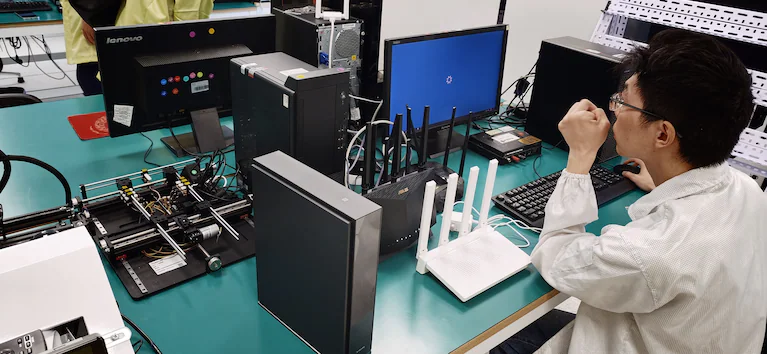
To understand this world you need to know two acronyms: OEM and ODM. In the OEM model, the brand develops the design and entrusts the material production of the device to a partner. Shape, components and functioning have already been decided, while the external company provides factories and industrial capacity. With an ODM, however, the partner can have a much more important roleas it does not just assemble the phone, but has hardware platforms, engineers, laboratories and direct relationships with manufacturers of processors, screens, batteries and memories.
The brand may ask, for example, for a cheap phone with a large battery, a certain processor and a camera suitable for social media, subsequently the ODM then prepares a complete solution or a base that can be customized in design, materials and software. However, there are many intermediate formulas between these two models. For this reason it is often difficult to understand precisely who designed every single element of a smartphone. Making a modern telephone is an extremely complex job, you have to design antennas, electronic boards and cooling systems, optimize consumption, carry out safety tests and obtain different certifications based on the countries of sale. An ODM already has this facility and it can use the same basic platform for multiple products, so that starting from a specific processor it can create different phones, changing the screen, amount of memory, cameras, battery and body.
The costs are thus distributed over much larger volumes and this means for the brand reduce development times and arrive in stores sooner. The advantage is particularly important in the economic and medium range, where even a small increase in the cost of components can heavily impact the final price. Companies can also focus their engineers on flagship models and outsource phones that are less expensive or aimed at specific markets.
Because many smartphones all look the same
Scrolling through the catalogs of the main manufacturers devices with very similar characteristics are often found. Same screen diagonal, almost identical batteries, processors from the same family and cameras positioned in the same way. This is not always a coincidence, the reason is that component manufacturers are relatively few and ODMs develop platforms designed to be modified without starting from scratch every time. If multiple brands choose the same base, similarities become inevitable.
Customization occurs mainly through materials, colors, software and camera configuration. Even two phones with similar sensors can take very different photos, because the processing algorithms change from one brand to another. The mechanism resembles that of carswhere models from different brands can share platform, engines and electronic components, while maintaining different designs and behavior.
Same factory doesn’t mean same quality
Relying on an ODM doesn’t automatically make a smartphone better or worse, because the same company can produce a cheap phone and a much more refined model. What changes is the budgetmaterials, controls and customer requests. Just to give an example, one brand may demand drop tests, thermal tests, in-depth checks on the battery and very precise assembly tolerances, another may aim above all to keep the price down, accepting greater compromises. Also software support remains in the hands of the brand. The duration of updates, the availability of spare parts and the management of support do not simply depend on the company that assembled the phone.

What changes for those who have to buy a phone
In most cases it’s difficult to know which ODM worked on a particular smartphonethis is because industry agreements are often confidential and can change from one generation to the next. However, knowing this system helps you evaluate phones more carefully and better understand that a product is not automatically better just because it belongs to a famous brand. Likewise, a smartphone developed by an external partner is not necessarily of lower quality. This is certainly nothing new, but this further confirms that it is therefore worth looking at autonomy, display, performance, cameras, updates and assistance, because these are the elements that really make the difference in daily use. Companies like Longcheer will likely continue to stay out of the spotlightas they do not have to convince the public to buy a phone, but the big brands to choose their projects. The name printed on the back of the device retains an important weight, but represents only the most visible part of a much larger industrial chain.